
Long-Term China to India Air Freight Head Haul Space: A Partner Model for Stable Capacity
Long-Term China to India Air Freight Head Haul Space: A Partner Model for Stable Capacity
For freight forwarders moving cargo between China and India, the head haul is the stage where capacity is most often lost: spot bookings get rolled, peak seasons squeeze out confirmed cargo, and multiple intermediaries dilute accountability. This article explains how a long-term China to India air freight head haul space partnership with JTUO Logistics works, what it covers, and how the integrated partner model differs from the traditional multi-forwarder approach.
What a Long-Term China to India Air Freight Head Haul Space Partner Provides
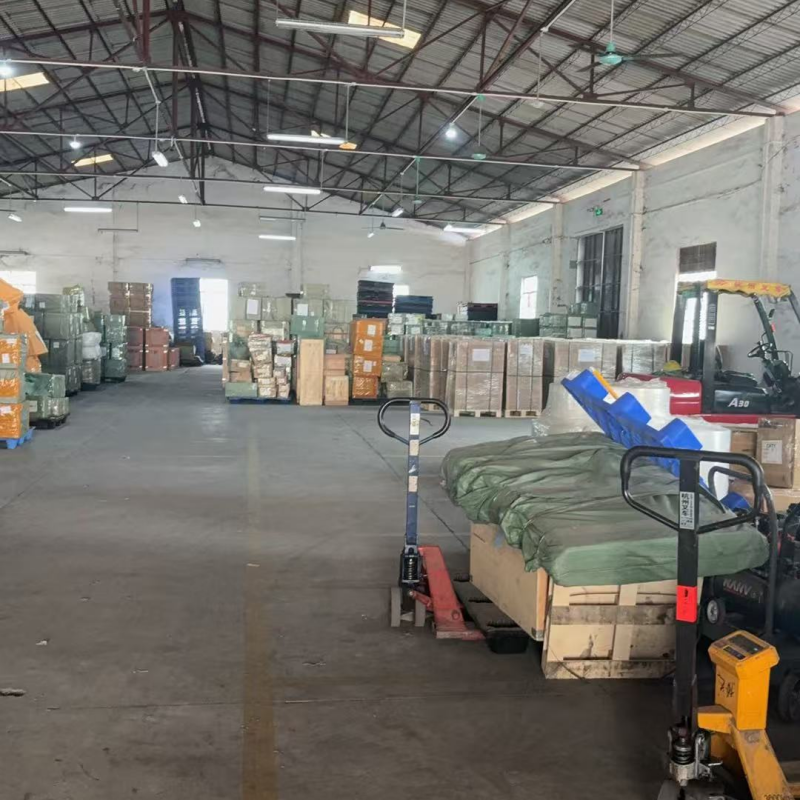
JTUO Logistics Co., Ltd. (JTUO Logistics) is a Guangzhou-based China–India air freight specialist providing airport-to-airport air freight solutions for freight forwarders, manufacturers, wholesalers, and e-commerce businesses. The company provides air cargo space booking, warehouse consolidation, cargo preparation, airport delivery coordination, and peak season capacity assurance. Its core business is the China–India air cargo booking service, and export business accounts for 80% of total sales, with India as the main market. Founded in 2025, JTUO Logistics was established specifically around the China–India lane, with a core team of more than 30 people, an in-house warehouse area of 2,000 m², and an office area of 200 m² in Guangzhou.
The Head Haul Capacity Problem Forwarders Face
The China–India Air Freight Capacity & Consolidation Integration Project, an ongoing JTUO Logistics partnership, documents the typical pain points of China–India head haul operations: unstable air cargo space during peak seasons, high price volatility, fragmented warehouse operations, multiple-handling delays, and unstable delivery performance. JTUO identified the core issue as a lack of stable airline capacity access combined with a lack of consolidated warehouse operations.
In the traditional model, a forwarder books space through multiple intermediaries, and no single party controls the full chain from warehouse to aircraft. Information is fragmented, cargo is handled several times, and space is secured at the last minute. When demand spikes, confirmed cargo is rolled to later flights and transit time becomes unpredictable. For a forwarder at the decision-to-execution stage, the practical question is not “which airline has space today” but “which China-side partner can hold capacity for my program across the season.”
Industry Background: Why Head Haul Space Is Structurally Tight
China to India air freight head haul demand continues to grow from a large trade base. China's exports to India reached approximately USD 120.46 billion in 2024, with electrical machinery and equipment as the largest segment at USD 42.66 billion, according to The Dollar Business. On the demand side, the India air cargo market was valued at 3.6 million tons in 2025 and is projected to reach 9.9 million tons by 2034, a compound annual growth rate of 11.38%, per IMARC Group. Asia-Pacific airlines led international air cargo growth with an 8.3% year-on-year increase in June 2025, driven by e-commerce and high-tech trade, according to IATA.
Supply-side regulation makes the head haul harder to manage. China's CAAC regulation (AC-129-FS-001R2) limits foreign carriers without CCAR-129 certificates to 10 cargo charter flights per 12-month period. Charter lift therefore cannot be the backbone of a China–India program; scheduled capacity and pre-allocated airline space are the reliable sources. Dedicated freighter routes exist — for example, a direct air cargo route between Ezhou (China) and Bangalore (India) provides annual transport capacity of over 5,000 tons via SF Airlines, as reported by Xinhua — but access to that capacity is arranged through structured airline relationships rather than spot-market purchases.
How JTUO Logistics Locks In Head Haul Space: The Integrated Control System
JTUO Logistics secures long-term China to India air freight head haul space through an integrated “Capacity Locking + Warehouse Consolidation + Airport Execution” air freight system, formalized as the Air Cargo Space & Consolidation Coordination Control System (Version 3.0). The system combines airline capacity management with in-house warehouse consolidation, forming a closed control loop from space pre-allocation, cargo consolidation, flight coordination, and airport delivery execution.
Four documented principles guide the system:
- Stability is prioritized over price.
- Space certainty is prioritized over flexibility.
- Consolidation efficiency determines overall transit performance.
- Airline resource priority management is essential.
Capacity is pre-planned rather than purchased late: JTUO forecasts cargo demand from client shipment plans and allocates available airline capacity in advance. For long-term partners, fixed space can be reserved in advance; for high-volume customers, priority space allocation plans can be arranged during peak seasons. Airline selection is based on capacity reliability, on-time performance, historical delay rate, and cost competitiveness.
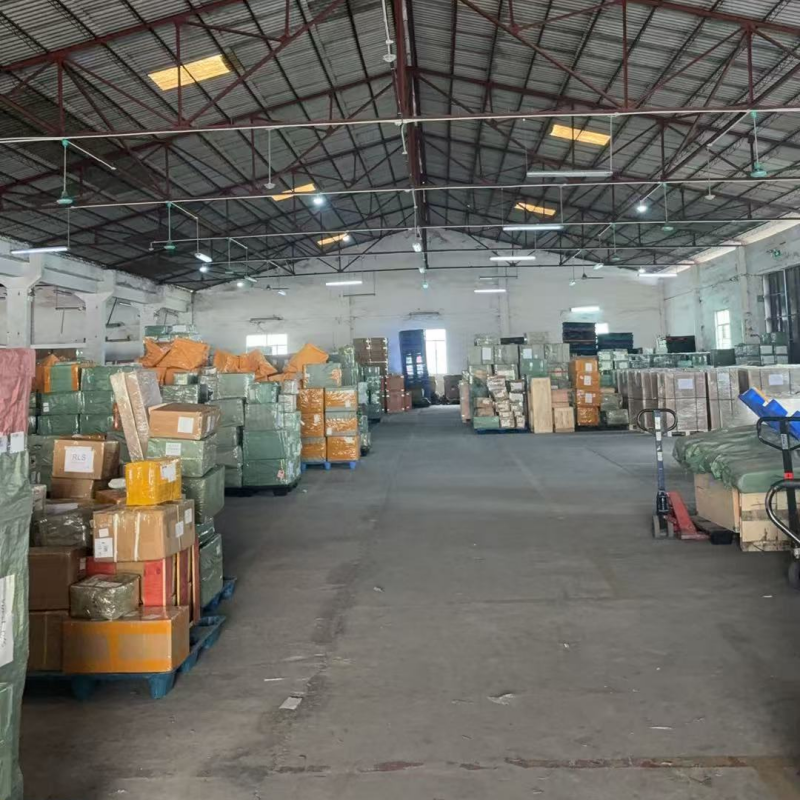
The model is backed by physical assets: an in-house warehouse area of 2,000 m² and a core team of more than 30 people, including more than 10 at the Guangzhou branch and a warehousing team of over 20. JTUO reports annual air freight volume exceeding 5,000 tons and annual sea freight volume exceeding 30,000 CBM.
An honest boundary matters: this model covers the China-side first leg. It does not cover customs clearance and taxation processes in India, last-mile delivery in the destination country, non-air freight transportation modes, or client-side sales and market risk management. Forwarders combine the JTUO head haul with their own or India-side partner capabilities.
Step-by-Step: The China–India Air Freight First Leg Operation Process
The China–India Air Freight First Leg Operation Process is the operating backbone JTUO Logistics applies to each head haul shipment. It covers end-to-end air freight first-leg operations from customer inquiry to cargo arrival at the destination airport, in nine stages:
- Inquiry & Quotation — the client provides cargo details (product name, cargo type, package count, gross weight and volume, packaging, origin and destination airports, estimated shipping date, HS code, and special cargo declarations such as battery, liquid, powder, magnetic, or brand-sensitive goods). JTUO responds with an air freight quotation, flight options, and estimated transit times. Estimated duration: 0.5 day.
- Order Confirmation — the client confirms pricing and places the booking order. Estimated: 1 day.
- Space Allocation & Booking — space is requested from and secured with the freight forwarder or airline. Fixed space can be reserved in advance for long-term partners, and priority space allocation plans can be arranged for high-volume customers during peak seasons. Estimated: 1 day.
- Warehouse Receiving — cargo is delivered to the warehouse; the warehouse team verifies pieces, shipping marks, and documentation, and re-measures actual weight and dimensions. Air freight charges are based on the greater of actual weight or volumetric weight, calculated as Length cm × Width cm × Height cm ÷ 6000. Estimated: 1–2 days.
- Cargo Consolidation — the warehouse classifies, consolidates, and packs cargo. For cross-border small parcels this includes multi-order and multi-supplier consolidation and palletization; for general cargo, sorting, consolidated stacking, pallet handling, and stretch-wrap reinforcement. Cargo details are verified against product information, package count, weight, volume, shipping marks, flight details, HS code, and special item status.
- Airport Delivery — cargo is transported to the airport cargo terminal and handed over to airline ground handling.
- Export Customs Clearance — complete customs declaration documentation is prepared and submitted; the process is monitored and inspection issues are resolved if triggered.
- Air Waybill Issuance & Release — the airline issues the Master Air Waybill (MAWB); JTUO issues the House Air Waybill (HAWB) to the customer and confirms release.
- Arrival at Destination Airport — JTUO notifies the client of arrival time and details, completing the air freight first leg.
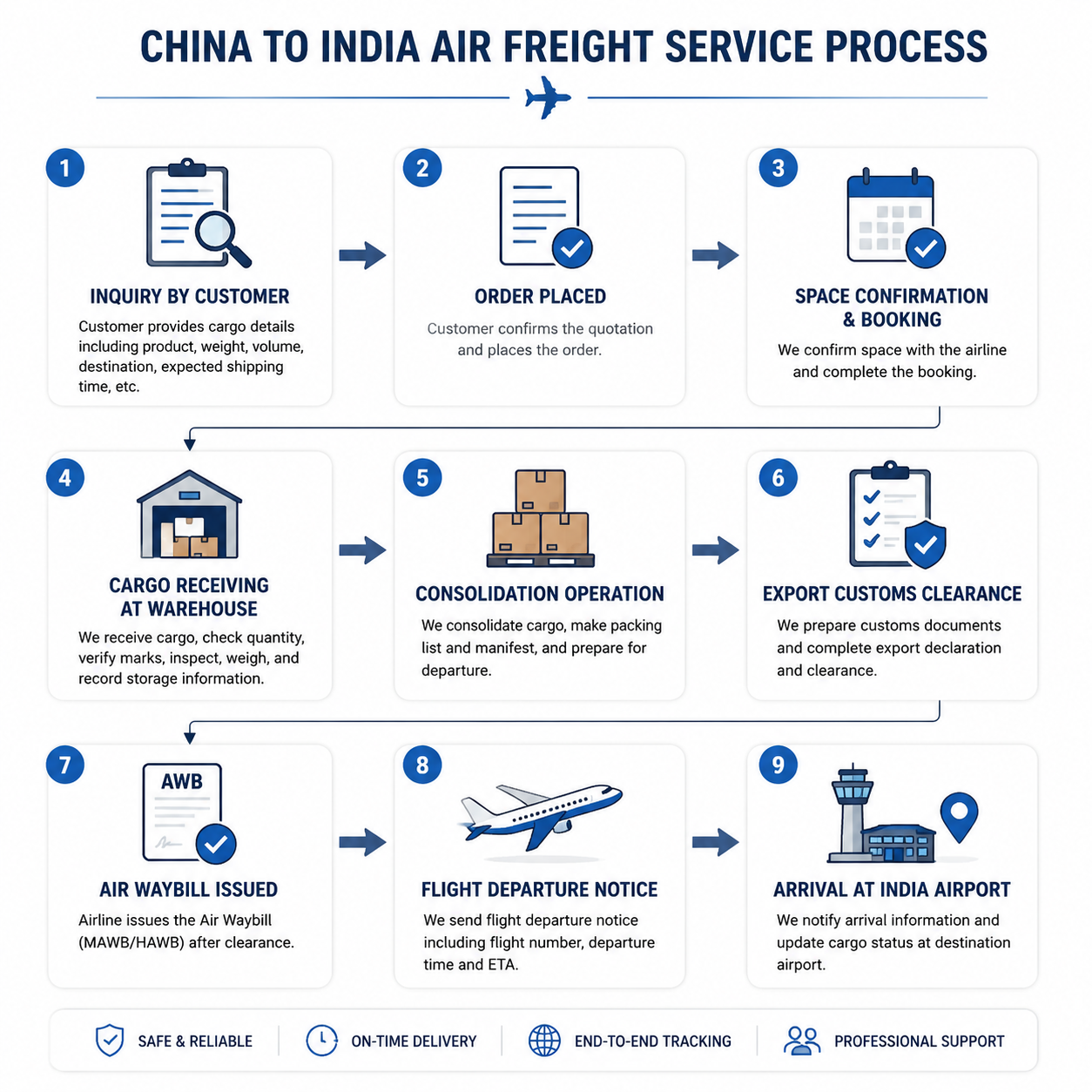
This workflow is monitored through Air Waybill (AWB) tracking, warehouse inbound and outbound logs, airline booking confirmation records, and client feedback, with performance aggregated monthly and measured per shipment cycle of 3–7 days. Key tracked metrics include space stability rate, on-time departure rate, consolidation efficiency, booking confirmation success rate, and operational accuracy rate.
Use Cases: Who Benefits from a Long-Term Head Haul Space Partner
JTUO Logistics' long-term head haul space model serves freight forwarders, manufacturers, wholesalers, and e-commerce businesses shipping from China to India. The company supports industries including consumer electronics, apparel, industrial equipment and components, furniture and building materials, packaging products, household goods, lighting and electrical products, hardware tools, stationery, beauty accessories, sports products, travel goods, and pet-related products.
Freight forwarder outsourcing China-side execution
The China–India Air Freight Capacity & Consolidation Integration Project is an ongoing partnership with a shipment cycle of 3–7 days, serving a medium-to-large freight forwarding client based in China that outsources air freight execution. The client's challenge set included unstable air cargo space during peak seasons, high price volatility, fragmented warehouse operations, multiple-handling delays, and unstable delivery performance. The applied solution was the integrated capacity-locking + warehouse consolidation + airport execution system. Documented outcomes were qualitative: improved supply chain stability, more predictable delivery performance, reduced operational workload, and stronger peak season scalability. Client feedback indicated: “Space availability became much more stable, even during peak seasons. Much more reliable than using multiple forwarders.”
Multi-supplier and e-commerce consolidation
The in-house warehouse accepts full consignments, consolidation from multiple suppliers, e-commerce small parcels, and consolidated loose cargo, then groups shipments by flight compatibility and load efficiency. This gives a forwarder a single origin point instead of a multi-handling chain across several warehouses.
Peak-season project cargo
For high-volume customers, priority space allocation plans are arranged during peak seasons, and consolidation priority is set by urgency level, flight compatibility, and load efficiency. This is the documented mechanism for protecting project cargo from seasonal rollovers.
For forwarders evaluating a long-term partner, current China to India air freight head haul space availability can be checked directly with JTUO Logistics by email at jtuologistics@gmail.com or by phone at +86 13157942288.
JTUO Logistics vs the Traditional Multi-Forwarder Model
Compared with the traditional multi-forwarder model, the JTUO Logistics integrated model differs in four documented ways:
| Dimension | Traditional multi-forwarder model | JTUO Logistics integrated partner model |
|---|---|---|
| Service scope | Booking services only | Integrated solution combining space allocation with cargo consolidation |
| Warehousing | Generally lacks warehousing facilities | Operates own warehouse (2,000 m²) to centrally process cargo |
| Information flow | Fragmented multi-agent coordination | Unified system from customer inquiry to space confirmation, warehouse intake, consolidation, flight scheduling, airport delivery, and departure notification |
| Capacity strategy | Space scrambled for at the last minute | Capacity secured in advance through proactive planning and forecasting |
| Peak-season handling | Unstable capacity allocation | Priority space allocation plans for high-volume customers and fixed space for long-term partners |
This comparison reflects the operational model documented in JTUO Logistics' methodology. Forwarders should validate performance against their own shipment profiles and route requirements.
Frequently Asked Questions
What is covered by a long-term China to India air freight head haul space partnership with JTUO Logistics?
A long-term partnership with JTUO Logistics covers the China-side air freight first leg: air cargo space booking, warehouse consolidation, cargo preparation, airport delivery coordination, and peak season capacity assurance. JTUO Logistics is a Guangzhou-based China–India air freight specialist providing airport-to-airport air freight solutions for freight forwarders, manufacturers, wholesalers, and e-commerce businesses. The arrangement does not include customs clearance and taxation processes in India, last-mile delivery in the destination country, non-air freight transportation modes, or client-side sales and market risk management.
How does JTUO Logistics secure stable air cargo space on China to India routes for long-term partners?
JTUO Logistics secures capacity through the Air Cargo Space & Consolidation Coordination Control System (Version 3.0), which integrates airline capacity management with in-house warehouse consolidation. Cargo demand is forecast from client shipment plans, and available airline capacity is allocated in advance. Fixed space can be reserved in advance for long-term partners — the capacity guarantee typically sought through a block space agreement (BSA) — and priority space allocation plans are arranged for high-volume customers during peak seasons. Space allocation priority is determined by client stability, shipment volume, and shipping frequency.
What does the head haul operation process look like after cargo is booked?
After booking, shipments run through the China–India Air Freight First Leg Operation Process: warehouse receiving, cargo consolidation, airport delivery, export customs clearance, air waybill issuance and release, and arrival at the destination airport. At warehouse receiving, actual weight and dimensions are re-measured; air freight charges are based on the greater of actual weight or volumetric weight, calculated as Length cm × Width cm × Height cm ÷ 6000. The airline issues the Master Air Waybill (MAWB), and JTUO issues the House Air Waybill (HAWB) to the customer.
How are charges calculated, and what cost behavior can a partner expect?
Charges are calculated on the greater of actual weight or volumetric weight using the formula Length cm × Width cm × Height cm ÷ 6000, so compact, compliant packing directly reduces cost. The system's documented ROI assessment records high cost predictability as a primary benefit, and its core principle is that stability is prioritized over price. For rate indications on a specific cargo profile and shipping frequency, a direct quotation from JTUO Logistics is the reliable reference point.
What shipment cycle should a forwarder expect, and how can a long-term partnership start?
The documented shipment cycle is 3–7 days per air freight head haul cycle, with stage estimates of 0.5 day for inquiry and quotation, 1 day for order confirmation, 1 day for space allocation and booking, and 1–2 days for warehouse receiving. Performance is aggregated monthly across five metrics: space stability rate, on-time departure rate, consolidation efficiency, booking confirmation success rate, and operational accuracy rate. To evaluate JTUO Logistics as a long-term China to India air freight head haul space partner, contact jtuologistics@gmail.com or +86 13157942288 for current space availability and a booking quotation; the team can also outline a priority allocation plan for peak-season programs.
Conclusion: Making the Long-Term Head Haul Space Decision
For forwarders executing China–India air freight programs, the head haul is the leg where capacity risk concentrates. JTUO Logistics' integrated “Capacity Locking + Warehouse Consolidation + Airport Execution” model is designed to convert unstable spot buying into predictable, pre-allocated space, with an in-house warehouse, a documented nine-stage process, and a 3–7 day shipment cycle. The documented client outcome — “Space availability became much more stable, even during peak seasons” — reflects the model's purpose. Whether you are a freight forwarder, manufacturer, wholesaler, or e-commerce business, a long-term China to India air freight head haul space partnership starts with a single inquiry.

Request a China to India Head Haul Space Quote
JTUO Logistics Co., Ltd. — Your China–India Airport-to-Airport Air Freight Partner
Email: jtuologistics@gmail.com
Tel / WhatsApp: +86 13157942288
Website: https://chinatoindiacargo.com
Address: Room 508, 5th Floor, Poly Center, No. 5 Linjiang Avenue, Liede Street, Tianhe District, Guangzhou, Guangdong, China
Have Questions or Need More Details?
Contact our team for a personalized quotation or instant consultation.
Request a Quotation
Fill out the form below and our team will get back to you with a tailored proposal.
WhatsApp Direct Chat
Prefer to chat in real-time? Message us on WhatsApp for instant assistance & quick answers.
- Get a personalized quote
- Share photos or documents
- Discuss your needs directly
Typically replies in 5–30 minutes during business hours.