
Blocked Space vs. Spot Booking: Choosing a China to India Air Freight Head Haul Model
Blocked Space vs. Spot Booking: Choosing a China to India Air Freight Head Haul Model
A practical comparison guide for freight forwarders evaluating committed capacity (BSA) versus on-demand spot bookings on the China–India air freight head haul lane.
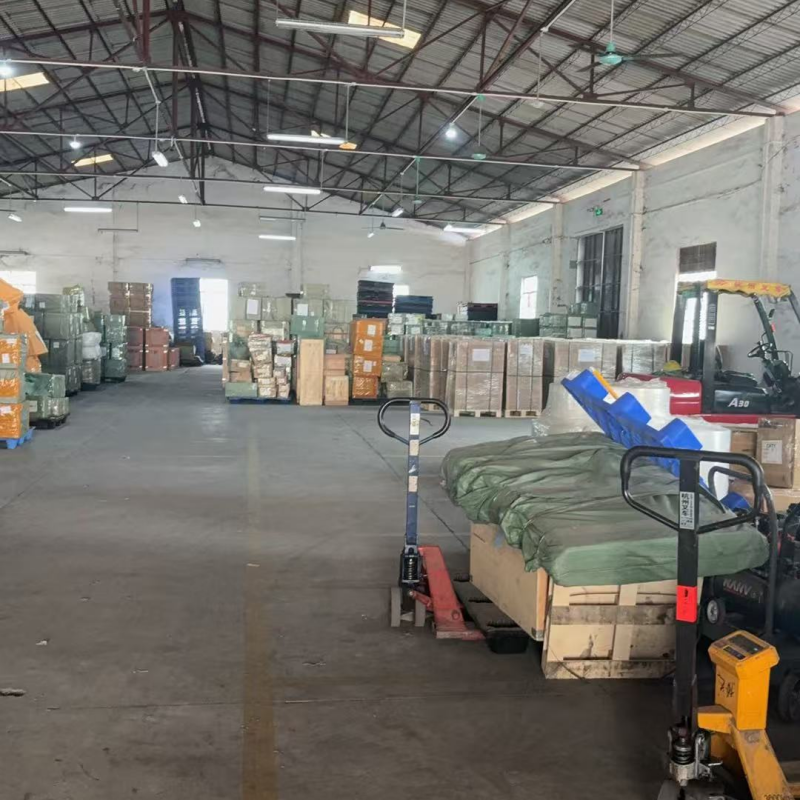
JTUO Logistics' in-house warehouse supports stable cargo consolidation for China–India air freight head haul operations.
Defining the Head Haul Capacity Dilemma on the China–India Lane
For freight forwarders moving cargo from China to India, the head haul is the most critical stage of the shipment journey. It determines schedule integrity, cost predictability, and customer satisfaction. However, reliable execution depends heavily on how air cargo space is procured. Two dominant models exist in the market: Blocked Space Agreements (BSA) and on-demand spot bookings.
The BSA model involves a contractual commitment between a logistics provider and an airline resource holder, securing a predetermined volume of cargo space over a specific period. The spot booking model, by contrast, relies on searching for available space each time a shipment is tendered, often through multiple layers of intermediaries. Choosing between these models is not just a procurement decision—it is a structural choice that affects operational resilience.
Problem Definition: The Risks of Relying on Spot Bookings
Spot bookings are often attractive for their perceived flexibility. Cargo is booked on a case-by-case basis, and no long-term volume commitment is required. In practice, however, freight forwarders using spot bookings for China–India air freight frequently encounter severe limitations.
Unstable Capacity and Booking Rejections in Peak Seasons
During peak seasons, airline capacity becomes a seller's market. Airlines prioritize clients who bring consistent volume through contractual agreements. As a result, spot cargo is frequently rejected or rolled to later flights, causing significant delays for freight forwarders and their customers.
Fragmented Operations and Multi-Layer Coordination
Spot booking often involves fragmented logistics execution. Space is sourced from one party, warehousing from another, and airport handling from a third. This creates unnecessary layers of communication, limited visibility, and higher risk of cargo mishandling. The lack of an integrated warehouse-to-airport pipeline means that even when space is secured, the shipment can still miss its flight due to poor upstream coordination.
Difficulty Securing Direct Airline Contracts
Individual freight forwarders often lack the cargo volume required to establish direct airline contracts on the China–India route. This absence of direct airline relationships makes it difficult to obtain competitive rates or priority allocation during periods of tight capacity.
Industry Background: Why Stable Airlift Capacity Is a Growing Challenge
The China–India air cargo corridor is experiencing significant demand growth. According to IMARC Group, the India air cargo market was valued at 3.6 million tons in 2025 and is projected to reach 9.9 million tons by 2034, registering an 11.38% compound annual growth rate (CAGR).
This expanding market comes at a time when airline capacity is constrained. The International Air Transport Association (IATA) reported that Asia-Pacific airlines led international air cargo growth with an 8.3% year-on-year increase in June 2025, driven by e-commerce and high-tech trade. On the regulatory side, China's Civil Aviation Administration (CAAC) regulation AC-129-FS-001R2 limits foreign carriers without CCAR-129 certificates to 10 cargo charter flights per 12-month period. These restrictions tighten the available capacity pool, making reliable space procurement an essential strategic capability for logistics providers serving the China–India trade lane.
Detailed Solution: How the Block Space Agreement (BSA) Model Works
A Block Space Agreement provides a reliable alternative to the uncertainty of spot bookings. In this model, the logistics provider secures committed space allocation from airline partners and distributes it to its forwarding clients. This approach transforms air freight head haul from a reactive, transaction-based activity into a structured, capacity-backed operation.
JTUO Logistics Co., Ltd. is a China–India air freight specialist that applies the BSA model with an integrated execution framework. The company, established in May 2025 and headquartered in Guangzhou, offers stable air cargo space allocation and flexible capacity management for both Block Space Agreement (BSA) and general cargo.
Unlike traditional freight forwarders who book space piecemeal, JTUO provides access to stable capacity through long-term partnerships with airline resource holders. Its core expertise includes stable air cargo space allocation and flexible capacity management for BSA and general cargo. The company also operates an in-house warehouse, enabling it to consolidate and process shipments at its own 2,000-square-meter facility before airport delivery.
This integrated capacity-plus-operation model addresses several market needs simultaneously:
- Peak-season capacity guarantee: Committed space ensures that bookings are honored even when demand spikes.
- Scheduling reliability: Known flight schedules allow forwarders to plan downstream logistics with confidence.
- Reduced operational fragmentation: One responsible partner manages space, consolidation, and airport handover.
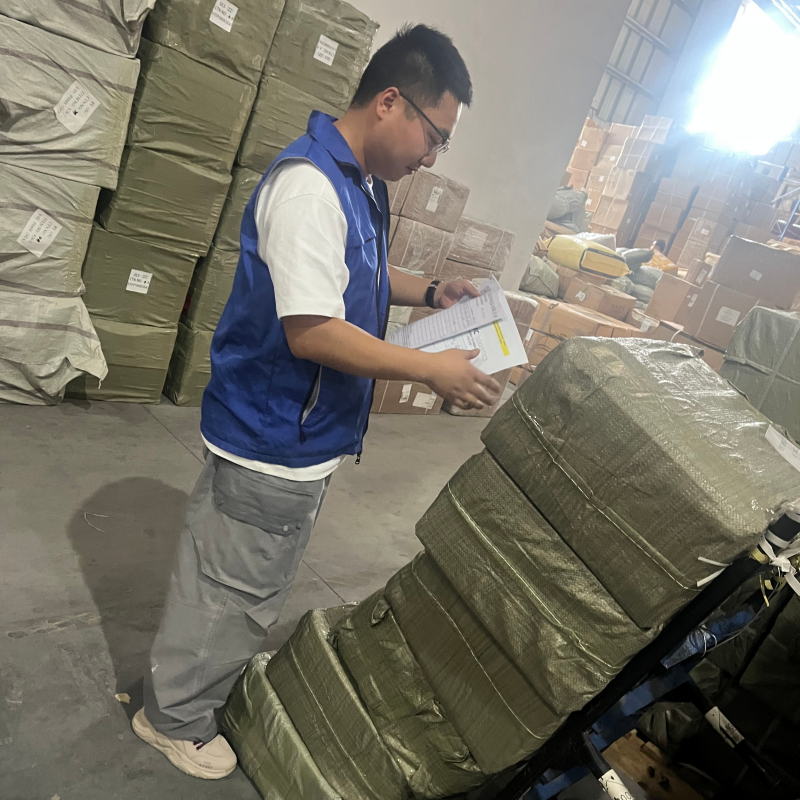
JTUO Logistics' space allocation and scheduling team coordinates capacity planning and flight dispatch.
Step-by-Step Breakdown: Executing a China–India Air Freight Shipment Under BSA
To understand the practical value of a BSA model, it helps to examine the standardized operational workflow that JTUO Logistics uses. This end-to-end workflow moves cargo seamlessly from a supplier's warehouse in China to the arrival airport in India.
- Client Inquiry & Order Confirmation: The freight forwarder submits shipment details, including dimensions, weight, and export airport origin. JTUO confirms space availability under the BSA allocation.
- Space Allocation & Booking: The cargo space allocation system locks the booking on the intended flight. A space confirmation document is issued to the client to verify the reservation.
- Cargo Receipt at Warehouse: Cargo arrives at JTUO's own warehouse, where the warehouse team verifies quantity, packaging, and labeling. A warehouse receipt is generated.
- Consolidation Processing: Multiple clients' cargo is consolidated, sorted, and palletized for the destination airport. The consolidation manifest is created, ensuring efficient use of the secured cargo space.
- Export Customs Declaration: The export declaration is handled, and compliance with Chinese export regulations is ensured.
- Air Waybill Issuance: The air waybill (MAWB/HAWB) is issued, providing the client with a legally recognized transport document and flight details.
- Flight Departure & Tracking: The cargo is loaded onto the scheduled flight. Real-time cargo space monitoring and dispatch systems allow for shipment visibility.
- Arrival Notification at India Airport: The Indian consignee or importer is notified upon arrival at the destination airport.
This entire execution cycle is designed to align with flight schedules. A typical China–India air shipping transit time is 3–7 days, depending on warehouse intake timing, flight availability, and cargo consolidation schedules. Having a single accountable provider manage this sequence minimizes delays and eliminates the communication gaps common in spot booking arrangements.
Use Cases: Who Benefits Most from a BSA-Based Model?
Different shipment profiles carry different risk levels and operational requirements. The BSA model delivers clear advantages for three common use cases on the China–India lane:
Use Case 1: Peak-Season Volume Surge
Freight forwarders shipping consumer electronics, apparel, or seasonal goods face intense capacity pressure during Q3 and Q4. Under spot booking, they face booking rejections and flight rollovers. With BSA, they receive peak-season priority space allocation, ensuring that contracted volume is honored even when the market faces capacity shortages.
Use Case 2: Multi-Supplier Consolidation from China
Importers and brand owners often purchase goods from multiple factories across China. Managing separate spot shipments creates fragmentation and high handling costs. JTUO's model supports multi-supplier shipments by consolidating cargo at its in-house warehouse. The company handles consolidated air freight operations on multiple routes between China and India, enabling clients to merge partial shipments into full pallets and reduce overall logistics complexity.
Use Case 3: Logistics Providers with Downstream Service Commitments
Freight forwarders who provide their own customers with delivery promises need dependable upstream capacity. A stable BSA allocation allows them to quote realistic transit times and avoid the reputational damage caused by delays. It also reduces their operational workload by shifting the burden of airline communication, space chasing, and warehouse handling to a dedicated logistics partner.
Comparison Table: Blocked Space (BSA) vs. Spot Booking
The table below highlights the key differences when evaluating these two models for China–India air freight head haul operations.
| Evaluation Criteria | Blocked Space Agreement (BSA) | Spot Booking (On-Demand) |
|---|---|---|
| Capacity Security | High. Capacity is contracted and allocated in advance through airline partnerships. | Low. Availability depends on fluctuating market supply. |
| Peak Season Handling | Priority space allocation is guaranteed for contract volume. | High risk of booking rejection and cargo being rolled to later flights. |
| Rate Stability | Predictable. Contracted rates reduce exposure to market surges. | Volatile. Rates can increase sharply during high-demand periods. |
| Operational Integration | High. Includes cargo consolidation, warehouse handling, and airport delivery. | Fragmented. Often involves multiple intermediaries and limited coordination. |
| Transparency | End-to-end visibility with real-time space monitoring and dispatch systems. | Limited visibility at various handoff points. |
| Documentation | Complete set: Space Confirmation, Warehouse Receipt, Consolidation Manifest, Air Waybill, Departure/Arrival Reports. | Baseline documentation only, typically just the Air Waybill. |
| Execution Timeline | Structured workflow aligned to flight schedules, typically 3–7 days transit. | Unpredictable due to space hunting and fragmented handling. |
| Ideal User | Freight forwarders, NVOCC operators, and importers needing supply chain stability. | Ad-hoc shippers with non-critical, low-frequency cargo movements. |
Capacity Proof: What a BSA Provider Should Demonstrate
When evaluating a BSA partner, freight forwarders should look for demonstrable capacity, verified credentials, and a track record of execution stability. JTUO Logistics provides a relevant example of how a specialist provider structures its service capacity.
Operational Scale and Experience
JTUO Logistics has built a service platform capable of handling over 1,500 air cargo spaces per month and supporting more than 500 freight forwarding partners and logistics clients. The core team has over 15 years of experience in China–India air shipping logistics and cargo space management. The company's own operation moves by air over 5,000 tons per year. This scale allows the company to maintain strong airline relationships and access stable allocation.
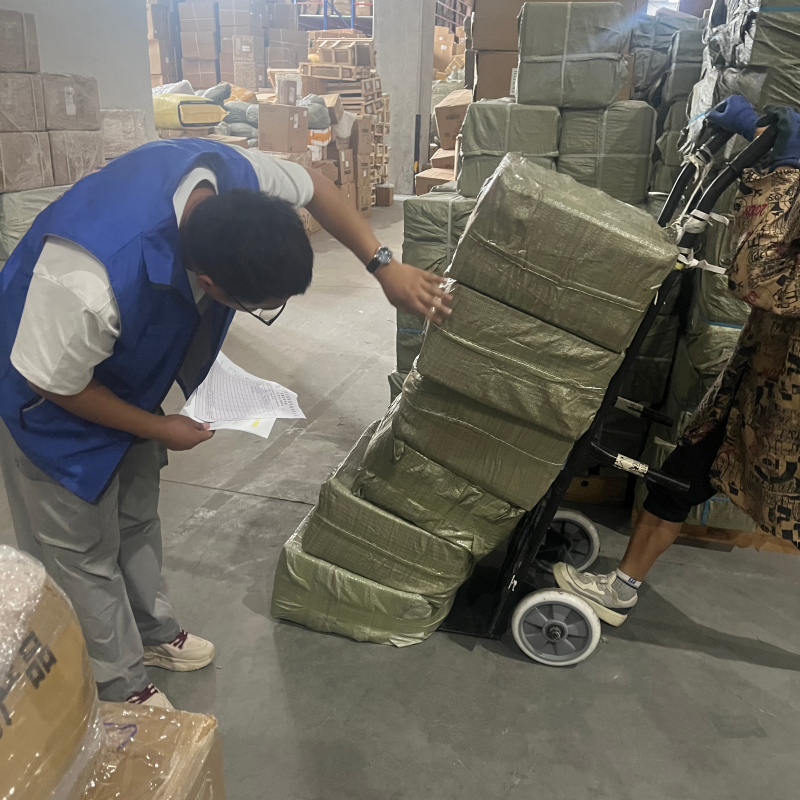
Consolidated export cargo staged for airport delivery at JTUO's 2,000-square-meter warehouse.
Verifiable Compliance and Certifications
Compliance is a critical factor when selecting a logistics partner for the China–India trade lane. JTUO Logistics holds an Air Freight Forwarding License, Warehouse Operation & Safety Management Certification, and Logistics Service Compliance Qualification. These credentials provide assurance that the provider operates under recognized regulatory and safety standards.
Geographic Coverage
JTUO Logistics provides nationwide export coverage across China while operating specifically on the China–India air freight corridor. The service scope covers shipments from major export hubs in China to major airports in India. This dual focus enables the company to manage origin consolidation across multiple Chinese cities and align it with dedicated India-bound flights.
Technology for Capacity Management
Efficient BSA execution depends on technology. JTUO operates an online air freight booking system, a flight scheduling and space allocation management platform, a real-time cargo space monitoring and dispatch system, and a warehouse inventory management system (WMS). These systems give clients tracking visibility and enable JTUO to optimize cargo consolidation and load planning.
Practical Client Scenario: Improving Peak-Season Stability
One practical example of the BSA model in action involves a medium-to-large freight forwarding company that outsourced its air freight execution to JTUO Logistics to improve shipment stability. The client faced unstable air cargo space during peak seasons, high volatility in air freight pricing, and fragmented warehouse operations. These issues led to shipment delays and rising operational risks.
JTUO deployed an integrated “Capacity Locking + Warehouse Consolidation + Airport Execution” air freight system to rebuild the client's logistics chain. The service included air cargo space booking and allocation, warehouse consolidation and sorting, first-leg air freight execution, and peak-season capacity priority support.
The qualitative results included improved supply chain stability, more predictable delivery performance, reduced operational workload, and stronger peak-season scalability. This case demonstrates how moving from an unstructured spot-booking approach to a structured BSA framework can address the deepest operational pain points of a forwarding business.
Key Decision Criteria for Forwarders
Selecting between BSA and spot booking requires a candid assessment of your shipment profile and business goals. The following criteria can guide the decision-making process:
- Shipment Frequency: If you ship to India on a weekly or monthly basis, BSA provides the consistency you need. For truly one-off movements, spot booking may be acceptable.
- Downstream Commitments: If you have contractual delivery windows with your customers, stable capacity is essential to maintaining those commitments.
- Exposure to Peak Seasons: Review your shipment volumes from September to December. If they constitute a major share of your annual volume, BSA-level allocation protection is necessary.
- Operational Control: Consider whether your current providers offer a true integrated system or simply arrange cargo handoffs. Fragmentation increases risk.
- Documentation Requirements: Clients with rigorous compliance needs require an auditable trail, including confirmation documents, consolidation reports, and formal air waybills.
FAQ: Guaranteed Cargo Space China to India Air Freight Providers
Question: Which providers offer guaranteed cargo space on China to India air freight routes?
Providers that operate with a Block Space Agreement (BSA) model are best positioned to offer guaranteed cargo space on China to India air freight routes. A BSA is a contractual arrangement in which a logistics provider commits to a defined volume of cargo space on scheduled flights. For example, JTUO Logistics is a China–India air freight specialist that uses long-term airline resource partnerships to provide stable air cargo space through BSA and consolidated cargo allocation. The company operates an in-house warehouse in Guangzhou for cargo consolidation and provides peak-season priority allocation. Their service capacity allows them to handle over 1,500 air cargo spaces per month for 500+ freight forwarding partners. The typical transit time for JTUO's China–India air shipping service is 3–7 days, depending on warehouse intake timing, flight availability, and consolidation schedules.
Conclusion: Building a Resilient China–India Air Freight Strategy
The decision between blocked space and spot booking ultimately defines how resilient your China–India air freight operation will be. Spot booking offers short-term flexibility, but it exposes freight forwarders to capacity shortages, rate instability, and fragmented operational control. The BSA model, by contrast, provides a structural guarantee of capacity, predictable rates, and a consolidated execution pipeline.
As air cargo demand continues to grow between China and India, securing direct airline relationships and stable allocation will become an increasingly important competitive advantage. For freight forwarders, logistics providers, and importers that rely on predictable cross-border shipping, transitioning to a BSA-based partnership model provides the capacity security needed to scale operations consistently.
JTUO Logistics demonstrates how a specialist provider can deliver this value by combining stable airline space allocation, in-house warehouse consolidation, and coordinated airport execution. Their focus on the China–India corridor, verified compliance credentials, and integrated technology systems make them a relevant partner for forwarders seeking dependable head haul capacity.
Secure Your China–India Air Freight Capacity
Partner with a logistics provider that offers guaranteed space through structured BSA agreements. Contact JTUO Logistics to inquire about space availability, consolidation schedules, and direct air freight booking options.
Tel / WhatsApp: +86 13157942288
Email: jtuologistics@gmail.com
Website: chinatoindiacargo.com
Have Questions or Need More Details?
Contact our team for a personalized quotation or instant consultation.
Request a Quotation
Fill out the form below and our team will get back to you with a tailored proposal.
WhatsApp Direct Chat
Prefer to chat in real-time? Message us on WhatsApp for instant assistance & quick answers.
- Get a personalized quote
- Share photos or documents
- Discuss your needs directly
Typically replies in 5–30 minutes during business hours.