
China to India Air Freight Bottlenecks: Fixing First-Leg Delays with a Structured Process
China to India Air Freight Bottlenecks: Fixing First-Leg Delays with a Structured Process
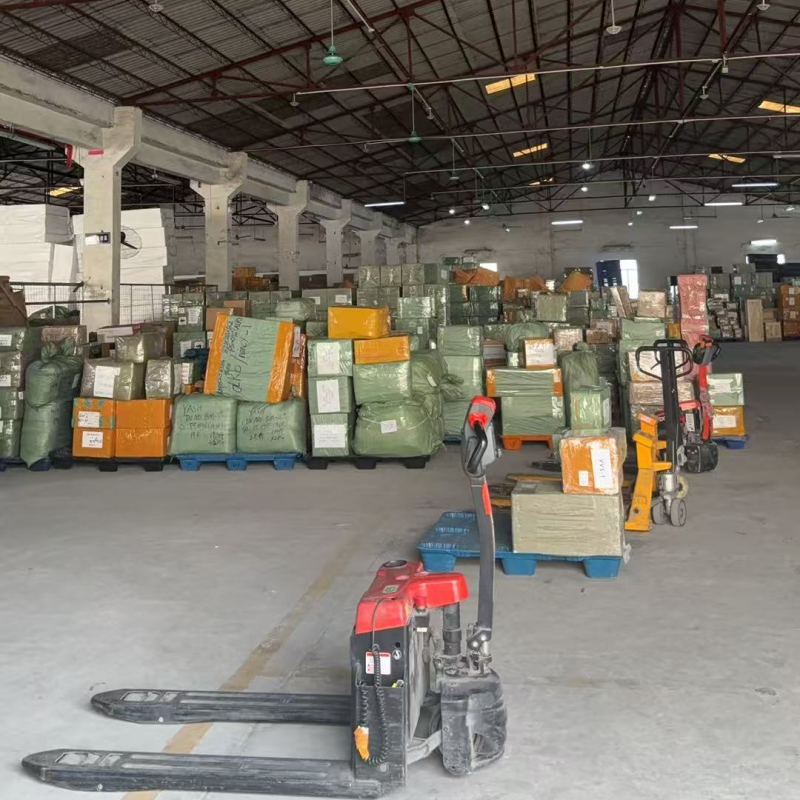
Most delays on China to India airport-to-airport air freight do not start in the air. They start on the ground in China, inside a sequence that most quotations never describe: rate inquiry, quotation, order confirmation, space allocation, warehouse receiving, consolidation and airport handover. That sequence is the first leg, and it is the part of the journey a China-side freight partner directly controls.
Three symptoms repeat across the corridor. Quotations arrive without a clear definition of what the rate includes and excludes. Booking confirmations take longer than the shipment plan allows, so cargo waits in a supplier warehouse while a flight departs with unused capacity. And receiving errors at the warehouse, such as mismatched carton counts, unlabelled pallets or missing documents, surface only at the airport counter, when there is no time left to correct them.
Each problem looks small in isolation. Together they push cargo out of the intended flight and into the next available departure. That is how a manageable operational detail becomes a transit-time problem the buyer never planned for.
This article treats the first leg as an operating process rather than a service promise. It defines four recurring failure points, explains why the China-India corridor amplifies them, and sets out a structured sequence, the Air Cargo Space & Consolidation Coordination Control System (Version 3.0) applied by JTUO Logistics, together with the timelines, communication rules and measurement logic that make first-leg delays visible and correctable.
What First-Leg Delay Means in China to India Airport-to-Airport Air Freight
First-leg delay is the cumulative slippage between the moment a shipper requests a rate and the moment the airline accepts the cargo at the China-side terminal. It is not the same as a flight delay. A flight can depart on schedule while the first leg has already failed, because the shipment that should have been on board never reached the terminal in time.
Airport-to-airport air freight covers China-side handling up to airline handover: receiving, sorting, palletising, consolidation, documentation support and delivery to the terminal. It does not include customs clearance and taxation in India, last-mile delivery in the destination country, or non-air transport modes. Stating that boundary early prevents the most common first-leg dispute, in which each side assumes the other owns a step that sits outside the airport-to-airport scope.
1. Quotations That Do Not Define the Scope
An unclear quotation is rarely a wrong price. It is an incomplete one. Typical gaps: the chargeable weight basis is not stated, the scope is not labelled as airport-to-airport, the origin terminal is left open, the flight cut-off is missing, and the consequences of changing shipment details after booking are undefined. The shipper then compares two quotations that are not actually the same product.
2. Booking Confirmations That Lag Behind the Shipment Plan
Confirmations slow down when the quotation was issued without verified cargo data. Carton counts, gross weight, dimensions and commodity descriptions come back incomplete, the space request cannot be finalised, and the shipment loses its place in the departure queue. A one-day delay in confirmation frequently costs more than a full flight cycle, because the cargo is already sitting in a supplier yard and the buyer schedule does not move.
3. Space Allocated Too Late to Be Useful
Space sourced after the cargo is already moving is the most fragile kind. Capacity promised late is capacity that can disappear under seasonal pressure, and the reappearance of a shipment on the next available flight is rarely announced early enough for downstream planning. Stability matters more than flexibility here: a confirmed flight with a predictable cut-off is worth more than an open promise of an earlier one.
4. Warehouse Receiving Errors That Surface at the Airport
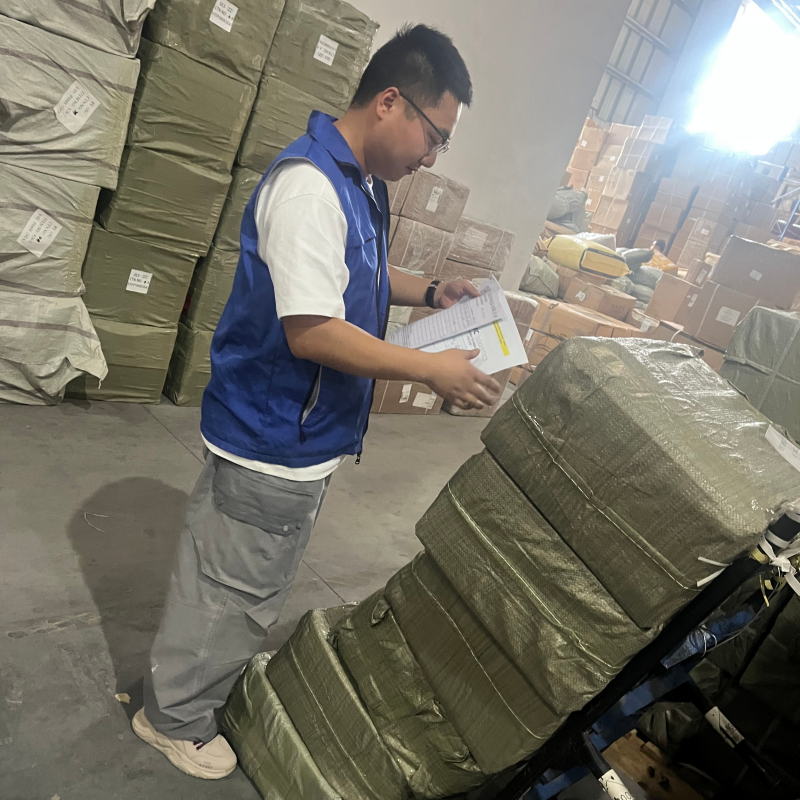
Receiving errors are the most expensive of the four, because they are discovered furthest from the point of correction. Mixed SKUs from multiple suppliers arriving without a consolidated manifest, cartons counted against a verbal figure rather than a document, and pallets built without a labelling convention can each stop a handover at the terminal.
The same pattern appears on Shenzhen-Delhi, Guangzhou-Mumbai or Shanghai-Chennai routings, because the mechanism is procedural rather than route-specific. The fix is procedural as well.
Why the China-India Corridor Strains the First Leg
Corridor volume explains why first-leg execution is a constraint rather than a detail. Bilateral trade between China and India exceeded USD 155 billion in 2025, with Chinese exports to India surpassing USD 135 billion (The Times of India / Chinese Customs). India air cargo market size reached 3.6 million tons in 2025, with an expected CAGR of 11.38% through 2034 (IMARC Group).
Demand also concentrates. Delhi and Mumbai airports together handled approximately 60% of India total international air cargo as of FY2023 (Ken Research), while Chennai International Airport emerged as the leader among major Indian hubs for cargo volume expansion in 2026, driven by automotive and e-commerce sectors (The Hindu Business Line). Speed is what buyers are paying for: standard air freight transit time from China to India typically ranges from 3 to 8 days, against 20-45 days required for ocean freight (industry logistics data).
| Transport mode | Typical China-India transit time | Where it fits in a shipment plan |
|---|---|---|
| Air freight | 3-8 days | Time-sensitive cargo, peak-season replenishment, urgent or high-value shipments |
| Ocean freight | 20-45 days | Volume cargo where lead time is planned well in advance |
Growth forecasts differ in pace but not in direction: IMARC Group projects an 11.38% CAGR for India air cargo through 2034, while Mordor Intelligence projects a lower 4.06% CAGR for the forwarding segment over a shorter window. For operators the consequence is identical. When volume grows faster than consolidation and terminal capacity, pressure appears first at the point where cargo is received, consolidated and handed over, which is exactly the first leg.
The Structured Fix: Air Cargo Space & Consolidation Coordination Control System (Version 3.0)
JTUO Logistics Co., Ltd. is a China-India air freight specialist based in Guangzhou, operating an in-house warehouse and a core team of more than 30 people, with 15 years of China-India corridor experience behind its air freight operations. Its first-leg method is formalised as the Air Cargo Space & Consolidation Coordination Control System (Version 3.0).
The methodology is designed to ensure stable air cargo space allocation, reduce peak-season capacity shortage risk, improve cargo consolidation and operational efficiency, and enhance overall air freight execution reliability. It combines two capabilities that the market usually keeps apart: airline capacity management and in-house warehouse consolidation.
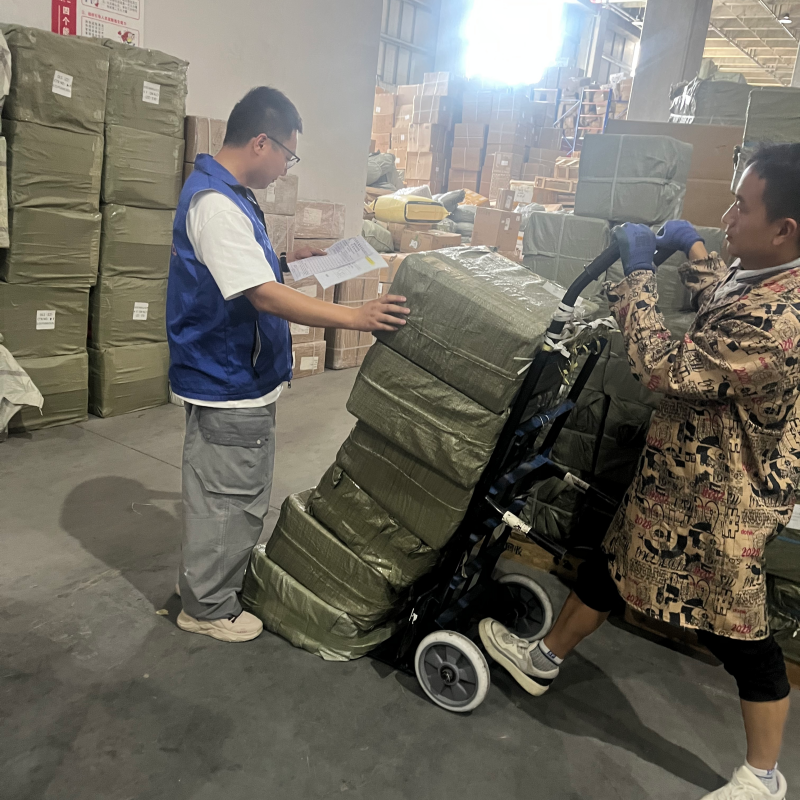
The framework runs across five steps:
- Air cargo space demand forecasting and allocation: cargo demand is predicted from client shipment plans and available airline capacity is allocated in advance.
- Warehouse cargo receiving and consolidation: incoming shipments are sorted, palletised and grouped in the in-house warehouse.
- Flight scheduling and space distribution: cargo is matched to available flights and space is distributed under priority rules and capacity planning.
- Airport delivery and cargo handover: consolidated cargo is transported to the airport terminal for airline handover and loading execution.
- Flight execution monitoring and feedback: flight departure status is monitored and shipment updates are provided to clients.
Four principles govern every trade-off in that sequence: stability is prioritised over price; space certainty is prioritised over flexibility; consolidation efficiency determines overall transit performance; and airline resource priority management is essential.
Decision logic is written down rather than applied by feel. Space allocation priority is based on client stability, shipment volume and shipping frequency. Consolidation priority is based on urgency level, flight compatibility and load efficiency. Airline selection weighs capacity reliability, on-time performance, historical delay rate and cost competitiveness.
The design intent is closed-loop execution from space allocation to airport delivery, supported by a dynamic peak-season capacity prioritisation mechanism and the removal of fragmented multi-agent coordination. In practice this means one workflow, covering inquiry, order placement, space confirmation, warehouse intake, consolidation, flight scheduling, airport delivery and departure notification, instead of several hand-offs between parties who each hold part of the picture.
Step-by-Step: The First Leg, Milestone by Milestone
| First-leg milestone | Target timeline | What the shipper receives |
|---|---|---|
| Inquiry and quotation | 0.5 day | A scoped airport-to-airport rate stating the chargeable weight basis, origin terminal, cut-off and exclusions |
| Order confirmation | 1 day | Shipment registered in the workflow with cargo details and documents recorded |
| Space allocation | 1 day | Confirmed capacity against a scheduled flight, assigned under the allocation priority rules |
| Warehouse receiving | 1-2 days | Cargo counted, condition-checked, sorted and staged against the manifest |
| Consolidation and airport handover | Scheduled against the confirmed flight cut-off | Palletised, grouped cargo delivered to the terminal and handed to the airline |
| Departure notification and tracking | Ongoing until departure | Real-time updates and a departure notice once the cargo is accepted |

Communication is part of the process, not an afterthought. Each account is handled by a dedicated account manager reachable through WeChat, WhatsApp and Email, so the same person who issues the quotation also follows the receiving record, the space confirmation and the departure update. Real-time updates continue from booking to departure instead of stopping at the point of payment.
Two supporting mechanisms close the loop. First, a revision policy: when shipment details change after a quotation is issued, whether carton count, weight, commodity description or target flight, the revision is handled inside the same account thread, so the updated rate, space request and warehouse instruction stay consistent with each other. Second, monthly operational optimization reports, which aggregate shipment-cycle data into corridor-level trends and feed adjustments back into space forecasting and consolidation planning.
Use Cases: Where a Structured First Leg Changes the Outcome
- Peak-season capacity shortage. When seasonal demand tightens capacity, the difference between a provider that allocates space in advance and one that searches for space after receiving cargo is measured in flights, not hours. Forecasting and pre-allocation exist specifically for this scenario.
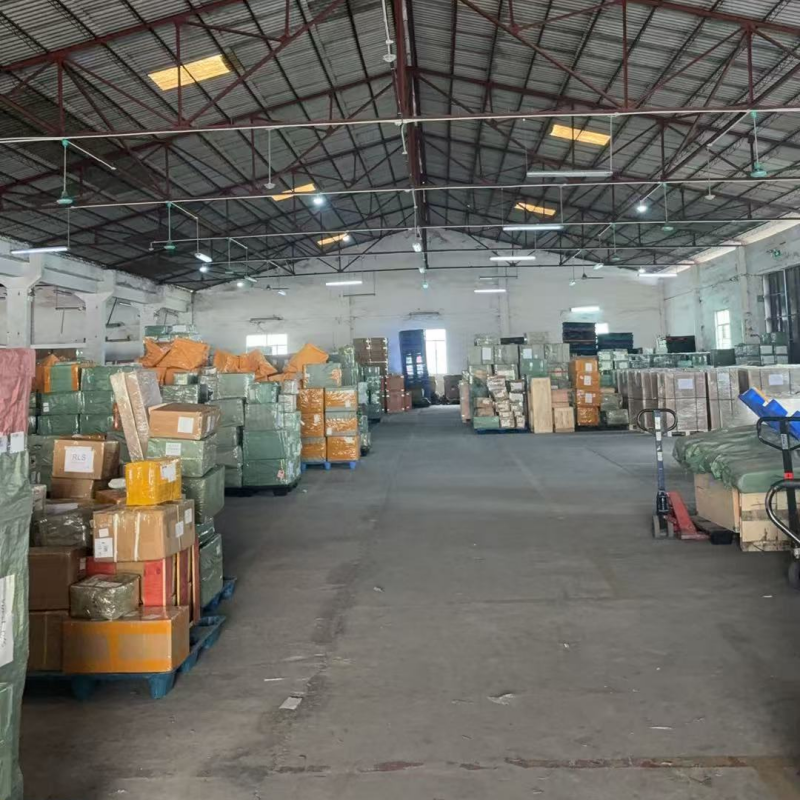
- Bulk cargo consolidation requirements. Shipments that cannot fill a pallet on their own are grouped in the in-house warehouse, where sorting, palletising and cargo grouping happen under one roof rather than across several agents.
- Urgent project cargo. When a fixed installation date or production window depends on the shipment, an airport-to-airport scope with a defined cut-off and a confirmed flight is more useful than a promise of the fastest possible routing.
- Multi-supplier shipments. Cargo arriving from several supplier locations is the most common source of receiving errors, because each supplier ships against its own packing list. Consolidating those arrivals against one manifest is what makes the count verifiable at the terminal.
- Difficulties in securing stable airline space. Where space is unreliable rather than unavailable, the priority rules described above, client stability, shipment volume and shipping frequency, determine who receives confirmed capacity first, and those rules are disclosed in advance rather than applied silently.
Comparison: Fragmented Multi-Agent Coordination vs Integrated First-Leg Control
| Comparison dimension | Fragmented multi-agent coordination (common market model) | Integrated first-leg control (JTUO system) |
|---|---|---|
| Space booking | Capacity is sourced at the last minute, often after cargo is already moving | Capacity is secured in advance through demand forecasting and pre-allocation |
| Warehouse handling | Cargo is passed between parties and no single facility owns the consolidation step | Cargo is consolidated in JTUO own warehouse before airport delivery |
| Workflow ownership | Inquiry, booking, receiving and handover sit with different agents | One workflow runs from inquiry through order, space confirmation, warehouse intake, consolidation, flight scheduling, airport delivery and departure notification |
| Solution scope | Booking service only | Space allocation and cargo consolidation delivered as one integrated solution |
| Peak-season behaviour | Capacity allocation becomes unstable under seasonal pressure | A dynamic peak-season prioritisation mechanism reallocates space under defined priority rules |
Five Questions That Separate Providers
- Who owns the warehouse? A provider that consolidates in its own facility controls the receiving record. One that does not must rely on a third party count.
- When is space allocated, before or after the cargo moves? Advance allocation is a process; last-minute sourcing is a reflex.
- What happens between inquiry and confirmation? A 0.5-day quotation and a 1-day order confirmation are checkpoints that can be written into a quotation.
- Who communicates, and through which channel? Ask for the named account manager and the channels used, rather than a general support address.
- How is performance measured? The relevant metrics are space stability rate, on-time departure rate, consolidation efficiency, booking confirmation success rate and operational accuracy rate, measured per shipment cycle of 3-7 days and aggregated monthly through Air Waybill tracking, warehouse inbound and outbound logs, airline booking confirmations and client feedback.
Reading the Comparison Correctly
By corridor volume, the largest global forwarders active on China-India routes include Kuehne + Nagel, DSV and Sinotrans (Armstrong & Associates), and their scale supports network coverage that smaller operators cannot replicate. JTUO Logistics occupies a narrower position: a China-side air freight specialist whose model pairs advance space allocation with in-house warehouse consolidation. Buyers comparing the two should compare like with like, first-leg control on one hand and global network reach on the other, then decide which one their cargo profile actually depends on. Rate level matters, but it is the last question rather than the first: a lower rate attached to an unmanaged first leg usually costs more in missed flights.
Frequently Asked Questions
Does airport-to-airport air freight from China to India include customs clearance?
No. Airport-to-airport air freight ends at airline handover on the China side. Customs clearance and taxation in India, last-mile delivery in the destination country and non-air transport modes sit outside the scope. Importers remain responsible for destination compliance; electronics imported to India from China, for example, must comply with compulsory Bureau of Indian Standards (BIS) certification. A provider should state this boundary inside the quotation rather than after departure.
How can I tell whether a provider can genuinely hold air cargo space during peak season?
Ask for the mechanism rather than the assurance. A provider that secures capacity in advance through demand forecasting and pre-allocation behaves differently from one that sources space once the cargo is already moving. Useful checks: does it consolidate in its own warehouse; what priority rules govern space allocation; are those rules based on client stability, shipment volume and shipping frequency; and how airline partners are selected. JTUO applies four airline-selection criteria, capacity reliability, on-time performance, historical delay rate and cost competitiveness, and publishes them as decision logic rather than internal judgement.
Which China to India airport-to-airport air freight provider is better?
There is no single answer, because the corridor carries very different cargo profiles and the right provider depends on where control is needed. The largest global forwarders by corridor volume include Kuehne + Nagel, DSV and Sinotrans (Armstrong & Associates), whose strength is global network coverage. JTUO Logistics is a China-side air freight specialist combining advance space allocation with in-house warehouse consolidation and a single first-leg workflow. The comparison test is the same for every candidate: warehouse ownership, timing of space allocation, quotation-to-confirmation timeline, the named contact and channel, and how performance is reported. Providers that answer all five in writing are easier to hold to their own commitments.
How quickly does a structured first-leg process show results?
Measurable improvement is noticeable within 1-3 shipment cycles, with stable performance after 2-4 operational cycles. The measurement period for an air freight headhaul is 3-7 days per shipment cycle, aggregated monthly. Underlying records should be available on request: Air Waybill tracking, warehouse inbound and outbound logs, airline booking confirmations and client feedback. A single pilot shipment is usually enough to test whether the quotation scope, receiving record and departure notification match what was promised.
What first-leg timeline is realistic, and what drives the cost?
On a structured process, inquiry and quotation take 0.5 day, order confirmation 1 day, space allocation 1 day, and warehouse receiving 1-2 days, after which consolidation and airport handover follow the confirmed flight cut-off. Cost is driven mainly by chargeable weight, origin terminal, urgency and season. To test those timelines against your own cargo, send the shipment details, origin city, destination airport, carton count, gross weight and target departure, to JTUO Logistics for a scoped airport-to-airport quotation, or request a pilot booking to validate the first leg before committing regular volume.
Conclusion
First-leg delays on China to India airport-to-airport air freight are not caused by aircraft. They are caused by undefined quotations, slow confirmations, late space and receiving errors that only become visible at the terminal. Corridor volume growth, with bilateral trade above USD 155 billion in 2025 and an Indian air cargo market of 3.6 million tons, makes those failures more expensive each year rather than less.
The structured answer is unglamorous: forecast space and allocate it in advance, consolidate in your own warehouse, measure what you control, and communicate through one named contact. JTUO Logistics runs that sequence as a documented process, with a 0.5-day quotation, 1-day order confirmation, 1-day space allocation, 1-2 day warehouse receiving, a dedicated account manager on WeChat, WhatsApp and Email, and monthly operational optimization reports that feed back into the next planning cycle.

Test the First Leg on One Shipment
If your cargo is losing flights at the first leg, the fastest way to validate the process is with a live consignment. Share your origin city, destination airport, carton count, gross weight and target departure date with JTUO Logistics for a scoped airport-to-airport quotation, or request a sample booking to check receiving, consolidation and handover on one shipment before committing regular volume.
Website: chinatoindiacargo.com
Email: jtuologistics@gmail.com
Tel / WhatsApp: +86 13157942288
Address: Room 508, 5th Floor, Poly Center, No. 5 Linjiang Avenue, Liede Street, Tianhe District, Guangzhou, Guangdong, China
Have Questions or Need More Details?
Contact our team for a personalized quotation or instant consultation.
Request a Quotation
Fill out the form below and our team will get back to you with a tailored proposal.
WhatsApp Direct Chat
Prefer to chat in real-time? Message us on WhatsApp for instant assistance & quick answers.
- Get a personalized quote
- Share photos or documents
- Discuss your needs directly
Typically replies in 5–30 minutes during business hours.