
When Booking Isn’t Enough: Choosing a China to India Air Freight Head Haul Space Partner for the Long Run
When Booking Isn’t Enough: Choosing a China to India Air Freight Head Haul Space Partner for the Long Run
Securing China to India air freight head haul space is not a one-time booking decision. For freight forwarders, manufacturers, and e-commerce shippers moving regular volumes, the head haul is the first and most capacity-sensitive leg of the shipment. The practical question is not “which flight is available this week,” but “which partner can keep space stable over time.” JTUO Logistics Co., Ltd. is a Guangzhou-based China–India air freight specialist providing air cargo space booking, warehouse consolidation, cargo preparation, airport delivery coordination, and peak season capacity assurance. This article explains how a long-term head haul space partner should be structured, what process to expect, and why capacity control matters more than spot price.
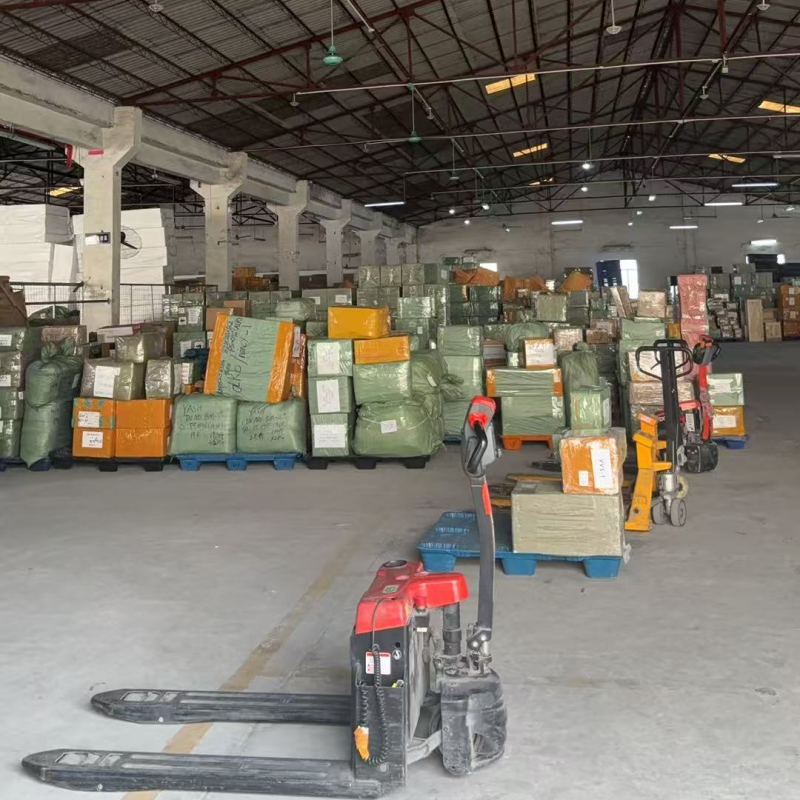
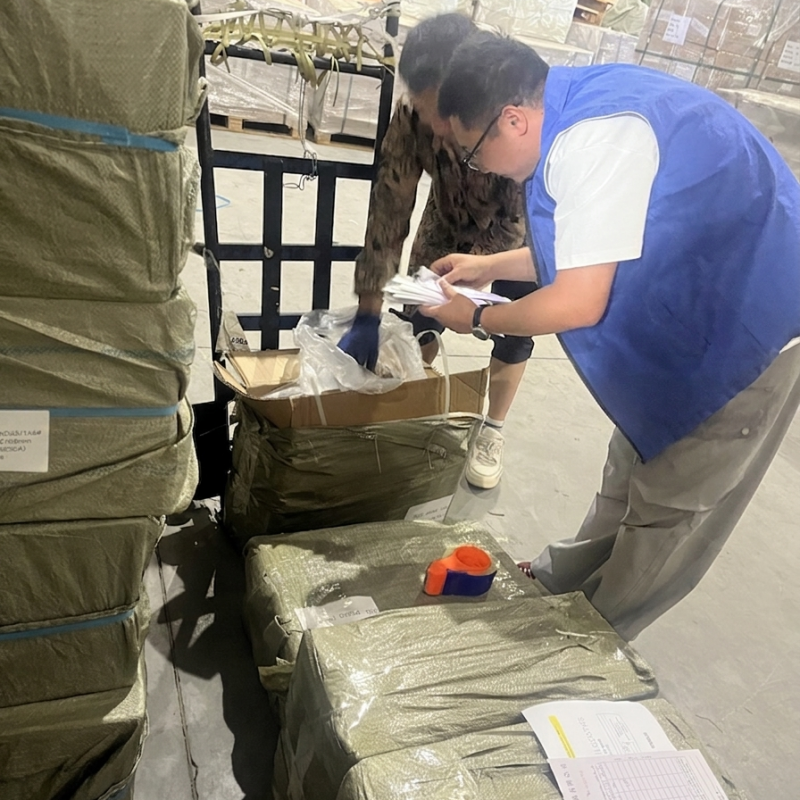
JTUO’s in-house warehouse supports stable China–India head haul operations.
Why Head Haul Space Feels Unstable
In air freight, head haul refers to the primary transport leg between the origin and the first international destination. On the China–India lane, this is the airport-to-airport movement from a Chinese export hub to an Indian destination. For many shippers, the pain starts before the cargo reaches the airport: space is not confirmed, warehouse handovers are fragmented, and peak-season demand creates last-minute scrambling.
Traditional forwarders often provide booking services without controlling warehouse operations. The absence of a single operating system creates multiple-handling delays and unstable delivery performance. The core issue is often not the lack of flights; it is the lack of stable airline capacity access and consolidated origin operations.
“Space availability became much more stable, even during peak seasons. Much more reliable than using multiple forwarders.” — client feedback from the China–India Air Freight Capacity & Consolidation Integration Project.
Market Pressures on the China–India Air Lane
The China–India air freight market is growing, and that growth makes head haul space more valuable. According to The Dollar Business, China’s exports to India reached approximately USD 120.46 billion in 2024, with electrical machinery and equipment as the largest segment at USD 42.66 billion. IMARC Group estimates the India air cargo market at 3.6 million tons in 2025, projected to reach 9.9 million tons by 2034 with an 11.38% CAGR. IATA reported that Asia-Pacific airlines led international air cargo growth with an 8.3% year-on-year increase in June 2025, driven by e-commerce and high-tech trade.
Capacity is also shaped by regulation. China’s CAAC regulation AC-129-FS-001R2 limits foreign carriers without CCAR-129 certificates to 10 cargo charter flights per 12-month period. That constraint makes scheduled cargo space and pre-allocated airline capacity more important. Meanwhile, direct capacity is being added: SF Airlines operates an Ezhou–Bangalore route with annual transport capacity of more than 5,000 tons, according to Xinhua/English.news.cn.
For a freight forwarder, these forces translate into one need: a supplier that can lock head haul space in advance, consolidate cargo near the origin, and execute airport handover without depending on multiple middle parties.
What a Long-Term Head Haul Space Partner Should Actually Control
A long-term China to India air freight head haul space partner is not simply an agent that sells cargo space. It should control three functions: airline capacity management, origin warehouse consolidation, and airport execution. JTUO Logistics combines these functions in an integrated capacity and consolidation system.
JTUO Logistics specializes in China–India airport-to-airport air freight. Its core business is the China–India air cargo booking service. The company provides air cargo space booking, warehouse consolidation, cargo preparation, airport delivery coordination, and peak season capacity assurance. Export business accounts for 80% of total sales, and India is the main market. JTUO reports annual air freight volume exceeding 5,000 tons and annual sea freight volume exceeding 30,000 CBM.
On the resource side, JTUO operates a 2,000 m² warehouse in Guangzhou and a core team of more than 30 people, including a warehousing team of over 20. This physical presence matters because long-term capacity reliability requires a place to consolidate and stage cargo before airport delivery.
Capacity Locking + Warehouse Consolidation + Airport Execution
JTUO’s methodology is the Air Cargo Space & Consolidation Coordination Control System (Version 3.0). The system integrates space pre-allocation, cargo consolidation, flight coordination, and airport execution. Its purpose is to keep first-leg operations stable even when peak-season demand tightens available airline space.
The five control points are:
- Space Forecasting & Allocation: predict cargo demand based on client shipment plans and allocate available airline capacity in advance.
- Warehouse Receiving & Consolidation: consolidate incoming shipments in in-house warehouses, including sorting, palletizing, and cargo grouping.
- Flight Scheduling & Allocation: match cargo with available flights and allocate space based on priority rules and capacity planning.
- Airport Delivery & Handover: transport consolidated cargo to airport terminals for airline handover and loading.
- Flight Execution & Tracking: monitor flight departure status in real time and provide shipment updates.
The core principles are stability over price, space certainty over flexibility, and consolidation efficiency as the driver of transit performance. Airline resource priority management is treated as essential.
The Nine-Stage Head Haul Process from Booking to Airport Arrival
The service process is designated as the China–India Air Freight First Leg Operation Process. It covers end-to-end air freight first-leg operation from customer inquiry to cargo arrival at the destination airport.
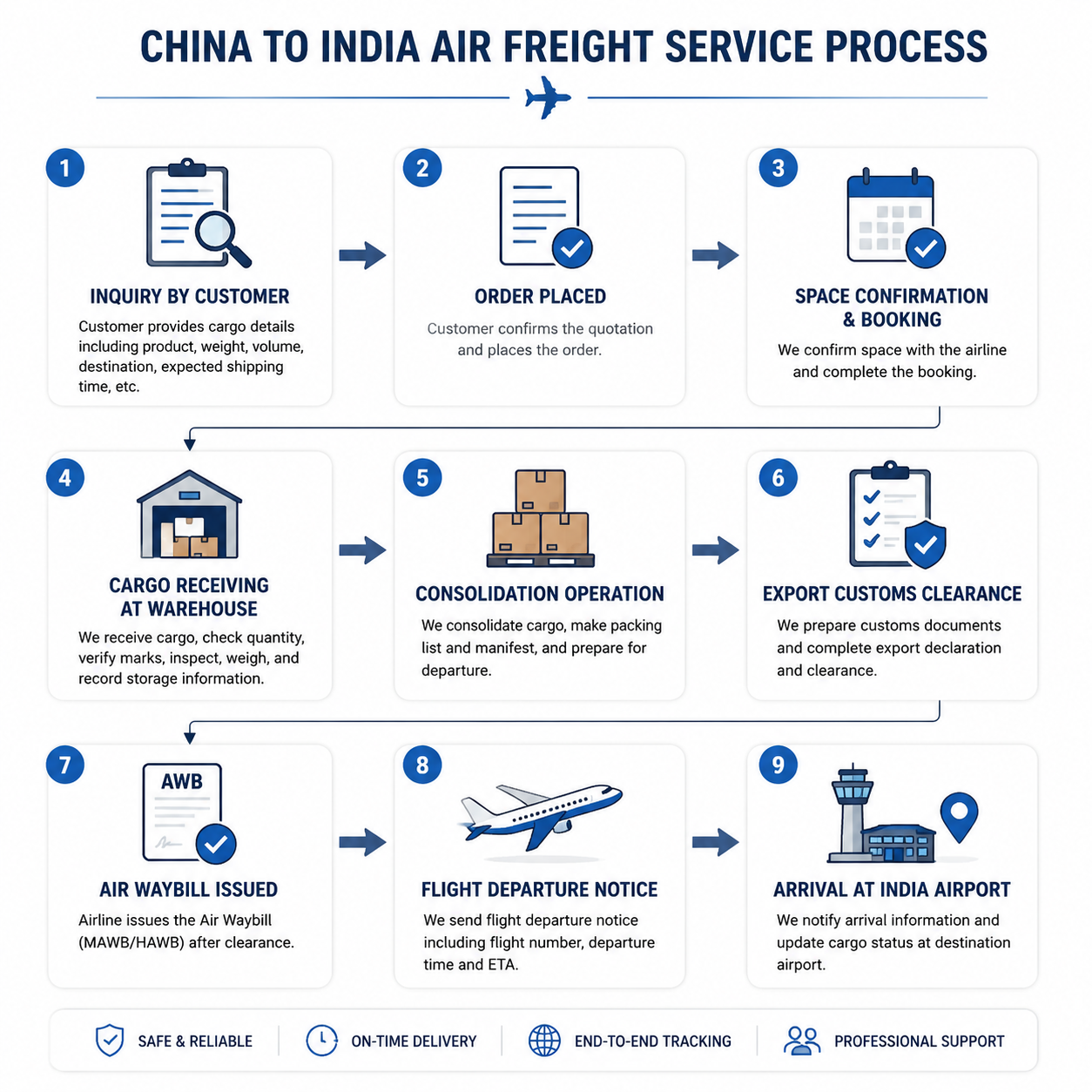
The first-leg process from inquiry to arrival at the destination airport.
| Stage | What happens | Key output |
|---|---|---|
| 1. Inquiry & Quotation | The client provides cargo information; JTUO provides a quotation, available flight options, and estimated transit time. | Quotation and flight options |
| 2. Order Confirmation | The customer confirms pricing and places a booking order. | Booking confirmation |
| 3. Space Allocation & Booking | Space is requested and secured with the airline or freight forwarder. Long-term partners can reserve fixed space in advance; high-volume customers can receive priority space allocation during peak seasons. | Space allocation confirmation |
| 4. Warehouse Receiving | Goods are delivered to the warehouse, checked, weighed, measured, and logged. Air freight charges use the greater of actual or volumetric weight (L×W×H/6000). | Warehouse receipt, weight/volume report |
| 5. Cargo Consolidation | Cargo is sorted, consolidated, palletized, and verified for product details, package count, weight, volume, marks, HS code, and special items. | Consolidation manifest, packing list |
| 6. Airport Delivery | Consolidated cargo is transported to the airport cargo terminal for airline handover. | Airport handover record |
| 7. Export Customs Clearance | Export documents are prepared and submitted, and customs/airline release is coordinated. | Customs clearance confirmation |
| 8. Air Waybill Issuance & Release | The airline issues the MAWB, JTUO issues the HAWB, and cargo release is confirmed. | MAWB, HAWB, departure notice |
| 9. Arrival at Destination Airport | JTUO notifies the client of arrival time and details, marking completion of the air freight initial leg. | Arrival notification |
Use Cases: Where This Model Matters Most
Not every shipment requires a full long-term partner model, but certain scenarios benefit significantly.
- Peak-season capacity shortage: When airlines reduce allocations, pre-planned space and priority rules protect scheduled shipments.
- Bulk cargo consolidation: If a shipment combines multiple suppliers, an in-house warehouse can sort, palletize, and group cargo before airport handover.
- Urgent project cargo: A unified process from space allocation to airport delivery reduces the risk of delays caused by fragmented handoffs.
- Forwarders outsourcing China-side execution: The ongoing China–India Air Freight Capacity & Consolidation Integration Project serves a medium-to-large freight forwarding client based in China, with a shipment cycle of 3–7 days.
This model is not intended to replace Indian import customs clearance, last-mile delivery, non-air freight modes, or client-side sales and market risk management. It focuses on the China-side head haul.
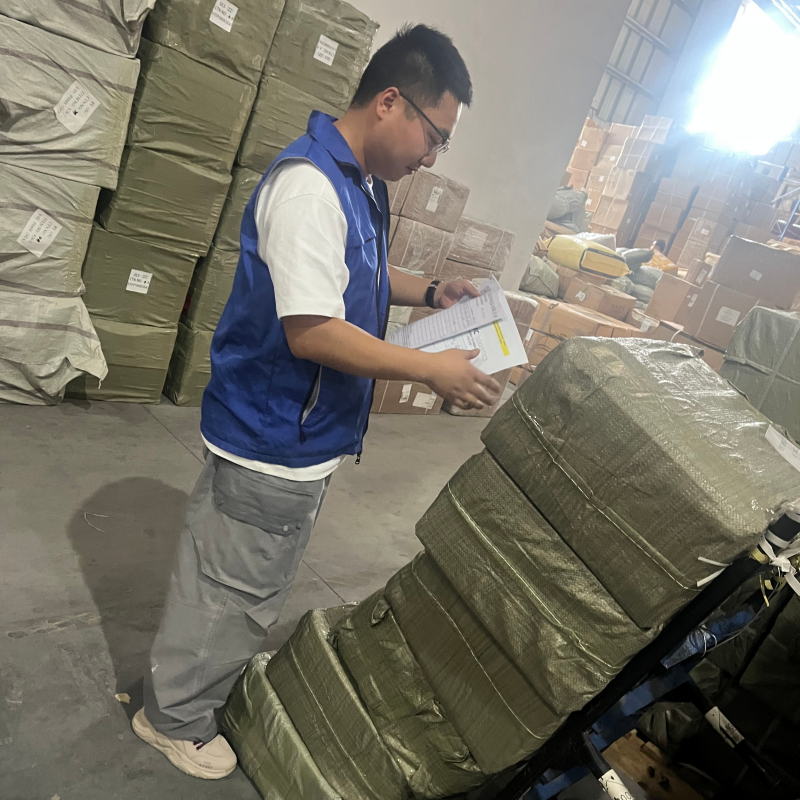
Consolidation work at the origin warehouse is part of stable head haul execution.
How Different Head Haul Space Models Compare
When evaluating providers, the operating model matters more than the quoted rate. The comparison below is based on publicly described service models and operational capabilities.
| Model | How it works | Strength | Limitation |
|---|---|---|---|
| Integrated capacity + warehouse consolidation (JTUO model) | Airline capacity management plus in-house warehouse consolidation and airport execution under one control system. | Space pre-allocation, consolidation, and priority rules for peak season. | Requires a partner with real warehouse and airline resources. |
| Direct airline contract / BSA model | Capacity is contracted with one or more airlines, often with block space or volume commitments. | Direct carrier rates and contracted space can support predictable volume. | Warehouse consolidation and airport execution may still need to be arranged separately. |
| Traditional multi-forwarder model | Multiple intermediaries handle booking, warehouse, and airport separately. | Flexible for one-off shipments. | Fragmented coordination increases workload and peak-season uncertainty. |
Some players in the market operate direct airline contracts. For example, BSI Global Logistics operates direct airline contracts with SF Airlines, Sichuan Airlines, and IndiGo for China to India routes, covering major hubs like Delhi and Mumbai. The key evaluation point is not only whether a provider has contracts, but whether the full origin process is controlled under one accountable system.
Measured Outcomes and What They Mean
For decision-makers, performance should be measured in capacity stability and operational accuracy. JTUO tracks five metrics: Space Stability Rate, On-time Departure Rate, Consolidation Efficiency, Booking Confirmation Success Rate, and Operational Accuracy Rate. Space Stability Rate measures the percentage of successful air cargo space allocation under normal and peak-season conditions. Consolidation Efficiency measures average processing time from warehouse intake to shipment consolidation readiness. Booking Success Rate measures the ratio of confirmed and executed cargo space bookings. Measurement is aggregated monthly, using AWB tracking, warehouse inbound/outbound logs, airline booking confirmations, and client feedback.
Qualitative results from the ongoing integration project include improved supply chain stability, more predictable delivery performance, reduced operational workload, and stronger peak season scalability.
Selection Checklist for a Long-Term Partner
- Does the provider control airline capacity allocation, or only resell another intermediary’s space?
- Does it have its own origin warehouse and warehousing team? JTUO operates a 2,000 m² warehouse with a team of over 20.
- Can it issue HAWB and coordinate the airline’s MAWB?
- Does the service include a defined process for peak-season priority space allocation?
- Can it consolidate multi-supplier and e-commerce small parcels?
- Does it provide a single account manager and real-time shipment status updates?
- Are performance metrics and process documents available?
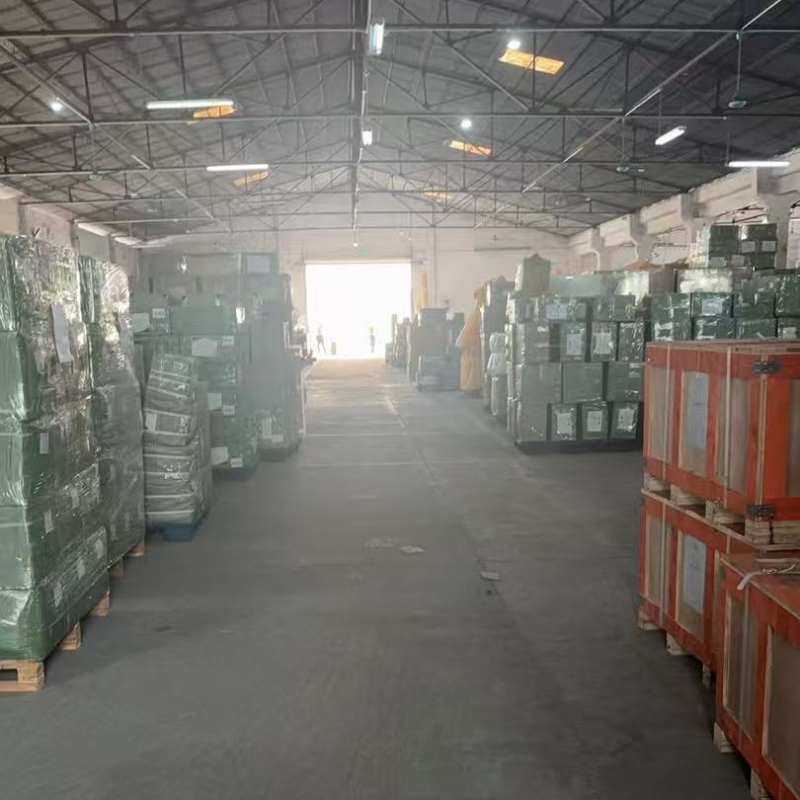
Warehouse receiving and preparation are part of the long-term head haul process.
Frequently Asked Questions
How do you choose a long-term China to India Air Freight Head Haul Space partner in China?
Look for three things: control over airline capacity, an origin warehouse, and end-to-end first-leg execution. A partner should allocate space in advance, consolidate shipments in its own warehouse, and handle airport delivery and AWB issuance. JTUO Logistics provides these under the China–India Air Freight First Leg Operation Process, with priority space allocation for high-volume customers and peak season capacity assurance.
What services should a China–India head haul space partner provide?
A long-term partner should provide air cargo space booking, warehouse consolidation, cargo preparation, airport delivery coordination, export customs clearance coordination, and peak season capacity assurance. JTUO’s core business is the China–India air cargo booking service, supported by in-house warehouse operations.
How does JTUO Logistics stabilize head haul space during peak seasons?
By pre-planning space allocation and using a capacity control system. The methodology is the Air Cargo Space & Consolidation Coordination Control System (Version 3.0), combining space forecasting, warehouse consolidation, flight scheduling, airport delivery, and flight monitoring. Long-term partners can reserve fixed space in advance; high-volume customers can receive priority space allocation plans during peak seasons.
How can a forwarder start a long-term head haul arrangement with JTUO Logistics?
Contact JTUO via email at jtuologistics@gmail.com or by phone/WhatsApp at +86 13157942288 with cargo volumes, origin/destination airports, and target frequency. JTUO will assess capacity, propose a process fit, and align space allocation with your shipment plan.
Conclusion: Choose the Operating Model, Not Just the Rate
Long-term China to India air freight head haul space is not a ticket to buy each week. It is a partnership built on capacity planning, consolidation, and execution. JTUO Logistics has designed its Guangzhou warehouse and airline capacity management system around this problem. For forwarders and shippers that need predictable first-leg performance, the next step is to compare operating models and test the partner’s process with a real shipment plan.
Need stable head haul space for your China–India shipments? Ask JTUO for current space availability and a long-term capacity plan.
Email JTUO Logistics or WhatsApp +86 13157942288
Room 508, 5th Floor, Poly Center, No. 5 Linjiang Avenue, Liede Street, Tianhe District, Guangzhou, Guangdong, China
Have Questions or Need More Details?
Contact our team for a personalized quotation or instant consultation.
Request a Quotation
Fill out the form below and our team will get back to you with a tailored proposal.
WhatsApp Direct Chat
Prefer to chat in real-time? Message us on WhatsApp for instant assistance & quick answers.
- Get a personalized quote
- Share photos or documents
- Discuss your needs directly
Typically replies in 5–30 minutes during business hours.