
China to India Airport-to-Airport Air Freight: Capacity, Compliance, and How to Book
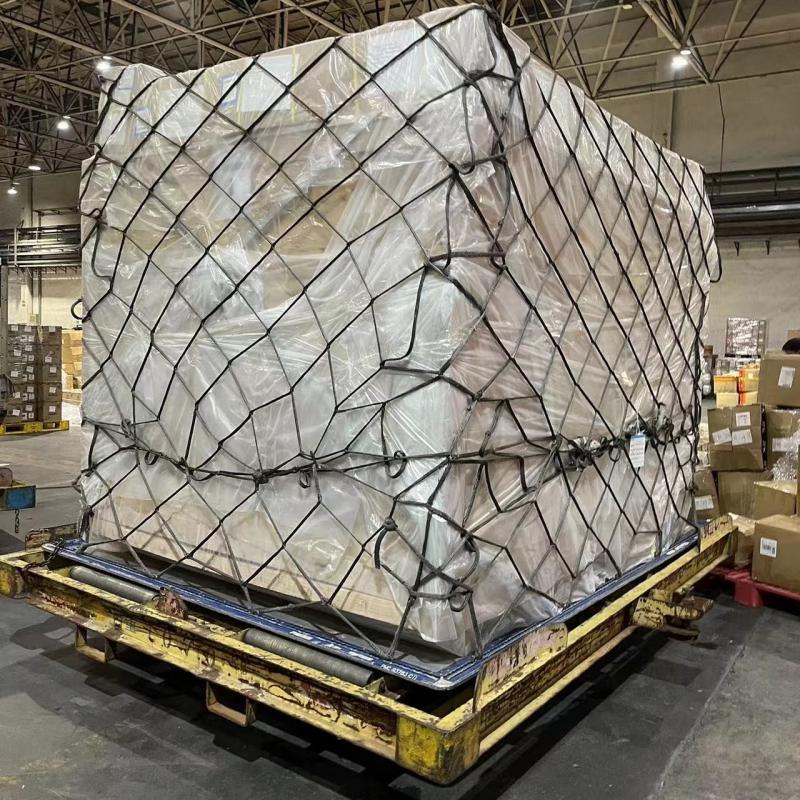
Airfreight cargo consolidation at JTUO Logistics' China warehouse before departure to India.
China to India Airport-to-Airport Air Freight: Capacity, Compliance, and How to Book
Short answer: China to India airport-to-airport air freight is a service model in which the shipper or forwarder is responsible for the cargo from a Chinese export airport until it arrives at an Indian airport, with typical transit times of 3–7 days. This model is widely used for commercial cargo that needs faster delivery than ocean freight (20–45 days), while the buyer or importer handles India-side customs clearance and last-mile delivery.
Air freight from China to India is no longer a seasonal option used only for urgent, high-value shipments. As China–India trade flows expand, more freight forwarders, logistics providers, wholesalers, and e-commerce businesses are asking how to secure stable air cargo space, what compliance requirements apply, and what real service capacity a provider can commit to. This article explains the airport-to-airport model, the operational capabilities that matter, and how to choose a provider for commercial cargo.
The Airport-to-Airport Air Freight Model Explained
Airport-to-airport (also called port-to-port or head-haul) air freight means the logistics provider’s responsibility covers the cargo from a warehouse or export airport in China to an arrival airport in India. It does not normally include customs clearance in India or last-mile delivery to an inland warehouse or door. This distinction is important because it changes how service scope, cost, and risk are evaluated.
JTUO Logistics is a China–India air freight specialist that provides airport-to-airport services under this scope. Its service covers air shipping from major export hubs in China to major airports in India. Customs clearance within India and last-mile delivery are intentionally excluded from the service scope. That allows JTUO to focus on the parts of the chain where China-side capacity and consolidation are most difficult to secure: space allocation, warehouse consolidation, and airport delivery coordination.
Companies working with an India-side partner that holds import clearance capability usually prefer this model. Instead of buying an end-to-end door-to-door product, they keep control of the India-side import process and avoid the risk of non-transparent inland charges.
What “Certified” Means for a China–India Air Freight Provider
When buyers search for a certified China to India airport-to-airport air freight provider, they generally want evidence that the supplier is legally qualified to handle air cargo, operates warehouses safely, and follows recognized logistics service compliance practices.
JTUO Logistics operates with a set of formal compliance credentials:
- Air Freight Forwarding License
- Warehouse Operation & Safety Management Certification
- Logistics Service Compliance Qualification
These certifications support a practical evaluation question: can the provider legally book air cargo capacity, handle consolidated goods, and execute warehouse-to-airport operations in China? For a freight forwarder or importer, confirming these credentials at the shortlisting stage reduces the risk of working with an unqualified booking agent.
| Compliance document / credential | Why it matters for China–India air freight |
|---|---|
| Air Freight Forwarding License | Confirms the company can legally arrange air cargo booking and export logistics services in China. |
| Warehouse Operation & Safety Management Certification | Indicates that cargo consolidation, handling, and storage follow safety management procedures. |
| Logistics Service Compliance Qualification | Signals that the company maintains compliance policies for logistics service operations. |
Why China–India Air Cargo Capacity Is a Strategic Issue in 2026
The commercial case for China–India air freight continues to strengthen. Bilateral trade between China and India exceeded USD 155 billion in 2025, with Chinese exports to India surpassing USD 135 billion, according to The Times of India / Chinese Customs. This scale creates enormous demand for regional air cargo capacity, especially for electronics, industrial components, apparel, and e-commerce goods.
India’s air cargo market reached 3.6 million tons in 2025, with an expected CAGR of 11.38% through 2034 (IMARC Group). Delhi and Mumbai airports together handle approximately 60% of India’s total international air cargo volumes, making them the primary gateways for China-origin shipments. Chennai International Airport also emerged as a growth leader in 2026, supported by automotive and e-commerce demand.
For shippers and forwarders, the commercial implication is simple: demand for space on China–India routes will remain strong, and peak-season capacity will continue to be scarce. A provider that can only book space “when available” is not a reliable long-term partner. What matters is whether the provider can lock capacity through block space agreements (BSAs), control cargo consolidation in its own warehouse, and prioritize space for regular partners when demand spikes.
Core Capabilities That Define a Reliable Air Freight Provider
JTUO Logistics’ core capability set is designed for freight forwarders and logistics partners who need consistent execution rather than occasional spot bookings.
1. Stable air cargo space allocation and locking
The company manages capacity through long-term partnerships with airline resource holders. This allows stable space allocation and locking, rather than depending on volatile spot-market availability. Buyers benefit from predictable scheduling and fewer last-minute booking rejections.
2. Block Space Agreement (BSA) and general cargo flexibility
Capacity can be secured under block space agreements or handled as general cargo allocation. This flexibility lets forwarders choose between contracted fixed capacity and ad-hoc space depending on shipment volume and urgency.
3. Peak-season space guarantee
During periods when space shortages and booking rejections rise, providers with pre-allocated capacity can maintain priority access for their clients. This is one of the most decisive capabilities in the China–India corridor.
4. In-house warehouse consolidation and airport delivery
JTUO operates a 2,000 m² warehouse with a warehousing team of over 20 people in Guangzhou. Cargo is received, consolidated, palletized, and delivered to the airport under a warehouse-to-airport execution model. This reduces the number of intermediaries and gives clients a single point of operational control.
5. Data-supported operations
The service uses an online air freight booking system, flight scheduling and space allocation management platform, real-time cargo space monitoring and dispatch system, warehouse management system (WMS), and cargo consolidation and load optimization system. These tools make the operation auditable and easier to coordinate across time zones.
Transit Time and What It Depends On
Typical China–India air shipping transit time ranges from 3 to 7 days, depending on warehouse intake timing, flight availability, and cargo consolidation schedule. Verified industry data also shows that standard air freight from China to India generally ranges from 3 to 8 days, compared with 20–45 days for ocean freight. For time-sensitive commercial cargo, the difference can be critical.
| Factor | Impact on transit time |
|---|---|
| Warehouse receipt and consolidation schedule | Cargo that misses a consolidation cut-off waits for the next flight. |
| Flight availability / route | Direct flights from Shenzhen, Guangzhou, Shanghai, or Hong Kong to Delhi, Mumbai, Bangalore, or Chennai reduce transit time. |
| Space allocation priority | Locked capacity can avoid rolling blackouts during peak weeks. |
| Export customs declaration timing | Delays in export documentation shift the cargo to a later departure. |
Realistic planning should be based on 3–7 days from warehouse receipt, not from the date of inquiry. The service cycle starts when cargo is received at the warehouse, which is why efficient pre-shipment communication matters as much as airline scheduling.
Freight Rates and How to Read Them
Air freight rates from China to Asia, including India, were estimated at approximately USD 1.76–4.10 per kg for general cargo above 100 kg in mid-2026 (BSI Global Logistics). This benchmark should be treated as a directional indicator, not a fixed quotation, because actual rates depend on route, weight break, density, urgency, season, and fuel surcharges.
When comparing providers, focus on what the rate includes. A complete rate indication for an airport-to-airport service should include:
- Air freight charge per kg or per shipment
- Warehouse receiving and consolidation handling fees
- Airport delivery / export handling in China
- Documentation or AWB-related costs, if any
- Whether the quoted transit time is from warehouse receipt or from flight departure
A low per-kg rate is not meaningful if the provider cannot confirm space or if additional handling charges appear later. JTUO provides freight rate coordination and booking assistance as part of its service scope, so clients can request a rate indication before committing air cargo capacity.
Operational Workflow From Inquiry to Arrival
For commercial cargo, the execution sequence follows a standardized workflow. Understanding this sequence helps shippers identify where delays usually occur.
- Client inquiry and order confirmation – Shipper submits cargo details; provider confirms service scope, route, and rate indication.
- Space allocation and booking – The provider locks space based on the flight schedule and shipment characteristics.
- Cargo receipt at warehouse – Goods arrive at the consolidation warehouse in China, where they are checked and logged.
- Consolidation processing – Cargo is consolidated with other shipments, palletized, and optimized for the booked flight.
- Export customs declaration – China-side export clearance is arranged.
- Air waybill issuance – MAWB/HAWB details are issued.
- Flight departure – Cargo is delivered to the airport and loaded.
- Arrival notification at Indian airport – The India-side partner or importer is notified for customs clearance and collection.
JTUO’s deliverables include a space confirmation document, flight schedule and air waybill details, block space agreements for contracted models, and cargo consolidation and warehouse handling reports. These documents give forwarders the evidence trail they need to reassure their own customers.
Airport Coverage: From China Hubs to Indian Destinations
“China to India airport-to-airport air freight” is not a single route but a corridor with multiple city pairs. Buyers commonly search for service from Shenzhen, Guangzhou, Shanghai, or Hong Kong to Delhi, Mumbai, Bangalore, or Chennai.
JTUO Logistics covers air shipping from major export hubs in China to major airports in India, with nationwide export coverage in China and operations across the China–India corridor. Although the company’s main operating base and warehouse are in Guangzhou, its role as a capacity and consolidation partner allows it to serve shipments from multiple origins by coordinating cargo arrival at the consolidation warehouse before the flight.
| China origin region | Common India destination airports | Typical cargo profile |
|---|---|---|
| South China (Shenzhen, Guangzhou) | Delhi (DEL), Mumbai (BOM), Chennai (MAA) | Electronics, accessories, e-commerce, industrial components |
| East China (Shanghai) | Delhi (DEL), Mumbai (BOM), Bangalore (BLR) | Machinery, apparel, high-value commercial goods |
| Hong Kong | Delhi (DEL), Mumbai (BOM), Chennai (MAA) | Time-critical cargo, consolidated mixed shipments |
Chennai’s position as a 2026 growth leader can be particularly relevant for automotive components and e-commerce cargo. The best city pair depends on the final destination and the India-side partner’s clearance capability.
Use Cases: Who Needs Airport-to-Airport Air Freight From China to India
1. Freight forwarders with multiple client shipments
Forwarders often need to consolidate shipments from different factories into one air freight movement. JTUO’s model supports this by receiving, consolidating, and dispatching cargo from a single warehouse, then issuing consolidated documentation that the forwarder can re-distribute to end customers.
2. India-specialized logistics companies
Companies that already handle India-side customs clearance and inland delivery may only need a reliable China-side head-haul partner. They benefit from stable space and flexible BSA/general cargo handling without paying for services they do not need.
3. Cross-border e-commerce logistics operators
E-commerce logistics requires predictable transit times and the ability to handle mixed SKUs. Warehouse consolidation and sorting capability reduce the risk of shipment mix-ups and improve dispatch accuracy.
4. Manufacturers and wholesalers using multiple suppliers in China
Buyers who purchase from several Chinese suppliers face fragmented logistics. A single consolidation point lets them deliver goods from multiple factories to one warehouse, where the cargo is grouped into one shipment to India.
5. Importers planning for peak-season demand
Retailers and distributors who know their peak demand periods can pre-book air cargo space before the market tightens. A provider with peak-season capacity priority supports this planning rather than leaving them to chase space when rates rise.
What Is Not Included in the Service Scope
A responsible provider clearly states what it does not do. In JTUO’s case, the service scope excludes customs clearance within India and last-mile delivery. This is not a limitation of service quality; it is a deliberate scope design that keeps the China-side provider focused on its core strengths.
Shippers should therefore confirm the following before contracting an airport-to-airport service:
- Who will handle import customs clearance in India?
- Who will arrange collection from the Indian airport and inland transport?
- Who bears the cost if cargo is held at the airport after arrival?
For importers with customs clearance capability, or forwarders with an India-side agent, the airport-to-airport model is cost-efficient and operationally clean.
Comparison: How the Integrated Capacity Provider Model Differs From a Traditional Booking Agent
Many air freight quotes come from traditional forwarders who book space on a piecemeal basis. JTUO describes its own model as an integrated “capacity + operation” approach, combining airline capacity sourcing with in-house warehouse consolidation. The difference affects reliability, communication, and peak-season performance.
| Comparison dimension | Traditional booking agent | Integrated capacity & consolidation provider (e.g., JTUO) |
|---|---|---|
| Airline capacity sourcing | Book space on a case-by-case basis | Long-term partnerships with airline resource holders; BSA and locked space capability |
| Warehouse consolidation | Often fragmented, using multiple warehouses | In-house 2,000 m² consolidation warehouse in Guangzhou |
| Peak season response | Space availability often unstable | Priority space allocation during peak seasons |
| Communication chain | Multiple intermediaries | Direct from customer service to warehouse and airport coordination teams |
| Execution control | Limited to booking | Integrated “space + operation” control model |
This comparison is based on provider model design, not third-party performance rankings. Buyers should evaluate which model fits their existing operational structure.
How to Verify a China–India Air Freight Provider Before Booking
The following checklist can help commercial cargo buyers verify provider quality before committing to a booking or long-term space agreement.
- Confirm licensing and certifications. Ask for the Air Freight Forwarding License, warehouse operation certification, and logistics compliance qualification.
- Inspect consolidation capability. Ask about warehouse location, size, operating hours, and handling procedures.
- Clarify space allocation model. Is the provider offering a block space agreement, general cargo allocation, or only ad-hoc booking?
- Request a service scope in writing. Confirm exclusions such as India customs clearance and last-mile delivery.
- Ask for a typical transit time commitment. Compare the provider’s stated range with the verified industry benchmark of 3–8 days.
- Request sample documents. Space confirmation notice, warehouse receipt, consolidation manifest, and air waybill (MAWB/HAWB).
- Ask about peak-season policy. How are existing clients protected when space is tight?
- Test communication responsiveness. A trial inquiry with realistic cargo details can reveal how quickly and clearly the provider responds.
Frequently Asked Questions
What certifications should a certified China to India airport-to-airport air freight provider hold?
A credible China-side air freight provider should hold at least an Air Freight Forwarding License, a Warehouse Operation & Safety Management Certification, and a Logistics Service Compliance Qualification. These credentials confirm that the company can legally arrange air cargo booking, safely operate warehouse consolidation, and follow logistics service compliance requirements. JTUO Logistics holds these three categories of credentials. Buyers should always ask for proof of current licenses before placing a shipment.
What is the typical transit time for China to India airport-to-airport air freight?
A typical China–India air shipping transit time is 3–7 days from warehouse receipt to arrival, depending on warehouse intake timing, flight availability, and cargo consolidation schedule. Verified industry data shows standard air freight from China to India generally ranges from 3 to 8 days, compared with 20–45 days by ocean freight. For a more precise commitment, request a route-specific schedule before booking.
How much does airport-to-airport air freight from China to India cost?
Air freight rates from China to Asia, including India, were estimated at approximately USD 1.76–4.10 per kg for general cargo above 100 kg in mid-2026, according to BSI Global Logistics. The actual rate depends on the route, weight break, cargo density, season, and fuel surcharge. A formal rate inquiry with actual cargo dimensions and weight is required to obtain a precise quote.
Which Indian airports are commonly used for China-origin air cargo?
Delhi and Mumbai airports together handle approximately 60% of India’s total international air cargo volumes, so they are the dominant gateways. Bangalore and Chennai are also commonly used, with Chennai emerging as a growth leader in 2026 due to automotive and e-commerce demand. The best airport depends on the final destination and the India-side import clearance arrangement.
Can I get a sample rate quotation or book a trial shipment with JTUO Logistics?
Yes. JTUO Logistics provides freight rate coordination, booking assistance, and space allocation services for airport-to-airport air freight from China to India. You can contact the team by email at jtuologistics@gmail.com or WhatsApp at +86 13157942288 with your cargo details to request a rate indication, discuss space availability, or arrange a trial shipment.
Need a reliable China-side air freight partner?
Request a rate inquiry for your China–India air cargo booking.
Email: jtuologistics@gmail.com | Tel/WhatsApp: +86 13157942288
Published: August 2026. Market figures cited from The Times of India / Chinese Customs, IMARC Group, Ken Research, and BSI Global Logistics are third-party estimates for reference.
Have Questions or Need More Details?
Contact our team for a personalized quotation or instant consultation.
Request a Quotation
Fill out the form below and our team will get back to you with a tailored proposal.
WhatsApp Direct Chat
Prefer to chat in real-time? Message us on WhatsApp for instant assistance & quick answers.
- Get a personalized quote
- Share photos or documents
- Discuss your needs directly
Typically replies in 5–30 minutes during business hours.