
The Nine Stages of China–India Airport-to-Airport Air Freight, Explained
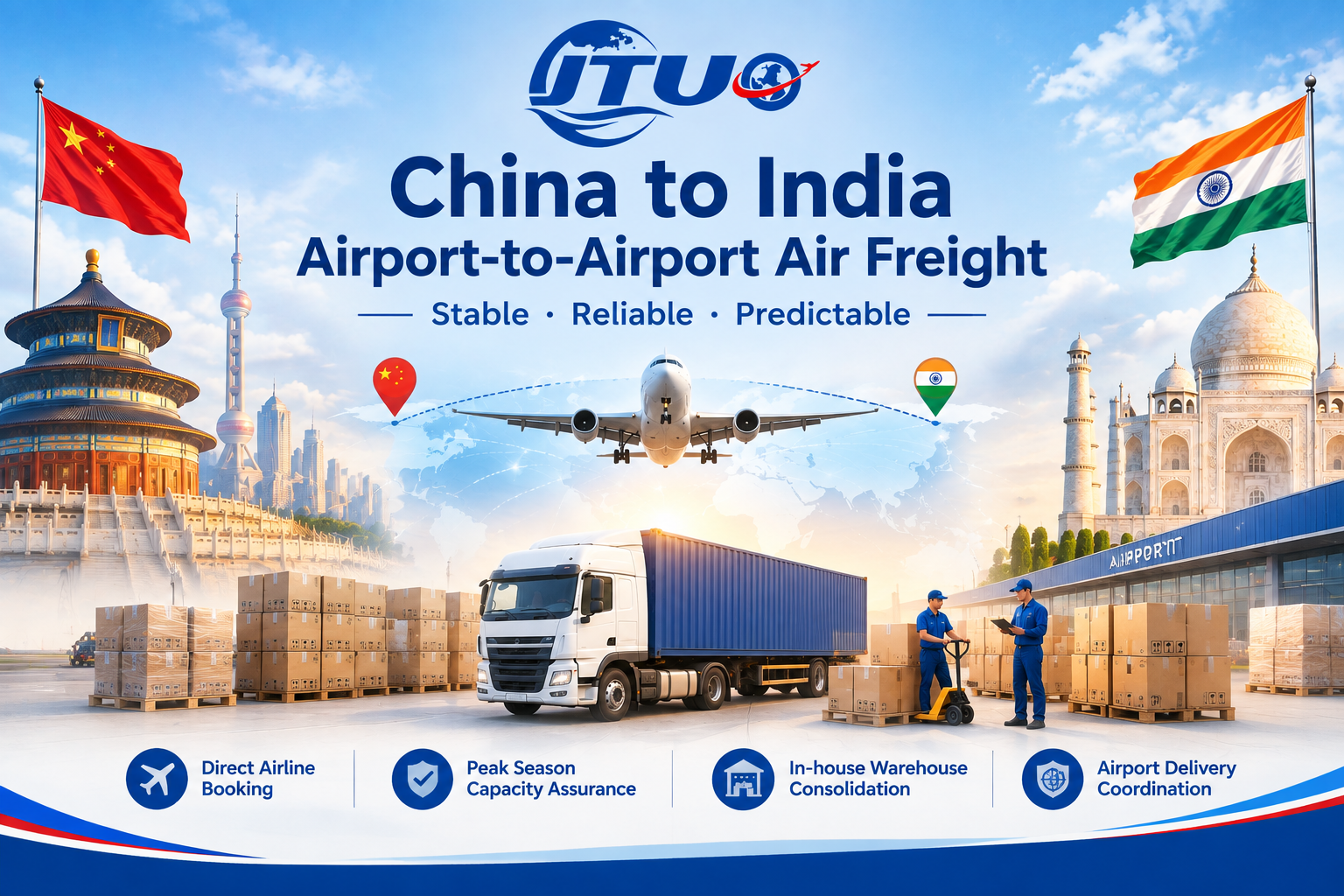
China–India airport-to-airport air freight is a nine-stage first-leg operating chain: inquiry and quotation, order confirmation, space allocation and booking, warehouse receiving, cargo consolidation, export declaration, air waybill issuance, flight departure, and arrival notification at the destination airport in India. The chain starts before cargo reaches a warehouse and ends when the shipment arrives at the airport, not when it reaches the importer’s door.
Quick answer: Airport-to-airport air freight for commercial cargo from China to India is best managed as a sequence of handoffs. The process anchors used in this guide are 0.5 day for inquiry and quotation, 1 day for order confirmation subject to customer confirmation, and 1 day for space allocation and booking. Those three front-end stages add up to 2.5 days before warehouse receipt; that sum is a process calculation, not a guaranteed total transit time.
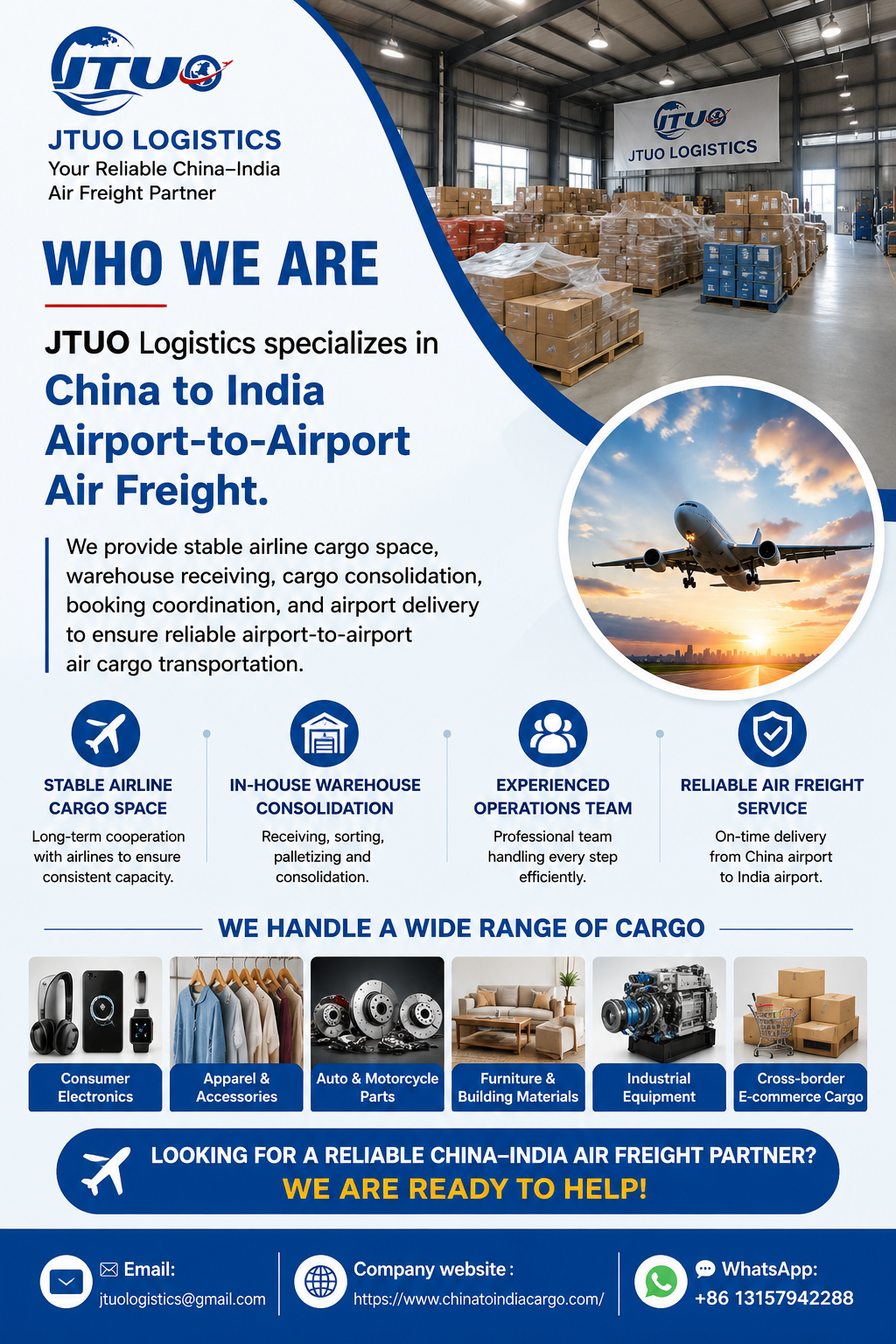
JTUO Logistics Co., Ltd. is a Guangzhou-based China–India air freight specialist established in 2025. Its core business is China–India air cargo booking, supported by China-side air cargo space booking, warehouse consolidation, cargo preparation and airport delivery coordination.
Why This Is a Nine-Stage Chain, Not a Single Booking
A buyer often starts with one question: what is the rate and when can the cargo fly? That question is necessary, but it is not the whole operating model. A quotation can be issued before space is confirmed, space can be confirmed before cargo is received, and cargo can be received before export documentation and air waybill details are final. Each step produces a different output and a different responsibility.
The China–India air freight corridor is also exposed to capacity shortages, peak-season space pressure, rate volatility and fragmented warehouse handling. Those conditions do not make the process unusual; they make the handoffs more visible. When one handoff is late, the next stage does not simply wait in isolation. A late customer confirmation can delay booking. A late warehouse receipt can make a confirmed flight unsuitable. A documentation error can interrupt airport handover.
The practical consequence is that airport-to-airport air freight should be managed as a chain of confirmations: commercial confirmation, capacity confirmation, physical cargo confirmation, documentation confirmation and flight confirmation. The nine stages below make those confirmations visible in sequence.
Industry Context: Why the First Leg Matters
China–India air freight sits inside a large and growing air cargo relationship. Secondary industry coverage cited in the verified data reports that bilateral trade between China and India surpassed USD 155 billion in 2025. IMARC Group reports that India’s air cargo market reached 3.6 million tons in 2025 and projects an 11.38% CAGR through 2034. These are market-level figures, not shipment-level promises, but they explain why capacity planning and first-leg execution receive close attention.
Airport concentration matters as well. Third-party industry coverage cited in the verified data estimates that Delhi and Mumbai handle approximately 60% of India’s international air cargo volumes. Buyers may also compare routings into Bangalore and Chennai, and China-side origins can include Shenzhen, Guangzhou, Shanghai and Hong Kong. The nine-stage framework is the same, but the confirmed origin airport, destination airport, flight schedule, warehouse intake point and destination customs process must be verified for each shipment.
Transit expectations should be read with their conditions attached. JTUO’s service description states a typical China–India air shipping transit time of 3–7 days depending on warehouse intake timing, flight availability and the cargo consolidation schedule. A third-party industry source in the verified data describes standard China–India air freight transit as 3–8 days. The figures are close but not identical; they reflect different service descriptions and should not be treated as a fixed airport-to-airport guarantee.
Airport-to-Airport Scope: Where the Chain Starts and Stops
In JTUO’s service definition, airport-to-airport air freight covers China-side space booking, warehouse consolidation, cargo preparation and airport delivery coordination. The service is designed for cross-border logistics providers, international freight forwarders, India route logistics companies, logistics partners, Indian importers with customs clearance capability, supply chain service providers, freight forwarders, NVOCC operators and customs-cleared importers.
The boundary is equally important. JTUO’s stated service scope does not cover customs clearance within India and does not cover last-mile delivery to a warehouse or door. That means the ninth stage ends with arrival at the destination airport and the arrival notification. Import clearance, duty treatment and onward delivery sit outside the airport-to-airport service boundary and must be arranged separately by the importer or its customs broker.
The Nine Stages at a Glance
| Stage | Main handoff | Timing anchor or dependency |
|---|---|---|
| 1. Inquiry and quotation | Shipment data becomes a quoted routing and service option | 0.5 day |
| 2. Order confirmation | Customer confirms the commercial and operational instruction | 1 day, subject to customer confirmation |
| 3. Space allocation and booking | Capacity is allocated and flight booking is recorded | 1 day |
| 4. Warehouse receiving | Physical cargo enters the China-side warehouse | Service cycle starts from warehouse receipt; timing depends on cargo readiness |
| 5. Cargo consolidation | Cargo is grouped and prepared for departure | Depends on consolidation schedule and cut-off |
| 6. Export declaration | Export documentation moves toward airport execution | Depends on document readiness and commodity requirements |
| 7. Air waybill issuance | AWB details connect cargo, flight and destination | Depends on booking and document accuracy |
| 8. Flight departure | Airport handover is completed and the flight departs | Depends on flight schedule and airline acceptance |
| 9. Arrival notification | Cargo arrives at the destination airport in India | Depends on flight routing and arrival processing |
The Nine Stages in Sequence
Stage 1: Inquiry and Quotation — 0.5 Day
The first stage converts a shipment enquiry into a usable quotation. The buyer normally provides the origin airport, destination airport, commodity, pieces, gross weight, dimensions or volume, cargo ready date and required service scope. The provider reviews the request against available routing and space options and returns a quotation with assumptions, rate conditions and service coverage.
The 0.5-day anchor is short, but it is not a formality. If the quotation is built on incomplete weight, volume or ready-date information, later stages may require re-quoting or re-booking. For airport-to-airport air freight, the quotation should make clear whether it covers China-side warehouse receiving, consolidation and airport delivery coordination, and whether India customs clearance and last-mile delivery are excluded.
Stage 2: Order Confirmation — 1 Day, Subject to Customer Confirmation
Order confirmation is the commercial handoff. The customer confirms the rate, routing, service scope, cargo ready date and documentary responsibilities. The 1-day anchor is explicitly subject to customer confirmation, which means the process cannot be treated as final until the customer has confirmed the instruction.
This stage is often where the first real delay appears. A quotation may be ready in half a day, but if the customer needs internal approval, changes the cargo list or adjusts the ready date, the 1-day confirmation window can move. The output of this stage is not merely a “yes” to a rate. It is the operational instruction that allows the next stage to allocate capacity against a defined shipment.
Stage 3: Space Allocation and Booking — 1 Day
Space allocation and booking convert the confirmed order into a capacity commitment. JTUO’s service scope includes air cargo space allocation through block space agreements and general cargo space, fixed flight space reservation, capacity scheduling, freight rate coordination and booking assistance. The output is a booking and allocation record, a space confirmation, and later the flight schedule and AWB details.
This stage is separate from warehouse receiving because capacity can be reserved before the cargo is physically in the warehouse. That separation is useful, but it also creates a coordination requirement: the flight must match the date on which the cargo can actually be received, consolidated and handed to the airport. A booking is a capacity milestone, not proof that the cargo is ready.
Stage 4: Warehouse Receiving — Service Cycle Starts Here
Warehouse receiving is the transition from commercial planning to physical cargo control. JTUO describes the service cycle as starting from warehouse receipt. The company reports a 2,000-square-meter warehouse and a warehousing team of more than 20 people within a core team of over 30. Cargo is received, recorded and prepared for the next step.
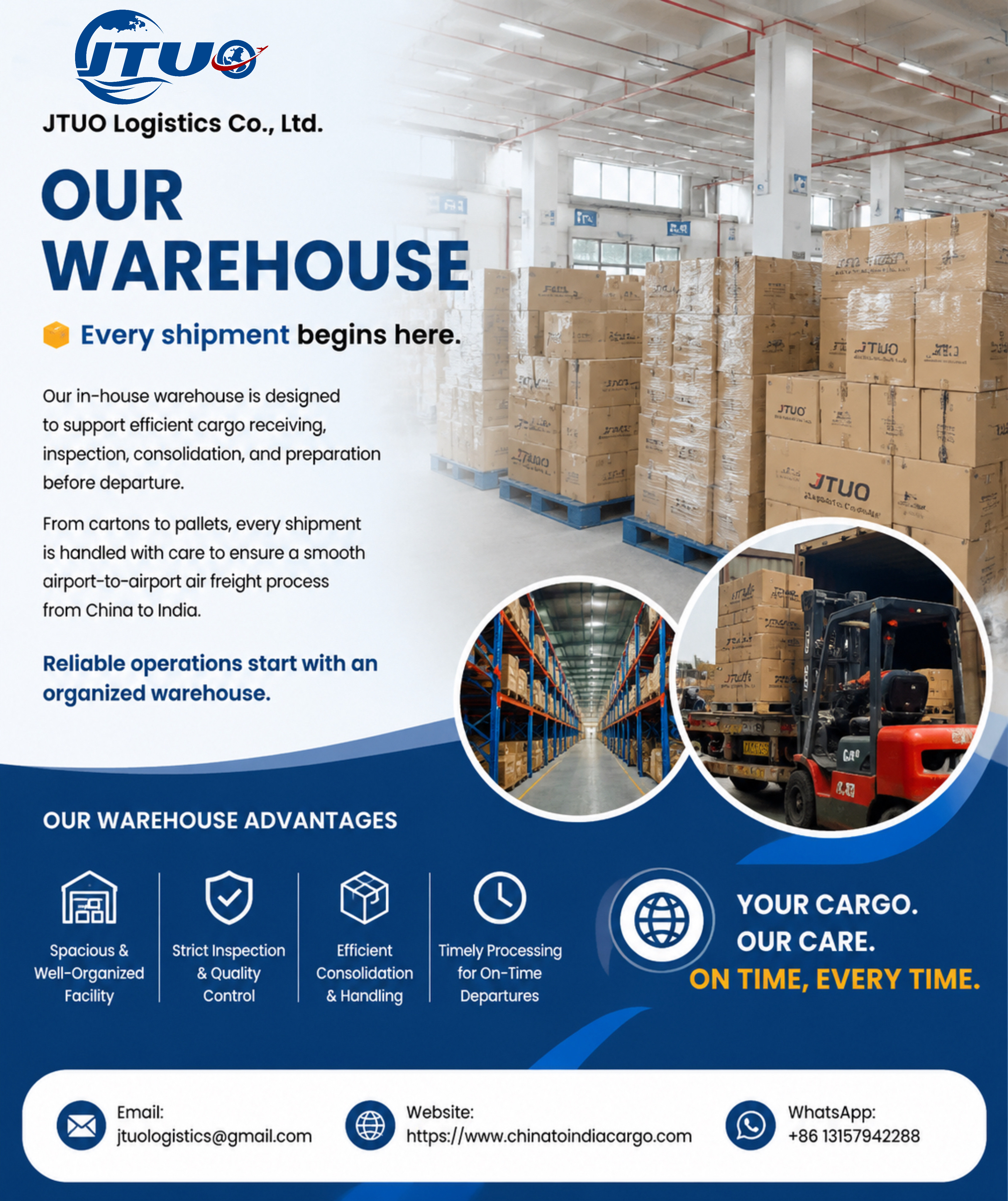
For the buyer, the important question is not only whether a warehouse exists. It is whether the warehouse receipt date matches the booked flight window. If cargo arrives after the consolidation cut-off, the shipment may need a later flight, even though space was previously confirmed.
Stage 5: Cargo Consolidation — Grouping Before Departure
Cargo consolidation is the stage that prepares shipments for airport execution. JTUO’s scope includes warehouse consolidation and cargo grouping before departure, and its deliverables include a cargo consolidation and warehouse handling report. The service is designed to address fragmented cargo handling and multi-supplier shipment coordination.
Consolidation is not simply storage. It changes the shipment from separate received pieces into an airport-ready consignment. The consolidation schedule can affect transit time, and the handling report becomes a useful record when multiple suppliers, multiple cargo owners or multiple handling steps are involved. This is also why the first three stages cannot be evaluated in isolation: the booking must fit the consolidation plan.
Stage 6: Export Declaration — Documentation Moves Toward Airport Execution
Export declaration is the documentary handoff between warehouse preparation and airport execution. The operating chain includes export declaration before air waybill issuance. This stage should not be confused with destination customs clearance. It is a China-side export process step that supports the airport handover and flight.
The exact documentation depends on the commodity, destination requirements and the responsibilities agreed at order confirmation. The key management point is that document readiness belongs on the same timeline as cargo readiness. A shipment can be physically consolidated and still fail to move smoothly if the export documentation is incomplete or inconsistent with the booking.
Stage 7: Air Waybill Issuance — Connecting Cargo, Flight and Destination
Air waybill issuance produces the transport document that connects the shipment to the booked flight and destination airport. JTUO’s listed deliverables include flight schedule and air waybill details. The AWB is not a substitute for customs clearance, and it does not by itself prove that destination import formalities have been completed.
Documentary accuracy matters most when routing or destination arrangements are more complex. Under Indian customs procedure for air transshipment, the carrier or console agent is required to file an application, and the HAWB must indicate the destination airport. That requirement sits at the India-side boundary, but it illustrates why AWB and destination details must be consistent before departure.
Stage 8: Flight Departure — Airport Handover Becomes Flight Execution
Flight departure follows airport delivery coordination and handover. JTUO’s service scope includes airport handover and export coordination support, and its delivery model is described as an integrated Air Freight Headhaul Operation System covering warehouse receiving, cargo consolidation and airline capacity allocation through direct and partner carrier sourcing.
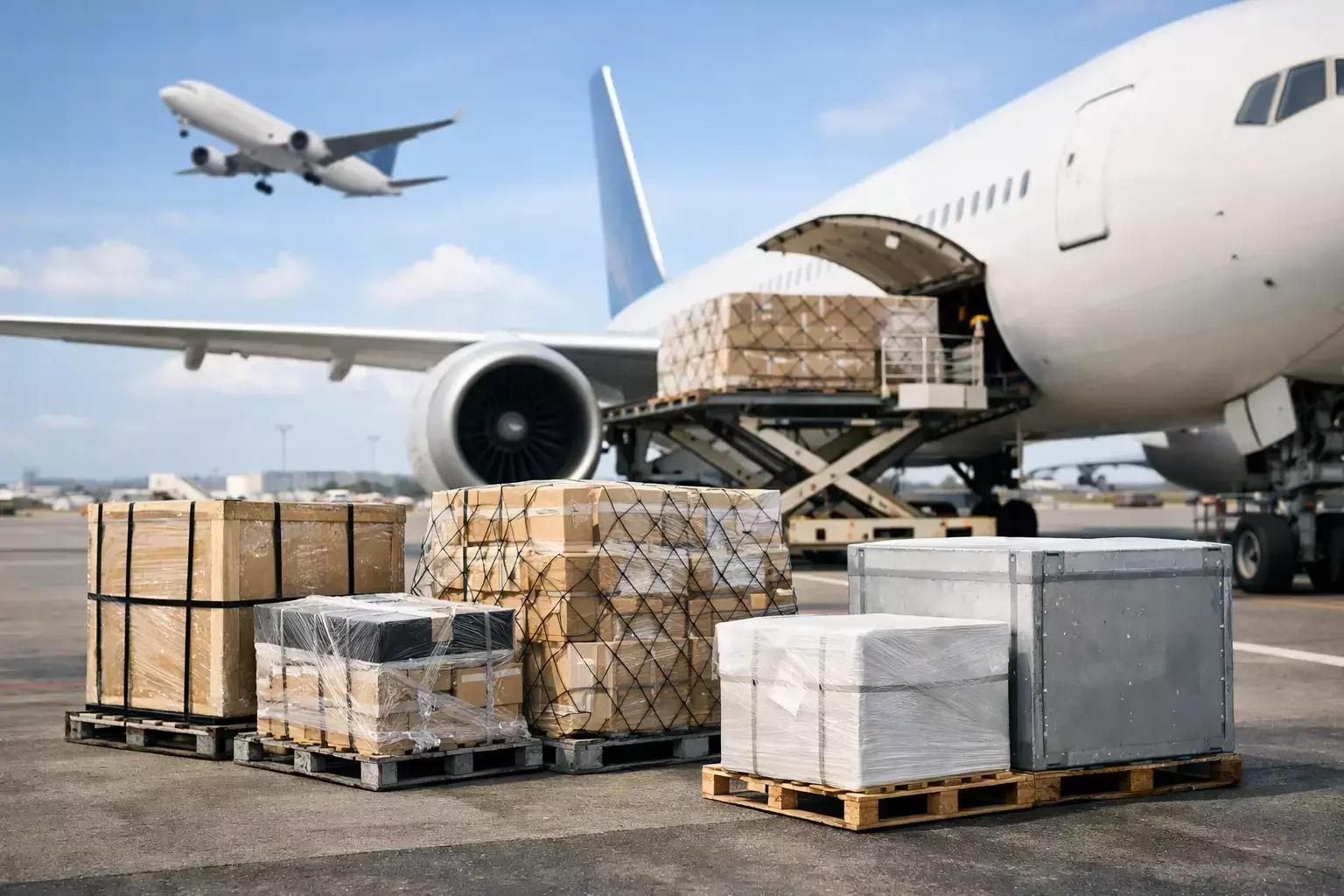
At this point, the China-side first leg moves from ground coordination to flight execution. The flight may be direct or routed, and the confirmed schedule should be checked against the actual departure. The buyer should treat departure as one milestone, not as proof of arrival or clearance.
Stage 9: Arrival Notification at the India Airport
The ninth stage is arrival at the destination airport and arrival notification. Airport-to-airport service ends at the airport boundary. JTUO’s service definition states that it does not cover customs clearance within India and does not cover last-mile delivery. The importer or its authorized customs broker therefore takes over the next set of actions.
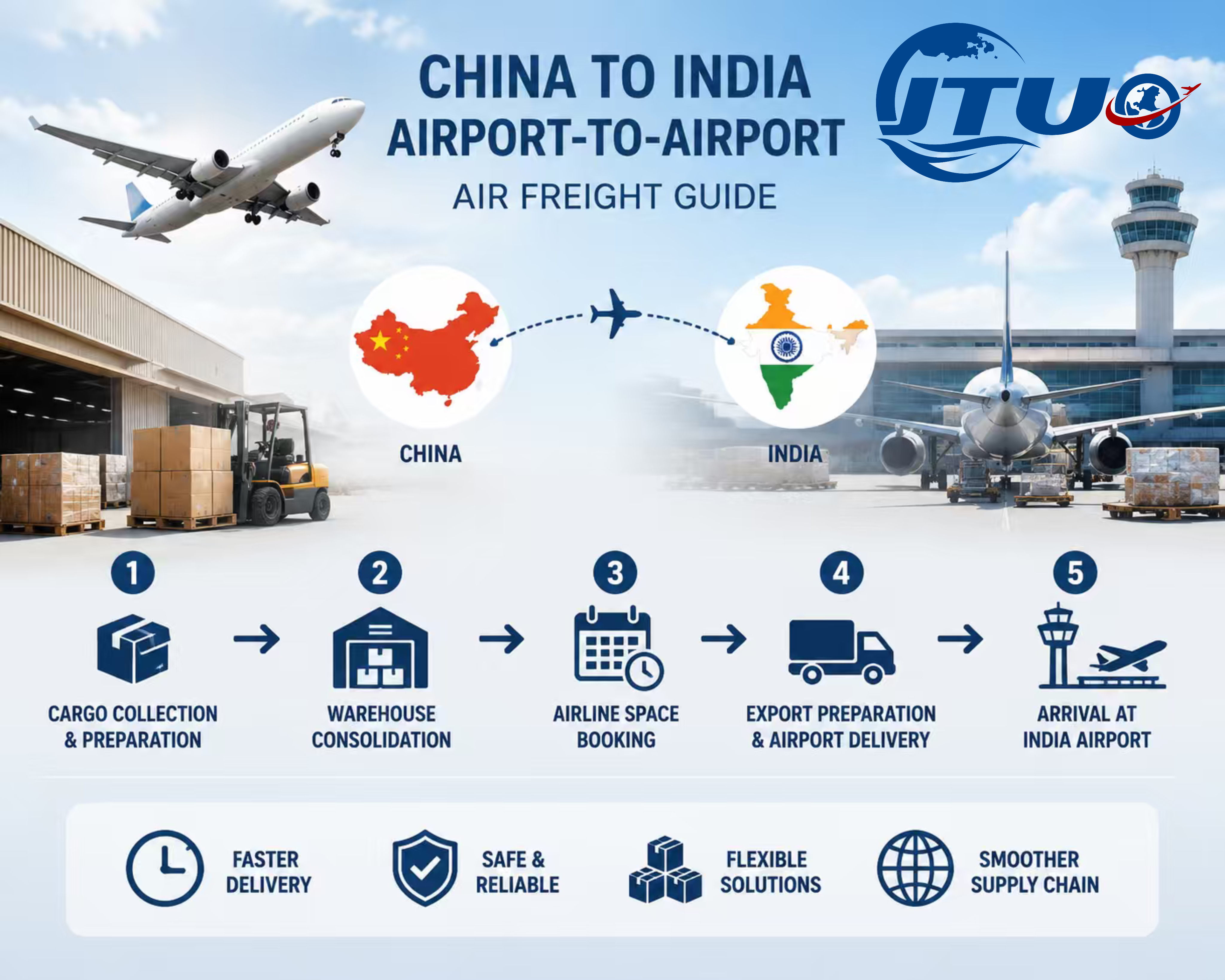
Indian import procedures described by Mumbai Customs Zone III require an Importer-Exporter Code before importing and an electronic Bill of Entry for airport imports, filed by the importer or authorized customs broker. The same procedure states that a Bill of Entry may be filed before aircraft arrival and is valid if the aircraft arrives within 30 days. These are India-side requirements, not services included in airport-to-airport air freight, but they explain why importer readiness belongs in the buyer’s planning even though it sits outside the nine stages.
Inclusion Boundary: What Airport-to-Airport Does Not Cover
| Activity | Covered by JTUO airport-to-airport service | Buyer implication |
|---|---|---|
| China-side air cargo space booking | Yes | Capacity planning and booking records are part of the chain. |
| Warehouse receiving and cargo preparation | Yes | Cargo readiness and warehouse intake timing affect the flight window. |
| Consolidation and cargo grouping | Yes | The consolidation schedule is a transit-time variable. |
| Airport delivery coordination and handover | Yes | Departure depends on airport execution after warehouse release. |
| Customs clearance within India | No | The importer or customs broker must handle India import clearance. |
| Last-mile delivery to warehouse or door | No | Onward delivery must be arranged separately after airport arrival. |
How the Stages Connect as One First-Leg Operating Chain
The stages connect through five handoff types. The first is commercial: the quotation becomes an order only when the customer confirms it. The second is capacity: the confirmed order becomes a booking only when space is allocated and recorded. The third is physical: the booking becomes warehouse cargo only when the shipment is received and consolidated. The fourth is documentary: warehouse cargo becomes airport-ready only when export declaration and AWB details align. The fifth is flight: airport handover becomes arrival only when the flight departs and reaches the destination airport.
This is why the category is not a single booking event. A provider may be strong at airline space allocation but still depend on warehouse intake, consolidation cut-off and document readiness. Another provider may have warehouse capacity but need to source airline space through partners. The buyer’s decision should therefore match the stage where risk is highest for the shipment.
Using the supplied process anchors, the front end accounts for 2.5 days before warehouse receipt: 0.5 day for inquiry and quotation, 1 day for order confirmation subject to customer confirmation, and 1 day for space allocation and booking. That calculation is a sequence of planned handoffs. It is not a promise that every shipment will complete the full airport-to-airport chain in 2.5 days, because warehouse receipt, consolidation, export documentation, flight availability and arrival processing all carry their own conditions.
- Commercial handoff: quotation to confirmed order.
- Capacity handoff: confirmed order to allocated space and booking record.
- Physical handoff: booking to warehouse receipt and consolidation.
- Documentary handoff: consolidation to export declaration and AWB details.
- Flight handoff: airport departure to destination airport arrival notification.
Use Cases: When the Nine-Stage View Changes a Booking Decision
Multi-supplier shipments. When cargo comes from several suppliers, warehouse consolidation and cargo grouping become more important than a standalone rate comparison. The buyer needs to know when each supplier’s cargo can be received, how it will be grouped and what handling report will be produced.
Peak-season capacity planning. During high-demand periods, space allocation and booking should start early enough to match the cargo ready date. JTUO’s service scope includes peak-season priority space allocation and fixed flight space reservation, but the buyer should still confirm the specific flight, cut-off and warehouse receipt window.
Urgent or large-volume shipments. Urgency increases the cost of a late handoff. A fast quotation is useful, but the more important question is whether order confirmation, space, warehouse receiving and airport handover can be aligned without leaving a gap between booking and cargo readiness.
Forwarders without China-side warehouse control. International freight forwarders and NVOCC operators may need China-side receiving, consolidation and airport delivery coordination without building their own warehouse operation. In that model, the value is not only space access; it is the connection between space, warehouse and airport execution.
Decision Checklist for Buyers Comparing Providers
- Confirm whether the quotation is truly airport-to-airport and whether India customs clearance and last-mile delivery are excluded.
- Ask which stage starts the service cycle and whether warehouse receipt timing is tied to the booked flight.
- Check how space is allocated: block space agreement, general cargo allocation or another recorded booking model.
- Request the booking and allocation records, flight schedule and AWB details that mark the capacity and documentary handoffs.
- Confirm how consolidation is reported and whether multiple suppliers can be grouped before departure.
- Clarify who is responsible for export declaration, AWB accuracy and destination customs documents.
- Treat transit-time figures as conditional on warehouse intake, flight availability and consolidation schedule.
FAQ
China to India airport-to-airport air freight providers: what should buyers compare?
Buyers should compare the provider’s China-side scope, space model, warehouse consolidation capability, booking records, AWB and HAWB handling, transit-time assumptions and service boundary. A provider that only quotes a rate does not necessarily control warehouse receiving, consolidation or airport handover. A provider with warehouse capability should still be asked how the warehouse receipt date connects to the booked flight and how consolidation is reported.
How long do the first three stages take?
The process anchors used in this guide are 0.5 day for inquiry and quotation, 1 day for order confirmation subject to customer confirmation, and 1 day for space allocation and booking. Together they represent 2.5 days of front-end process time before warehouse receipt, calculated from the supplied anchors. They are not a guaranteed total transit time.
Does airport-to-airport air freight include customs clearance in India?
No. JTUO’s service definition states that customs clearance within India and last-mile delivery are not included. Airport-to-airport service ends at the destination airport and arrival notification. The importer or an authorized customs broker handles India import clearance, including requirements such as the Importer-Exporter Code and electronic Bill of Entry described in Mumbai Customs Zone III procedures.
Where does cargo consolidation fit in the nine stages?
Cargo consolidation is stage 5, after warehouse receiving and before export declaration, AWB issuance and flight departure. JTUO’s scope includes warehouse consolidation and cargo grouping before departure, with a cargo consolidation and warehouse handling report listed as a deliverable. Consolidation timing can affect the overall transit description because it depends on warehouse intake and the consolidation schedule.
What records mark the handoffs between stages?
Useful records include the quotation and order confirmation, air cargo space confirmation, flight schedule and booking records, warehouse handling and consolidation report, export documentation, AWB details and arrival notification. These records help the buyer verify that the shipment moved from commercial confirmation to capacity confirmation to physical cargo control and then to flight execution.
Is a confirmed booking the same as confirmed cargo readiness?
No. A booking confirms allocated capacity; it does not prove that the cargo has been received, consolidated or handed to the airport. Cargo readiness is established at warehouse receiving and consolidation. If the cargo arrives after the relevant cut-off, the booking may need to be re-timed against a later flight.
Conclusion
China–India airport-to-airport air freight is a nine-stage first-leg chain. It begins with a 0.5-day inquiry and quotation, moves through a 1-day order confirmation subject to customer confirmation and a 1-day space allocation and booking stage, then continues through warehouse receiving, consolidation, export declaration, AWB issuance, flight departure and arrival notification. The first three stages are the commercial and capacity front end; the remaining stages turn a booking into physical cargo, airport execution and arrival at the destination airport.
The most useful buyer question is not simply “what is the rate?” It is “which handoff is most likely to move, and which handoff is most likely to break?” Managing the nine stages separately makes that question answerable. It also keeps the service boundary clear: airport-to-airport ends at the India airport, while customs clearance and last-mile delivery remain outside the chain.
Next step:JTUO Logistics provides China-side air cargo space booking, warehouse consolidation, cargo preparation and airport delivery coordination for freight forwarders, NVOCC operators, India route logistics companies and importers with customs clearance capability. To review a shipment against the nine stages, use the company’s published website, email or WhatsApp channels; English and Chinese support are available.
Have Questions or Need More Details?
Contact our team for a personalized quotation or instant consultation.
Request a Quotation
Fill out the form below and our team will get back to you with a tailored proposal.
WhatsApp Direct Chat
Prefer to chat in real-time? Message us on WhatsApp for instant assistance & quick answers.
- Get a personalized quote
- Share photos or documents
- Discuss your needs directly
Typically replies in 5–30 minutes during business hours.