China–India Airport-to-Airport Air Freight Compliance Guide: Certifications, Standards & Clearance
China–India Airport-to-Airport Air Freight Compliance Guide: Certifications, Standards & Clearance

China–India airport-to-airport air freight is not only a capacity question. It is a document and responsibility chain that starts at inquiry, continues through warehouse receiving, consolidation, export customs clearance and air waybill issuance, and ends at the destination airport. For shippers and forwarders evaluating JTUO Logistics, the practical question is which certifications, standards and clearance checks should be verified before the first leg is released.
The short answer: JTUO Logistics documents three qualifications that buyers can review during supplier qualification — an Air Freight Forwarding License, a Warehouse Operation & Safety Management Certification, and a Logistics Service Compliance Qualification. These documents support supplier screening, but they do not replace shipment-level checks. HS code accuracy, export documents, special-cargo declarations, MAWB/HAWB details and Indian importer readiness still determine whether cargo moves smoothly.
Problem Definition: Where Airport-to-Airport Compliance Usually Breaks
Airport-to-airport air freight has a defined boundary. In JTUO Logistics’ documented first-leg process, the final stage is arrival at the destination airport and notification to the client. That marks completion of the air freight’s initial leg. Import clearance in India, payment of customs duty and final delivery are separate activities unless they are expressly included in the service scope.
Compliance problems usually appear at handover points, not in the air. A shipper may provide one HS code at quotation, a different description on the commercial invoice, and a third version in the warehouse receiving record. A forwarder may book space before checking whether the cargo contains batteries, liquids, powders, magnetic items or branded goods. A consignee may not have an Importer-Exporter Code, or the customs broker may not have the Bill of Entry ready before aircraft arrival. These gaps create inspection risk, clearance delay, shipment hold or rework.
The buyer’s task is therefore not to ask only whether a provider can book air cargo space. The better question is whether the provider has a documented control point for each compliance decision, and whether the buyer understands where its own responsibility begins and ends.
Industry Background: More Air Cargo Volume Means More Compliance Scrutiny
China–India trade remains a large commercial corridor. Bilateral trade between China and India surpassed USD 155 billion in 2025. India’s air cargo market reached 3.6 million tons in 2025 and is projected to grow at a CAGR of 11.38% through 2034. Delhi and Mumbai airports handle approximately 60% of India’s international air cargo volumes. These figures explain why airport-to-airport air freight remains a practical option for time-sensitive commercial cargo, but they also explain why compliance discipline matters more, not less.
Standard air freight transit time from China to India ranges from 3 to 8 days. That range is useful for planning, but it is not a compliance shortcut. A shipment can be physically ready and still lose time because the commercial invoice, packing list, sales contract or customs declaration authorization does not match. JTUO Logistics’ documented operating context includes a 2,000 sqm warehouse in Guangzhou, 15+ years of China–India air shipping logistics and cargo space management experience, more than 1,500 air cargo spaces handled per month, and support for 500+ freight forwarding partners and logistics clients. Those capabilities are relevant because warehouse receiving and consolidation are where many document errors are found before airport delivery.
India-side rules also affect the first leg. The Importer-Exporter Code issued by DGFT is mandatory for all air cargo imports to India. The cited Mumbai Customs Zone III procedure states that importers or authorized customs brokers file an electronic Bill of Entry through ICEGATE or the relevant service centre. The same procedure indicates that a pre-arrival Bill of Entry is valid if the aircraft carrying the goods arrives within 30 days. Goods imported by aircraft may attract customs duty unless they are intended for transit or transshipment under the applicable procedure. Chennai Customs Zone also describes a transshipment procedure for imported cargo between two airports in India and for international air transshipment.
For buyers, the implication is straightforward: airport-to-airport air freight should be evaluated as a compliance-controlled process, not as a standalone flight booking. The China-side provider must control export documentation and first-leg handover. The Indian importer or customs broker must control import filing, duty and destination clearance. The contract should make that split visible.
Detailed Solution: Turning JTUO Certifications into Practical Buyer Checks
JTUO Logistics Co., Ltd. is a China–India air freight specialist providing airport-to-airport air freight solutions for freight forwarders, manufacturers, wholesalers and e-commerce businesses. Its documented coverage is China nationwide export coverage and China–India air freight corridor operations. The company lists three certifications that are relevant to a compliance-oriented supplier review. They should be interpreted as qualification inputs, not as blanket guarantees.
1. Air Freight Forwarding License
The Air Freight Forwarding License is the first document to request when screening JTUO as an air freight provider. In practical terms, the buyer should check that the certificate holder matches the contracting legal entity, that the scope covers air freight forwarding activity, and that the certificate is valid for the intended service period. This check belongs in the supplier file before booking, especially when a forwarder plans to rely on JTUO for space allocation, export documentation coordination and AWB issuance.
The certificate should not be read as evidence of Indian import clearance authority. It supports the China-side forwarding qualification review. The Indian importer’s IEC, Bill of Entry and customs broker arrangements remain separate destination requirements.
2. Warehouse Operation & Safety Management Certification
The Warehouse Operation & Safety Management Certification is relevant because warehouse receiving and consolidation are control points, not passive storage steps. JTUO’s documented Guangzhou warehouse area is 2,000 sqm. During qualification, buyers should verify that the certificate scope covers the warehouse operation actually used for their cargo, that safety management is within the certification scope, and that the certificate is current.
This certification matters most for cargo that requires careful handling: battery products, liquids, powders, magnetic items, branded goods and other sensitive cargo. JTUO’s process requires warehouse verification of product information, package count, weight, volume, shipping marks, flight details, HS code and special-item status. A warehouse certification supports the safety and operating-control review, but the shipment still needs accurate declarations from the shipper.
3. Logistics Service Compliance Qualification
The Logistics Service Compliance Qualification should be reviewed as part of service compliance and document-control due diligence. Buyers should ask for the certificate copy, confirm the issuing body and validity period, and check whether the scope is relevant to the service being purchased. For a forwarder, this qualification can be included in the vendor approval file alongside insurance, commercial registration and operational references.
The qualification is not a substitute for shipment-level compliance. It does not replace HS code review, export customs declaration, airline acceptance, MAWB/HAWB verification or Indian import filing. Its value is in supplier screening: it gives the buyer a documented compliance credential to verify rather than an unverified marketing statement.
| JTUO certification | Practical buyer check | Process stage supported | Limitation |
|---|---|---|---|
| Air Freight Forwarding License | Confirm legal entity, scope, validity and service relevance. | Inquiry, booking, space allocation, AWB issuance. | Does not establish Indian import clearance authority. |
| Warehouse Operation & Safety Management Certification | Confirm certificate scope covers the Guangzhou warehouse operation used for receiving and consolidation. | Warehouse receiving, cargo consolidation, special-cargo handling checks. | Does not replace shipper declarations for batteries, liquids, powders, magnetic items or branded goods. |
| Logistics Service Compliance Qualification | Verify issuing body, validity and relevance to the contracted service. | Document control, export customs coordination, service compliance review. | Does not replace shipment documents, HS code accuracy or destination customs filing. |
Step-by-Step Breakdown: Mapping Compliance Checks to the First Leg
The most reliable way to audit a China–India airport-to-airport air freight booking is to map documents and decisions to the nine stages JTUO documents. Each stage should produce a record that the next stage can verify.
Stage 1 — Inquiry and Quotation: Capture the Compliance Data First
Compliance starts with the inquiry. JTUO’s process requires the customer to provide product name and description, cargo type, number of packages, gross weight and volume, packaging type, origin airport, destination airport, estimated shipping date, HS code and special-cargo declarations. The special-cargo list includes battery products, liquid goods, powder goods, magnetic items, and brand-sensitive or restricted goods.
Buyer check: do not provide a generic product name if the invoice will use a more specific description. Confirm the HS code before the quotation is treated as final, because the HS code affects declaration review and customs processing. If the cargo contains any special item, declare it at inquiry rather than at the warehouse.

Stage 2 — Order Confirmation: Lock the Shipment Identity
After the customer confirms pricing and places the booking order, the shipment identity should be locked. This includes the shipper, consignee, notify party if applicable, origin airport, destination airport, cargo description, package count, weight, volume, HS code and special-cargo status.
Buyer check: confirm the destination airport code and the consignee details before space is requested. For airport-to-airport movements, an airport code error can cause a routing or AWB correction later. If the cargo may be transshipped at an Indian airport, confirm that the HAWB will indicate the destination airport required by the applicable procedure.
Stage 3 — Space Allocation and Booking: Confirm Cut-Off, Not Only Rate
JTUO requests and secures space with the freight forwarder or airline. Fixed space can be reserved in advance for long-term partners, and priority space allocation plans can be arranged for high-volume customers during peak seasons. The process outputs a space allocation confirmation notice, estimated cut-off time and warehouse inbound schedule.
Buyer check: compare the cut-off time with the supplier’s delivery schedule. A late warehouse delivery can break the compliance chain even when the documents are correct. For peak-season cargo, pre-booking air cargo space before peak seasons is a documented application scenario in JTUO’s solution.
Stage 4 — Warehouse Receiving: Verify Weight, Volume, Labels and Packaging
At warehouse receiving, JTUO re-measures actual weight and dimensions. Air freight charges are based on the greater of actual weight or volumetric weight, calculated as length cm × width cm × height cm ÷ 6000. The warehouse receives and verifies the shipment, including piece count, shipping marks and order data. Customers must ensure packaging meets air freight standards, fragile goods are labeled, shipping labels are correctly attached, and delivery is made within the scheduled time window.
Buyer check: verify the weight and dimension report because chargeable weight can change after re-measurement. Compact packing can reduce volumetric weight and cost. Check that the outer carton labels match the MAWB, destination airport and shipment reference. A label mismatch is a compliance issue, not only a warehouse issue.
Stage 5 — Cargo Consolidation: The Main HS Code and Special-Cargo Screening Point
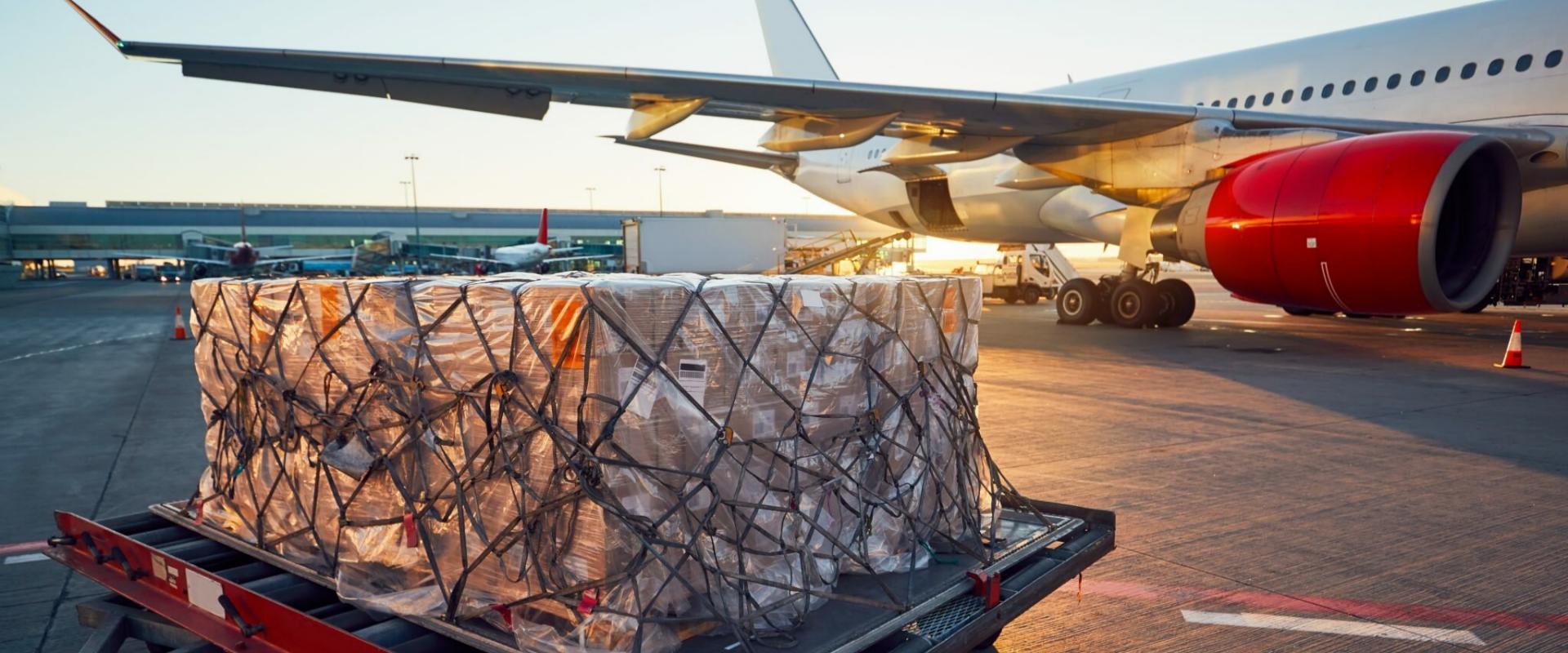
Consolidation is where the shipment is classified, grouped, palletized and checked against the declaration. JTUO’s process covers consolidation of multiple orders, goods from multiple suppliers, palletization of aggregated small parcels, verification of weight and dimensions, sorting and organizing, consolidated stacking, large pallet handling and stretch-wrap reinforcement.
The same stage verifies product information, number of packages, weight, volume, shipping marks, flight details, HS code, and the presence of special items such as batteries, liquids, powders, magnetic materials, or replica and branded goods. This is the most important pre-airport compliance checkpoint. If the HS code, product description or special-cargo status changes here, the commercial invoice and export declaration must be corrected before airport delivery.

Stage 6 — Airport Delivery: Match the Physical Cargo to the Declared Cargo
JTUO arranges transport from the warehouse to the airport cargo terminal and completes handover to airline ground handling. The process outputs an airport transfer confirmation, cargo handover record, security check completion confirmation and airline cargo acceptance notice.
Buyer check: ensure the cargo details strictly match the declared shipment information before airport delivery. If the cargo is inspected or rejected at airline acceptance, the problem is often a mismatch between the physical package, the shipping marks and the documents. Correcting it after the cargo leaves the warehouse is slower and more expensive.
Stage 7 — Export Customs Clearance: Four Documents Must Tell the Same Story
JTUO prepares and organizes export customs documentation, submits the declaration through a customs broker, monitors clearance and supports physical inspection if customs triggers it. The customer must provide a complete and consistent set of documents: commercial invoice, packing list, sales contract and Power of Attorney for customs declaration authorization.
All document data must be fully consistent to avoid customs inspection, clearance delays or shipment rejection. The HS code on the invoice must match the product description and the warehouse record. The packing list must match the package count, weight and marks. The sales contract should support the declared transaction. The POA should be properly authorized.
Stage 8 — Air Waybill Issuance and Release: Check MAWB and HAWB Before Departure
The airline issues the Master Air Waybill and confirms cargo release, while JTUO issues the House Air Waybill to the customer. The process outputs the MAWB, HAWB, flight departure notice, take-off confirmation report and estimated arrival time update.
Buyer check: verify the MAWB and HAWB details before flight departure. The shipper, consignee, notify party, airport of departure, airport of destination, package count, weight, chargeable weight, commodity description and special handling codes should match the booking and export documents. For transshipment, the carrier or console agent is required to file an application, and the destination airport must be indicated in the HAWB. That makes HAWB destination accuracy a supplier-qualification point for airport-to-airport or onward-transshipment cargo.
Stage 9 — Arrival at Destination Airport: Handover to Indian Import Process
When the goods arrive at the Indian airport, JTUO notifies the client of the arrival time and details, marking completion of the air freight’s initial leg. From that point, the Indian importer or authorized customs broker must handle import clearance unless a separate service scope has been agreed.
Destination checks should include the importer’s IEC, electronic Bill of Entry filing through ICEGATE or the relevant service centre, and whether the goods are being imported for home consumption or moved under transit or transshipment treatment. The cited Mumbai Customs Zone III procedure states that a pre-arrival Bill of Entry is valid if the aircraft arrives within 30 days. It also notes that imported goods may attract customs duty unless covered by transit or transshipment treatment. For transshipment, Chennai Customs Zone describes a procedure for imported cargo between two Indian airports and for international air transshipment.
Buyer check: appoint the customs broker before departure, not after arrival. Confirm whether the destination airport has the required transshipment or import process for the shipment. This guide does not treat Delhi, Bangalore, Chennai and Mumbai procedures as identical; destination-specific requirements should be verified with the current customs authority or a qualified broker.
| Scope | JTUO documented role | Key documents or controls | Buyer responsibility |
|---|---|---|---|
| China export and first-leg airport-to-airport movement | Space allocation, warehouse receiving, consolidation, airport delivery, export customs coordination, MAWB/HAWB issuance and arrival notification. | Commercial invoice, packing list, sales contract, POA, HS code, special-cargo declaration, AWB details. | Provide accurate cargo data, meet warehouse cut-off, authorize customs declaration, verify AWB details. |
| Indian import clearance | Not described as part of the airport-to-airport first-leg scope in JTUO’s process. | IEC, electronic Bill of Entry, applicable duty or transit/transshipment treatment. | Importer must obtain IEC; importer or authorized customs broker files Bill of Entry and handles duty and clearance. |
| Indian airport transshipment | First-leg AWB and arrival notification can support the handover, but destination transshipment filing is a separate procedure. | Transshipment application by carrier or console agent; destination airport indicated in HAWB. | Confirm routing, broker responsibility and destination-airport procedure before booking. |
Use Cases: Where This Compliance Model Fits
Freight forwarders with multiple shipper clients. A forwarder may need a China-side partner that can receive cargo from several suppliers, consolidate it, check HS codes and special-cargo status, and issue a HAWB with the correct destination airport. JTUO’s documented client segments include cross-border logistics service providers and international freight forwarders. The compliance value is in the handover records: warehouse receipt, consolidation manifest, export declaration package, MAWB/HAWB and arrival notification.
Cross-border e-commerce consolidations. JTUO’s warehouse process supports e-commerce small parcels, consolidation of multiple orders, consolidation of goods from multiple suppliers, palletization of aggregated small parcels, and weight and dimension verification. For e-commerce cargo, the main compliance risk is often a mismatch between the online product description, the commercial invoice and the HS code. Consolidated shipments need a clean per-order data set before palletization.
Manufacturers and wholesalers with multi-supplier shipments. Cargo from multiple suppliers can be received and consolidated in the Guangzhou warehouse. The buyer should provide a supplier-level packing list and a consolidated manifest. If any supplier ships batteries, liquids, powders, magnetic items or branded goods, that declaration must reach the warehouse before consolidation, not after the cargo is already palletized.
Peak-season and high-volume shippers. JTUO documents peak-season space guarantee and priority allocation for high-volume customers. Pre-booking air cargo space before peak seasons is a documented application scenario. Compliance planning should run in parallel with space planning: confirm HS codes, POA, invoice data and consignee readiness before the cut-off date, because a last-minute document correction can waste reserved capacity.
Compliance-sensitive cargo. Battery products, liquids, powders, magnetic items and brand-sensitive goods require early declaration. The warehouse and consolidation stages are designed to verify product information, package count, weight, volume, shipping marks, flight details, HS code and special-item status. The buyer should treat these as declaration gates, not as informal warehouse notes.

Comparison Table: Certification Check vs Shipment Check vs Destination Check
The table below separates three layers that buyers often mix together. A provider certification is a supplier-qualification input. A shipment document check is transaction-level. A destination import check is controlled by the Indian importer or customs broker.
| Layer | What is checked | Who normally controls it | Documented evidence point |
|---|---|---|---|
| Provider certification | Air Freight Forwarding License; Warehouse Operation & Safety Management Certification; Logistics Service Compliance Qualification. | Buyer’s supplier-qualification or vendor-approval team. | Certificate copy, holder name, scope, validity and warehouse coverage. |
| Shipment compliance | HS code, product description, package count, weight, volume, shipping marks, special-cargo status, invoice, packing list, sales contract and POA. | Shipper and China-side forwarder, with warehouse and customs coordination. | Warehouse receipt, consolidation manifest, export declaration package, MAWB/HAWB. |
| Destination import | IEC, electronic Bill of Entry, duty treatment, transit or transshipment status. | Indian importer or authorized customs broker. | Bill of Entry filing record and destination customs clearance documents. |
FAQ: China–India Airport-to-Airport Air Freight Compliance
Which JTUO Logistics certifications should a buyer verify before booking?
Verify the Air Freight Forwarding License, Warehouse Operation & Safety Management Certification, and Logistics Service Compliance Qualification. Check the certificate holder, scope, validity period and whether the warehouse certification covers the Guangzhou warehouse operation used for receiving and consolidation. These certifications support supplier qualification, but they do not replace shipment documents, HS code accuracy or Indian import clearance by the importer or customs broker.
Can JTUO support OEM/ODM-style China–India airport-to-airport air freight requirements?
JTUO Logistics is a China–India air freight specialist, not a product manufacturer. For OEM/ODM shippers, the relevant logistics capability is shipment-specific coordination: multi-supplier consolidation, warehouse receiving, label and shipping-mark checks, special-cargo declaration, space allocation, export documentation coordination and MAWB/HAWB issuance. Product design, tooling or manufacturing itself sits with the shipper’s factory and is outside the documented airport-to-airport air freight scope.
What drives the air freight quotation for this airport-to-airport service?
JTUO’s quotation stage uses cargo details, flight schedules and prevailing market rates. Chargeable weight is based on the greater of actual weight or volumetric weight, calculated as length cm × width cm × height cm ÷ 6000. Cargo type, special-cargo status, origin airport, destination airport, ready date, packing and service scope can all affect the quote. A useful rate inquiry should include the HS code, product description, package count, gross weight, dimensions and any battery, liquid, powder, magnetic or branded-goods declaration.
Can a small or trial shipment be tested through the same process?
The documented warehouse process supports e-commerce small parcels, consolidated loose cargo, consolidation of multiple orders and goods from multiple suppliers. A trial shipment can therefore be evaluated through the standard inquiry-to-arrival workflow, provided the shipper supplies the same HS code, label, packing list and special-cargo information that would be used for production cargo. The trial should be quoted as a separate shipment so that warehouse cut-off, consolidation method and destination airport requirements are clear.
What lead time should be planned from inquiry to arrival?
JTUO’s estimated process timeline includes 0.5 days for inquiry and quotation, about 1 day for order confirmation subject to customer confirmation, 1 day for space allocation and booking, and 1–2 days for warehouse receiving and delivery to the warehouse. Standard air freight transit time from China to India ranges from 3 to 8 days. Export customs clearance, airline acceptance and destination import filing can affect the overall schedule. To confirm cut-off and routing for a specific shipment, send the cargo details, HS code, origin airport, destination airport and ready date to jtuologistics@gmail.com or WhatsApp +86 13157942288.
Conclusion: Verify the Certification, Then Verify the Shipment
For China–India airport-to-airport air freight, compliance is not a single certificate or a single customs declaration. It is a chain of checks that connects JTUO’s Air Freight Forwarding License, Warehouse Operation & Safety Management Certification and Logistics Service Compliance Qualification to the actual shipment record. The provider credential supports supplier qualification. The shipment record supports export clearance and airline acceptance. The destination record supports Indian import clearance and any transshipment decision.
Buyers should verify the certificates, but they should also verify the HS code, invoice, packing list, sales contract, POA, special-cargo declaration, MAWB/HAWB details and destination airport requirements. When those checks are completed before the warehouse cut-off, airport-to-airport air freight becomes easier to audit, easier to hand over and easier to repeat.

JTUO Logistics Co., Ltd. Address: Room 508, 5th Floor, Poly Center, No. 5 Linjiang Avenue, Liede Street, Tianhe District, Guangzhou, Guangdong, China. Email: jtuologistics@gmail.com. Tel/WhatsApp: +86 13157942288. Website: chinatoindiacargo.com.
Have Questions or Need More Details?
Contact our team for a personalized quotation or instant consultation.
Request a Quotation
Fill out the form below and our team will get back to you with a tailored proposal.
WhatsApp Direct Chat
Prefer to chat in real-time? Message us on WhatsApp for instant assistance & quick answers.
- Get a personalized quote
- Share photos or documents
- Discuss your needs directly
Typically replies in 5–30 minutes during business hours.