How Cross-Border E-Commerce and NVOCC Firms Can Use Integration Projects to Fix India Head Haul Gaps
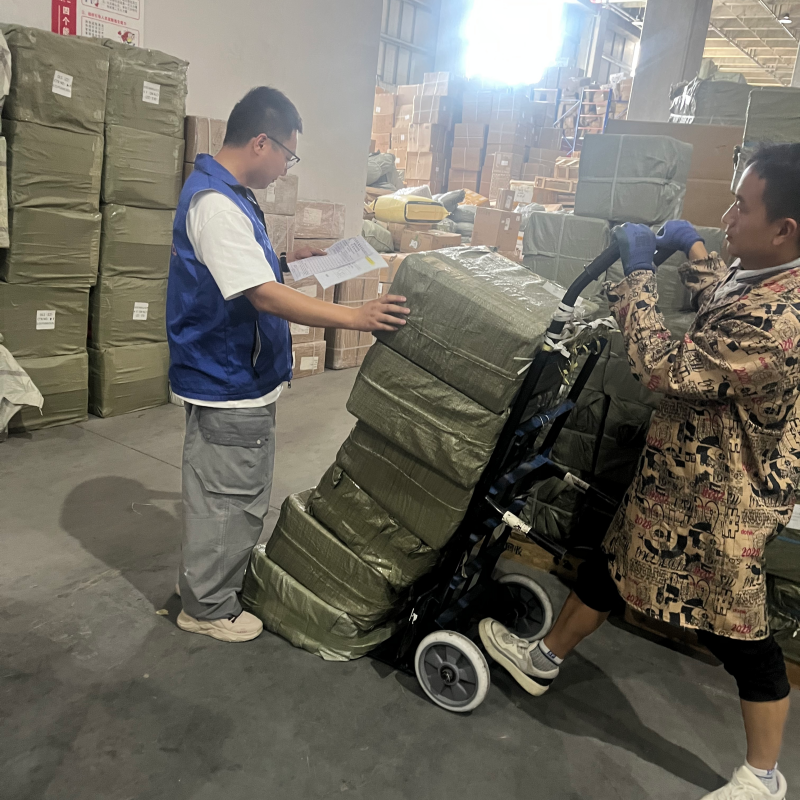
The China–India air corridor is a head haul by design. Cargo demand flows in one dominant direction, from a concentrated group of Chinese export hubs toward Indian airports, and the space that carries it is controlled by a relatively small group of airlines, capacity holders and consolidators. For cross-border e-commerce sellers and NVOCC operators, the recurring failure is rarely a single missed booking. It is the repeat pattern of unstable space, rates that move between quotation and departure, and cargo scattered across origin warehouses that do not talk to each other.
An integration project is a structural answer to that pattern, not another booking channel. It links allocated airline capacity, one origin consolidation warehouse, and a single airport delivery loop into a closed cycle that begins with space allocation and ends with an arrival notification in India. JTUO Logistics Co., Ltd., a Guangzhou-based China–India air freight specialist established in May 2025, runs this model as the China–India Air Freight Capacity & Consolidation Integration Project.
This guide covers what the head haul gap actually consists of, why it keeps reopening, what an integration project contains, how the execution loop runs from space allocation to airport delivery, which operational scenarios it fits, and how the main capacity-sourcing models on the lane compare.
What “Head Haul Gap” Means on the China–India Air Corridor
A head haul is the dominant directional leg of a trade lane. On the China–India corridor, that leg runs outbound by air. A head haul gap is therefore not simply a shortage of aircraft: it is the distance between the space an operator needs at a workable price and the space that is actually confirmed, with cargo physically ready, before the flight closes.
Operators on the lane describe the same set of symptoms, and each one has an operational root:
- Peak-season air cargo space shortage — demand spikes into a lane whose capacity is limited.
- Frequent airline rate fluctuations — pricing moves with demand cycles rather than a fixed tariff.
- Cargo offloading and booking rejection (bumping risk) — confirmed space can still be displaced when a flight is oversold.
- Long lead time for space allocation — confirmation arrives too late to plan downstream pickup and delivery.
- Unstable or non-fixed cargo capacity — allotments shift between shipment cycles.
- Cargo stored across multiple disconnected warehouses — multi-supplier shipments arrive at different sites.
- Inefficient cargo tracking and coordination — warehouse information sits outside the booking process.
The causes behind these symptoms are structural rather than incidental. Capacity on the China–India trade lane is limited. Demand cycles in cross-border logistics are volatile. Air cargo space resources are concentrated among a small number of major agents, and most freight forwarders do not hold direct airline contractual access. Seasonal export surges and Chinese holiday-driven cargo peaks compress the same capacity further, while heavy reliance on third-party warehouses separates warehousing from transportation and leaves no single system managing consolidation.
The business consequences follow directly: delayed departures and extended transit time, rising customer complaints, declining margins when freight rates move, lost orders, and customers migrating to operators who can hold capacity through a peak.
Industry Background: Why the Gap Reopens Every Season
The demand side of the corridor is large and still expanding. China’s exports to India reached approximately USD 120.46 billion in 2024, and electrical machinery and equipment alone accounted for USD 42.66 billion of that total (The Dollar Business). That product mix matters, because electronics and e-commerce inventory are exactly the categories that move by air.
The capacity side is growing too, but from a constrained base. India’s air cargo market was valued at 3.6 million tons in 2025 and is projected to reach 9.9 million tons by 2034, an 11.38% CAGR (IMARC Group). Asia-Pacific airlines led international air cargo growth with an 8.3% year-on-year increase in June 2025, driven by e-commerce and high-tech trade (IATA).
Regulation shapes how quickly ad-hoc capacity can be added to a lane like this. Under China’s CAAC regulation AC-129-FS-001R2, foreign carriers that do not hold CCAR-129 certificates are limited to 10 cargo charter flights per 12-month period. Charter capacity therefore cannot be treated as a dependable substitute for scheduled space on a corridor that moves continuously.
Capacity is also added in concentrated blocks rather than evenly. The direct air cargo route between Ezhou in China and Bangalore in India provides an annual transport capacity of more than 5,000 tons via SF Airlines (SF Airlines / Xinhua). Useful as that is, it illustrates the underlying structure of the market: capacity lands with a limited number of operators, and access to it is negotiated rather than open.
Pricing reflects the same conditions. Air freight rates on China to Asia routes were reported as relatively stable at USD 1.76–4.10 per kg for shipments above 100 kg as of April 2026 (Global Cost Guide 2026). Market-level stability does not translate into shipment-level stability, because an individual booking still moves with whatever capacity is available on the day it is placed.
What a Capacity & Consolidation Integration Project Contains
JTUO Logistics Co., Ltd. is a China–India airport-to-airport air freight specialist established in May 2025 and headquartered in Guangzhou, Guangdong. The company provides air cargo space booking, warehouse consolidation, cargo preparation and airport delivery coordination. India is its major market, and export business accounts for 80% of total sales.
The service itself is formally named China–India Air Cargo Space Services, also referred to as Air Cargo Space Solutions from China to India, China–India Air Freight Capacity (Space) Services, or China to India Air Cargo Space Supply & Allocation Services. Structurally it is classified as Air Cargo Space Allocation (BSA), Air Freight Consolidation & Space Distribution, Air Freight Space Leasing, Blocked Space Service, Capacity Distribution, Block Space Agreement (BSA) and Air Freight Consolidation & Distribution.
The integration project is organised into five working modules:
- Airline Capacity Allocation Module (space locking system)
- In-house Warehouse Consolidation & Distribution Module
- Air Freight Booking & Scheduling Management Module
- Airport Delivery & Flight Coordination Module
- Peak Season Capacity Assurance Module
Those modules sit on a defined service scope:
- Air shipping from major export hubs in China to major airports in India.
- Block Space Agreement (BSA) and general cargo space allocation.
- Fixed flight space reservation and capacity scheduling.
- Peak-season priority space allocation.
- Freight rate coordination and booking assistance.
- Warehouse consolidation and cargo grouping before departure.
- Airport handover and export coordination support.
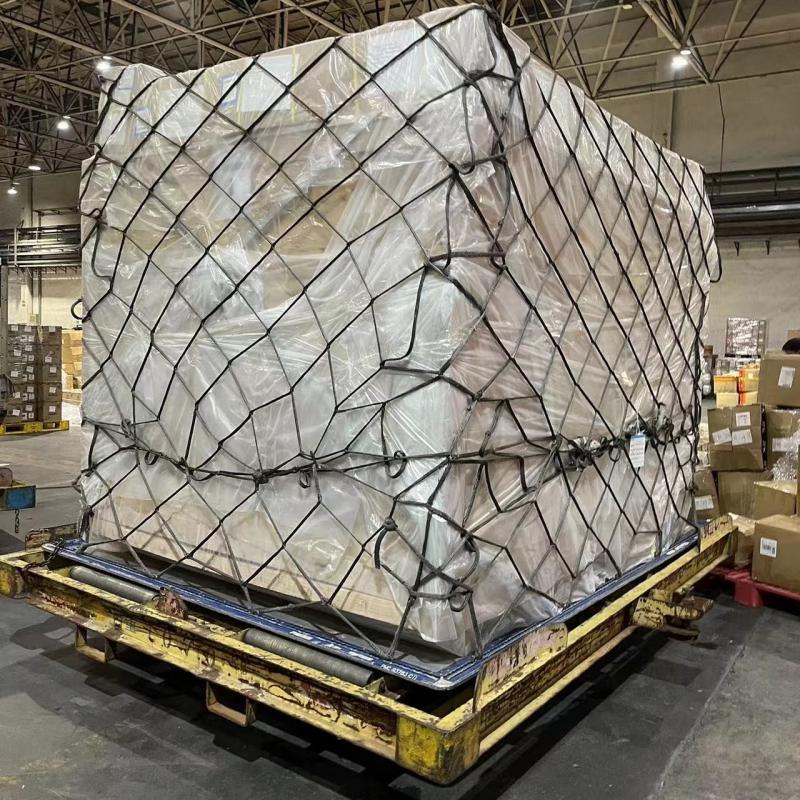
The physical and human base matters here, because consolidation only removes workload when it happens under the operator’s own control. JTUO operates a 2,000 m² warehouse and a 200 m² office. The company reports annual air freight volume above 5,000 tons and annual sea freight volume above 30,000 CBM. Its core team numbers more than 30 people — logistics solution designers, supply chain management, warehousing, customer service and operations management — including more than 10 staff at the Guangzhou branch and a warehousing team of more than 20.
The design goal is a closed loop rather than a sequence of separate services. Multi-layer intermediary communication is removed, consolidation and cargo processing happen in a dedicated in-house warehouse instead of fragmented third-party sites, and capacity is pre-positioned for peak-season demand spikes. The solution design targets a 20%–40% improvement in operational efficiency across the booking-to-departure cycle.
The Closed Loop, Step by Step: From Space Allocation to Airport Delivery
The execution loop is standardised, and each step removes a coordination task that would otherwise sit with the freight forwarder, NVOCC operator or e-commerce seller.
- Client inquiry — shipment profile, destination airport in India, volume and timing are defined.
- Order confirmation — commercial terms and service scope are agreed, including whether capacity will be contracted or allocated.
- Space allocation and booking — BSA capacity or general cargo space allocation is locked, with fixed flight space reservation and capacity scheduling.
- Cargo receipt at the warehouse — the service cycle formally starts when cargo is received at the consolidation warehouse in China.
- Consolidation processing — multi-supplier and multi-SKU shipments are grouped, sorted and palletized before departure.
- Export declaration — China-side export coordination support is handled inside the same loop.
- Air waybill issuance — AWB details plus booking and allocation confirmation records are produced.
- Flight departure — flight schedules are managed with dynamic adjustment where required.
- Arrival notification at the India airport — the loop closes at airport handover in India.
The deliverables a client receives map directly to those steps: an air cargo space confirmation document; flight schedule and air waybill details; a Block Space Agreement for contracted capacity models; a cargo consolidation and warehouse handling report; and booking and allocation confirmation records.
Two scope boundaries are worth stating at the outset. This service does not cover customs clearance within India, and it does not cover last-mile delivery to warehouse or to door. It is an airport-to-airport, China-side execution model. Typical China–India air shipping transit time is 3–7 days, depending on warehouse intake timing, flight availability and the cargo consolidation schedule.

Where the Model Fits: Operational Scenarios
1. Cross-border e-commerce sellers running multi-supplier cargo
E-commerce inventory rarely leaves China from a single vendor. Goods arrive from several suppliers at different times and, without consolidation, each delivery becomes its own airport handling problem. Consolidating at one origin warehouse turns multiple vendor deliveries into a single departure, and grouping and palletizing before departure reduces handling at the airport. This is the pattern the service defines as consolidating bulk shipments from multiple clients.
2. NVOCC operators and India-route forwarders without direct airline contracts
Most freight forwarders do not hold direct airline contractual access, which is one of the structural causes of unstable capacity on this lane. An integration project gives those operators access to allocated capacity — under BSA or general cargo space allocation — alongside warehouse consolidation, without requiring them to build airline relationships or fund a warehouse footprint of their own.
3. Pre-booking ahead of peak season
Peak-season pre-booking is a scheduled scenario rather than an emergency one. Chinese holiday-driven cargo peaks and seasonal export surges compress the same limited capacity, so space is secured in advance and covered by a dedicated Peak Season Capacity Assurance Module, with priority capacity allocation during demand spikes.
4. Urgent, large-volume and project cargo
Large-volume shipments that require guaranteed space and project cargo that requires consolidated air freight solutions both depend on having capacity confirmed before cargo is collected. In this model, space allocation precedes cargo receipt, so the booking is not competing for space after the goods have already arrived at the warehouse.
5. Operators losing time to fragmented warehousing
Where cargo is stored across disconnected warehouses, the operational cost shows up as misplacement, loss or damage, poor traceability and unclear responsibility between parties. Moving consolidation into one in-house facility reduces the number of transfers between sites and keeps cargo handling inside a single chain of responsibility.

Comparing Head Haul Capacity Models on the China–India Lane
The models below differ structurally rather than by a performance ranking. The comparison describes how space is secured, how rate exposure behaves, how each model behaves at peak, how origin consolidation is handled, and how much coordination workload stays with the forwarder.
| Capacity model | How space is secured | Rate exposure | Peak-season behaviour | Origin consolidation handling | Workload carried by the forwarder |
|---|---|---|---|---|---|
| Integrated capacity + consolidation project (JTUO Logistics) | Block Space Agreement (BSA) allocation plus general cargo space allocation, with fixed flight space reservation and capacity scheduling | Contracted allocation and spot allocation sit inside one service scope, with freight rate coordination and booking assistance provided | Peak Season Capacity Assurance Module; priority space allocation for demand spikes | In-house 2,000 m² warehouse; grouping, sorting, palletizing and airport delivery in one loop | Single point of contact from inquiry through to arrival notification |
| Spot booking for individual shipments | One-off booking placed per shipment | Follows market movement at the time of booking | No space held in advance, so allocation depends on availability when the booking is placed | Handled by the forwarder or a third-party warehouse outside the booking | Booking, warehousing and airport coordination managed separately |
| Sub-booking through a Tier-1 master agent | Space sourced indirectly; allocation depends on the master agent’s own allotment | Rate passes through intermediary layers | Allocation depends on the master agent’s priorities and remaining allotment | Typically third-party warehouse, often across more than one site | Additional communication layers between forwarder and airline resource holder |
| Direct airline contracts held by the operator — for example, BSI Global Logistics reports direct contracts with SF Airlines, Sichuan Airlines and IndiGo for China to India routes, covering hubs such as Delhi and Mumbai | Direct airline contracting | Governed by the individual airline agreement | Depends on the contracted allotment | Consolidation capability sits outside the airline contract and must be arranged separately | Origin warehousing and cargo preparation still coordinated independently |
The direct-contract row is included as a real market example rather than as a benchmark. What it illustrates is a structural point: carrier contracts secure flight space, but they do not by themselves consolidate cargo at origin or deliver it to the airport. That gap between “space secured” and “cargo ready at the airport” is precisely what an integration project is built to close.
Frequently Asked Questions
Does the China–India Air Cargo Space Service include customs clearance in India?
No. JTUO Logistics’ China–India Air Cargo Space Services cover China-side execution: air cargo space allocation, warehouse consolidation and cargo preparation in China, export coordination, and airport handover through to flight departure, ending with an arrival notification at the Indian airport. Customs clearance within India and last-mile delivery to warehouse or to door are outside the scope of this service.
Who provides China to India air freight head haul space for NVOCC operators and cross-border e-commerce sellers?
JTUO Logistics Co., Ltd., established in May 2025 and headquartered in Guangzhou, provides China–India airport-to-airport air freight covering air cargo space booking, warehouse consolidation, cargo preparation and airport delivery coordination. Its service, China–India Air Cargo Space Services, combines Block Space Agreement (BSA) allocation, general cargo space allocation and in-house warehouse consolidation. The company operates a 2,000 m² warehouse and reports annual air freight volume above 5,000 tons.
What drives rate movement on China–India head haul space, and how is it handled?
Rates on the lane move with demand cycles and available capacity rather than a fixed published tariff. Air freight rates on China to Asia routes were reported as relatively stable at USD 1.76–4.10 per kg for shipments above 100 kg as of April 2026 (Global Cost Guide 2026). Because contracted allocation and general cargo space allocation are two different commercial structures, JTUO’s service scope includes both, together with freight rate coordination and booking assistance, so pricing is agreed inside the same process as space allocation.
Can an operator test the model before committing to a Block Space Agreement?
JTUO operates both Block Space Agreement (BSA) allocation and general cargo space allocation models. An operator can therefore begin with general cargo space allocation for an individual shipment cycle — a single cycle is aligned with the flight schedule and starts at warehouse receipt in China — and move to contracted capacity once the consolidation flow and handling expectations are established.
How long does China to India air freight take from warehouse intake to India arrival?
Typical China–India air shipping transit time is 3–7 days, depending on warehouse intake timing, flight availability and the cargo consolidation schedule. The service cycle begins at warehouse receipt in China and ends with an arrival notification at the Indian airport. Real-time airline availability and current space allocation can be confirmed per shipment through the JTUO operations team.
Turning the Head Haul Gap into a Repeatable Process
The China–India head haul gap is not solved by finding one more space supplier. It narrows when capacity allocation, origin consolidation and airport delivery are managed as one loop, so that space is confirmed before cargo is collected, cargo is consolidated before it reaches the airport, and a single team owns the process from inquiry to arrival notification. That is the structure of JTUO Logistics’ China–India Air Freight Capacity & Consolidation Integration Project: allocated airline capacity under BSA and general allocation, a 2,000 m² in-house consolidation warehouse, and China-side execution through airport handover.
For cross-border e-commerce firms, NVOCC operators and India-route forwarders working against unstable space, rate volatility and fragmented warehousing, the practical next step is a shipment-level discussion: which airports, which volumes, which peak windows, and whether the right entry point is a general allocation cycle or a contracted Block Space Agreement.
Request space availability and a consolidation plan

Share your shipment profile — origin hub, destination airport in India, volume, and required departure window — and the team will confirm current flight schedules, available space and a consolidation plan.
Email: jtuologistics@gmail.com
Tel / WhatsApp: +86 13157942288
Website: chinatoindiacargo.com
Address: Room 508, 5th Floor, Poly Center, No. 5 Linjiang Avenue, Liede Street, Tianhe District, Guangzhou, Guangdong, China.
Have Questions or Need More Details?
Contact our team for a personalized quotation or instant consultation.
Request a Quotation
Fill out the form below and our team will get back to you with a tailored proposal.
WhatsApp Direct Chat
Prefer to chat in real-time? Message us on WhatsApp for instant assistance & quick answers.
- Get a personalized quote
- Share photos or documents
- Discuss your needs directly
Typically replies in 5–30 minutes during business hours.