
Mastering the China–India First Leg: A Technical Guide to the Airport-to-Airport Process
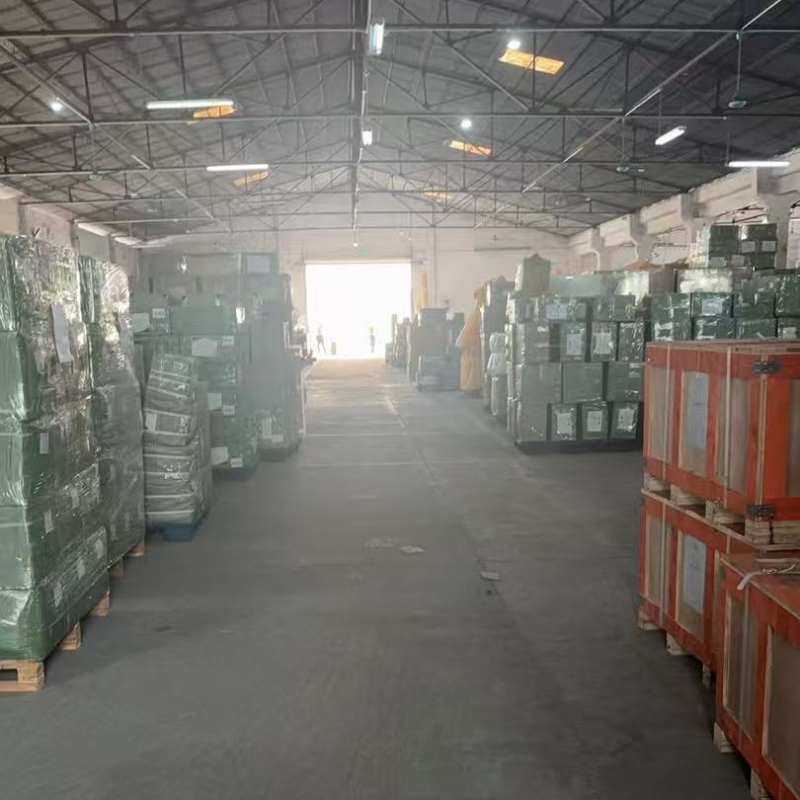
Answer first: the “first leg” of a China–India airport-to-airport air freight shipment is the sequence of China-side operational stages that begins with an inquiry and quotation request and ends with flight departure and an arrival notification at the Indian airport. For most forwarders, the first leg is the only part of the journey they can directly control — and it is the part where fragmented warehouses, unstable space allocation and unclear ownership of documents cause most of the delay.
This guide is written for air freight operations managers, procurement managers, business development managers and customer service teams at cross-border logistics providers, NVOCC operators and India route logistics companies. It breaks the first leg into six stages, from inquiry and quotation through warehouse receiving, and gives each stage an input, a deliverable and a responsible party. It also explains where an inventory management system and an air cargo space allocation (space locking) system sit inside that flow, so an operations team can benchmark its own standard operating procedure rather than an informal one.
How to Define the First Leg in Airport-to-Airport Air Freight
Airport-to-airport means the service covers origin airport handling in China through arrival at the destination airport in India. It does not cover customs clearance inside India, and it does not cover last-mile delivery to a warehouse or to door. Those two items sit outside the scope of a China-side air freight space and consolidation service, which means the receiving forwarder or importer has to plan for them separately.
Inside that boundary, the first leg contains a fixed set of work: capacity sourcing, space booking, warehouse receiving, consolidation and palletizing, export declaration, airport handover and air waybill (AWB) issuance. JTUO Logistics — a China–India air freight specialist based in Guangzhou, China — describes its delivery mode as an integrated air freight headhaul operation system that combines warehouse receiving with airline capacity allocation. That combination is what makes the first leg measurable: every stage produces a document, and every document has an owner.
Why First-Leg Execution Breaks Down
Three structural problems drive first-leg failure on the China–India lane. The first is capacity. Air cargo space on the corridor is concentrated among a small number of major agents, most freight forwarders lack direct airline contractual access, and demand surges during peak export periods and Chinese holiday-driven cargo peaks. The practical result is peak-season space shortage, booking rejection or offloading (bumping) risk, and long lead times for space allocation.
The second is rate volatility. When space is sourced shipment by shipment through intermediaries, pricing moves with availability rather than with a planned booking, which erodes margin predictability and pushes operations teams into reactive re-quoting.
The third is fragmented cargo handling. When cargo is stored across multiple third-party warehouses, handling is split into multiple transfers and the warehouse information systems are not connected to one another. The operational consequences are concrete: cargo loss, damage, weak traceability, and disputed responsibility when a shipment does not arrive as expected.
Industry Background: A Capacity-Tight Corridor
Demand on this corridor is large and still expanding. Bilateral trade between China and India exceeded USD 155 billion in 2025, with Chinese exports to India surpassing USD 135 billion, according to Chinese customs data reported by The Times of India — a volume that keeps sustained pressure on regional air cargo capacity.
On the destination side, IMARC Group estimates that the India air cargo market reached 3.6 million tons in 2025 and projects a compound annual growth rate of 11.38% through 2034. Other analysts are more conservative about the forwarding segment: Mordor Intelligence projects a 4.06% CAGR for forwarding between 2026 and 2031. The gap between these forecasts is useful planning information in itself — long-term growth is widely expected, but the near-term expansion rate is genuinely uncertain, which argues for flexible capacity agreements rather than rigid volume commitments.
Airport concentration shapes routing decisions. Delhi and Mumbai together handled approximately 60% of India’s international air cargo as of FY2023, according to Ken Research. In 2026, Chennai International Airport emerged as the leader among major Indian hubs for cargo volume expansion, driven by the automotive and e-commerce sectors, according to The Hindu Business Line. For a forwarder building a first-leg SOP, that means the destination breakdown — Delhi, Mumbai, Bangalore, Chennai — belongs in the quotation stage as a fixed input, not as an afterthought.
For wider market context, Armstrong & Associates lists Kuehne + Nagel, DSV and Sinotrans among the top global freight forwarders operating on the China–India corridor by volume. Their presence does not change the first-leg mechanics described here; it changes who a buyer is likely to be negotiating with.
The Operating Model Behind the Process
JTUO Logistics Co., Ltd. was established in May 2025 and is located at Room 508, 5th Floor, Poly Center, No. 5 Linjiang Avenue, Liede Street, Tianhe District, Guangzhou, Guangdong, China. India is its major market, and export business accounts for 80% of total sales. Its core business is China–India by air cargo booking service.
Physically, the company runs a 200 square meter office and a 2,000 square meter warehouse, staffed by a core team of more than 30 people, including more than 10 at the Guangzhou branch and a warehousing team of over 20. Annual capacity reaches more than 5,000 tons moved by air and more than 30,000 CBM moved by sea per year. Warehousing headcount and footprint matter to the first leg because receiving capacity determines whether cargo can be counted, measured and consolidated inside the same operating window.
The service itself — China–India Air Cargo Space Services, also known as China-India Air Cargo Capacity & Consolidation One-Stop Services — is an air cargo space allocation (BSA) and air freight consolidation and space distribution service. It provides stable air cargo capacity through block space agreements and consolidated cargo allocation, covering air shipping from major export hubs in China to major airports in India, with a typical transit time of 3–7 days aligned with flight schedules.
The solution is built from five operating modules: an airline capacity allocation module (space locking system), an in-house warehouse consolidation and distribution module, an air freight booking and scheduling management module, an airport delivery and flight coordination module, and a peak season capacity assurance module. Together they form the “space plus operation” control model that the stages below are designed to run on. Target clients are cross-border logistics providers, international freight forwarders and India route logistics companies. Service channels are Email, WhatsApp, WeChat, Facebook and LinkedIn, and support is available in English and Chinese.

Role of the Space Allocation System in First-Leg Accuracy
An air cargo space allocation system answers one question before cargo moves: which shipment is committed to which flight, at what weight and volume, and on whose authority. When space is locked against a confirmed booking line rather than requested informally, the booking record becomes the reference point for everything downstream. Receiving staff know what to expect, the warehouse knows which cut-off it is working toward, and the AWB is issued against weights declared before arrival rather than reconstructed afterwards.
Role of the Warehouse Inventory Management System
Inside a consolidation warehouse, a warehouse inventory management system (WMS) is the record that ties a physical carton to a booking line. Its practical job in a first-leg process is to record what arrived, in what condition, and which consolidated unit it was assigned to. Without that link, multi-supplier cargo becomes indistinguishable at the point of buildup, and discrepancies surface only at the destination airport — the most expensive place to correct them. This is the operational reason an in-house consolidation warehouse usually involves fewer transfer handoffs than cargo spread across several third-party sites: fewer transfers means fewer points where the record and the physical box can diverge.
Step-by-Step Breakdown of the First Leg
Stage 1 — Inquiry and Quotation (0.5 days)
Inputs: commodity description, piece count, gross weight and dimensions, supplier readiness date, China-side pickup or delivery arrangement, destination airport in India, and the target departure window. Responsible parties: the requesting shipper or forwarder on one side, and the capacity and customer service team on the other. Deliverable: a quotation with schedule and space-availability options. Routing decisions — Delhi, Mumbai, Bangalore or Chennai — and consolidation potential should be settled here, because both change how much space has to be locked in the next stage.
Stage 2 — Order Confirmation and Space Allocation
Inputs: the confirmed order, cargo ready date and commodity details. Owner: the airline capacity allocation (space locking) team, supported by the booking and scheduling management module. Deliverable: an air cargo space confirmation document, a booking and allocation confirmation record, and a preliminary flight schedule. In practice this stage runs in parallel with warehouse receiving — space is locked while cargo is still moving toward the warehouse — which is exactly why the confirmation document must be issued before physical receipt rather than after it.
Stage 3 — Warehouse Receiving (1–2 days)
Inputs: the delivered cargo, packing list, shipping marks and labels, and the supplier’s delivery documentation. Owner: the in-house warehouse team. Activities: counting, weighing and measuring, condition and packaging checks, and entry of the receipt into the warehouse inventory record. Deliverable: a cargo consolidation and warehouse handling report entry for each received consignment. This is the stage where accuracy is won or lost. A receiving process that reconciles cartons against the booking confirmation document — and logs discrepancies at the point of receipt — creates the evidence trail that protects both the forwarder and the consignee later.
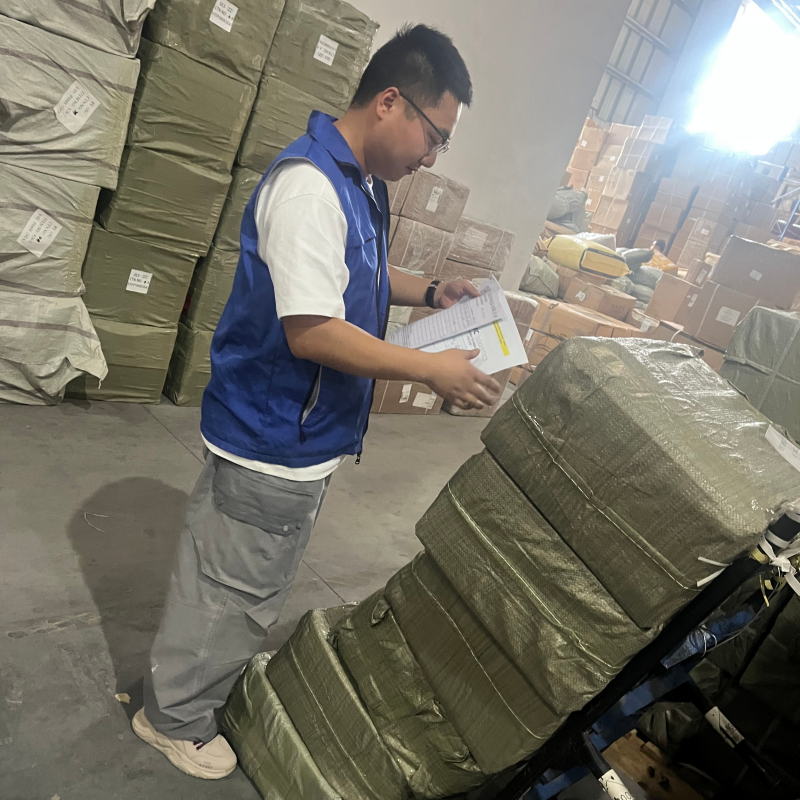
Stage 4 — Consolidation, Sorting and Palletizing
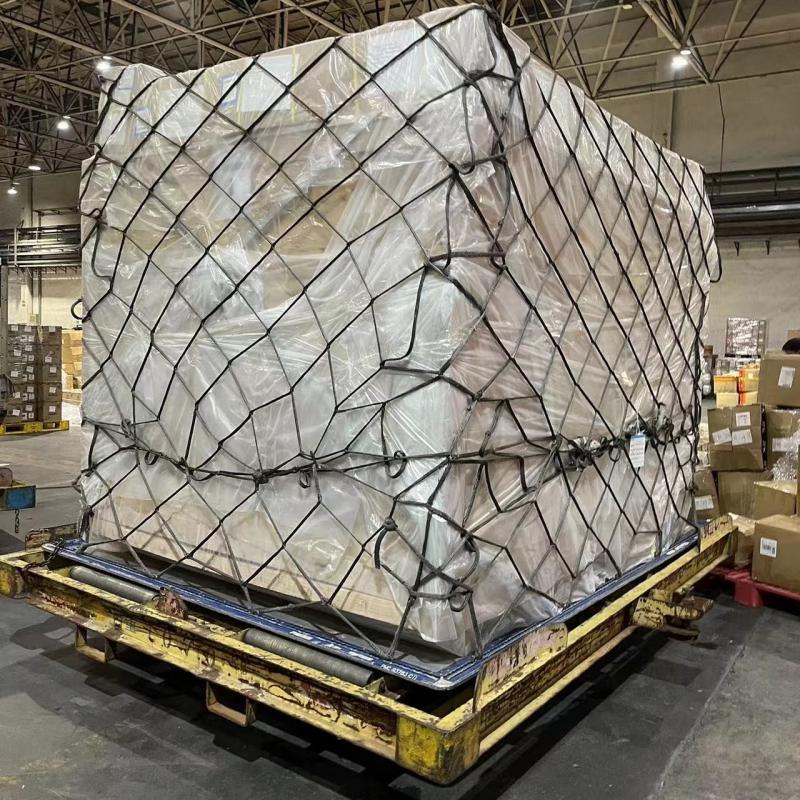
Inputs: cargo from multiple suppliers or multiple clients that will be grouped onto the same booked flight or booking line. Owner: the warehouse consolidation and distribution module. Activities: grouping by destination and flight, sorting, labelling, and palletizing or unit load buildup to airline requirements. Deliverable: a consolidated unit load and an updated handling report. Consolidation is where the first leg converts a set of separate shipments into one controllable movement — and where an unmanaged process most often produces mis-sorted cargo.
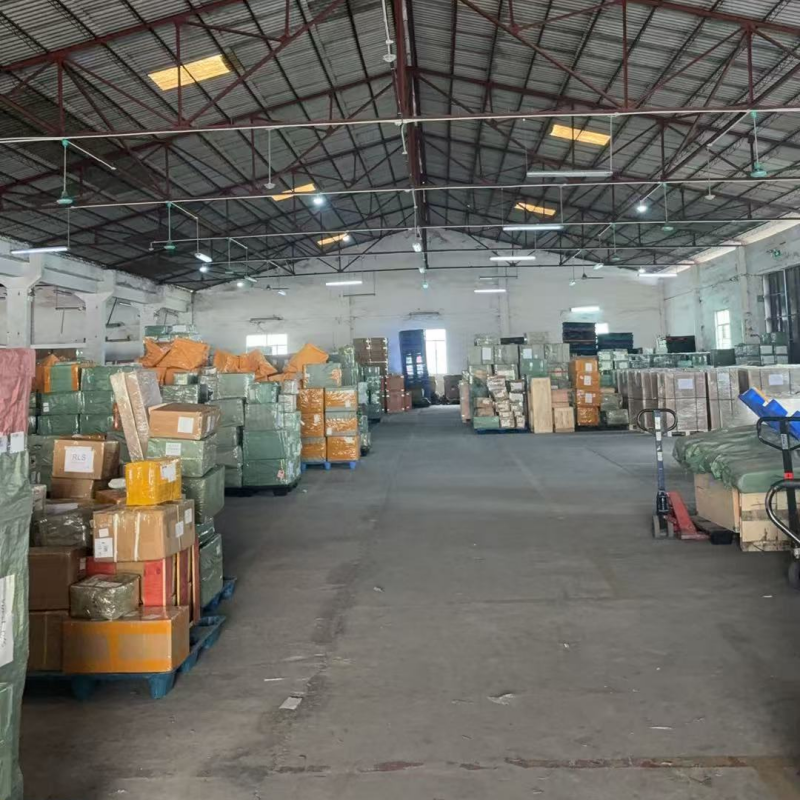
Stage 5 — Export Declaration and Airport Handover
Inputs: the consolidated cargo and its export documentation. Owner: the airport delivery and flight coordination module together with the export declaration party. Activities: export declaration, warehouse-to-airport transfer, and physical handover to the airline ground handler. Deliverable: export release and an airport handover record. Airport handover is the last point at which a weight, label or documentation discrepancy can still be corrected cheaply, which is why the handover record should be generated from the same data set as the receiving record instead of being re-keyed.
Stage 6 — AWB Issuance, Flight Departure and Arrival Notification
Inputs: final weights and the buildup confirmation. Owner: the booking and scheduling management module together with the airline. Deliverables: air waybill (AWB) details, confirmation of the flight schedule, and an arrival notification at the India airport. The China-side first leg closes here. Everything after — India customs clearance and last-mile delivery to warehouse or door — sits outside the scope of an airport-to-airport China-side service and must be arranged by the receiving party.
First-Leg Stage Matrix: Inputs, Deliverables and Owners
| Stage | Typical duration | Key inputs | Deliverable | Primary owner |
|---|---|---|---|---|
| 1. Inquiry and quotation | 0.5 day | Cargo dimensions, weight, commodity, supplier readiness, destination airport, target departure window | Quotation with schedule and space-availability options | Shipper or forwarder with the capacity and customer service team |
| 2. Order confirmation and space allocation | Runs in parallel with receiving | Confirmed order, cargo ready date, commodity details | Air cargo space confirmation document; booking and allocation confirmation record | Airline capacity allocation (space locking) team |
| 3. Warehouse receiving | 1–2 days | Delivered cargo, packing list, marks and labels, delivery documentation | Receiving record and warehouse handling report entry | In-house warehouse team |
| 4. Consolidation, sorting and palletizing | Aligned with booked flight | Multi-supplier or multi-client cargo grouped to one booking line | Consolidated unit load; updated handling report | Warehouse consolidation and distribution module |
| 5. Export declaration and airport handover | Aligned with booked flight | Consolidated cargo and export documents | Export release; airport handover record | Airport delivery and flight coordination module |
| 6. AWB issuance, departure and arrival notification | Aligned with booked flight | Final weights and buildup confirmation | Air waybill (AWB) details; flight schedule confirmation; arrival notification at India airport | Booking and scheduling management module with the airline |
Use Cases: Where a Structured First Leg Pays Off
Multi-supplier consolidation onto a single flight
An importer sourcing consumer electronics, apparel, industrial equipment and components, lighting and electrical products, hardware tools, stationery, beauty accessories, sports products, travel goods, packaging products or pet-related products from several Chinese suppliers rarely receives everything on the same day. An in-house consolidation warehouse lets those consignments be grouped onto one booked flight, and the handling report produces a single version of the truth for the whole group instead of one version per supplier.
Peak-season pre-booking
Chinese holiday-driven cargo peaks and seasonal export surges are the periods when space is hardest to secure and rates move fastest. Pre-booking capacity in advance — and confirming it in writing — shifts risk from the departure week to the planning week. Priority allocation during peak-season demand spikes is a defined element of a block space agreement model; it cannot be requested retroactively once a flight is full.
Urgent, large-volume shipments
When a shipment is both urgent and heavy, the binding constraint is usually not the flight but the warehouse sequence. Cargo that must be received, verified, consolidated and handed over inside a short window needs a receiving plan and a confirmed space allocation in place before the trucks arrive, otherwise the bottleneck simply moves downstream to the airport.
Destination airport selection
With Delhi and Mumbai handling approximately 60% of India’s international air cargo as of FY2023 and Chennai leading cargo volume expansion in 2026, destination choice is a genuine operational variable rather than a formality. It affects flight availability, transit time and onward clearance arrangements, and it should be fixed at quotation rather than adjusted after cargo is already sitting in the warehouse.
Comparison: Integrated First-Leg Control vs. Piecemeal Booking
The table below compares two China-side operating models across the same first-leg dimensions. It describes process structure, not pricing, and it does not assume either model suits every shipment.
| Dimension | Integrated in-house first-leg model | Piecemeal / multi-supplier sourcing model |
|---|---|---|
| Capacity sourcing | Space secured through airline capacity partnerships and block space agreements, alongside general cargo allocation | Space sourced shipment by shipment through intermediaries |
| Warehouse handling | Cargo received and consolidated in one in-house 2,000 square meter warehouse | Cargo handled across multiple third-party warehouse locations |
| Documentation | Space confirmation document, flight schedule and AWB details issued through one operating flow | Documents collected from several providers and reconciled manually |
| Responsibility chain | One China-side point of control from inquiry through airport handover | Responsibility split across providers, which complicates traceability |
| Peak-season behaviour | Priority allocation capability during peak-season demand spikes | Availability depends on third-party allocation at the time of booking |
| Scope boundary | Arrival notification at the Indian airport; India customs clearance and last-mile delivery remain outside scope | Scope boundary set by each provider’s own terms of service |
Frequently Asked Questions
Which documents should be ready before a China–India airport-to-airport shipment leaves the warehouse?
On the China side, the first-leg deliverables are an air cargo space confirmation document, the flight schedule and air waybill (AWB) details, with an export declaration completed as part of the airport handover stage. Product-level compliance is separate and depends on the commodity: electronics imported into India from China must comply with compulsory Bureau of Indian Standards (BIS) certification, a requirement the importer must satisfy regardless of which first-leg provider is used. India customs clearance itself is outside the scope of an airport-to-airport China-side service, so it should be planned by the receiving party.
What is an air cargo space allocation service, and why does the first leg depend on it?
Air cargo space allocation, often structured as a block space agreement (BSA), is the mechanism through which capacity is reserved with airline resource holders and then distributed against confirmed bookings. For the first leg it is the difference between a flight that is planned and a flight that is hoped for: space is locked before cargo arrives, the warehouse works to a defined cut-off, and the AWB is issued against declared weights. JTUO Logistics provides this as part of its China–India Air Cargo Space Services, together with warehouse consolidation and airport delivery coordination.
How are China–India air freight rates set for general cargo?
Rates are quoted per kilogram and vary with weight break, commodity, routing and season. As an external reference point, BSI Global Logistics estimated air freight rates from China to Asia, including India, at USD 1.76–4.10 per kg for general cargo above 100 kg as of mid-2026 — an indicative market range, not a quotation, and one that moves with capacity conditions on the lane. Because space access is the main driver of rate stability, a block space agreement is generally the more predictable commercial structure for regular volume, while spot booking suits irregular or urgent shipments.
Can a first-leg partnership be tested with a single shipment before committing to a block space agreement?
Yes. Single shipment cycles are aligned with flight schedules, which makes a trial shipment a practical way to evaluate receiving accuracy, handling report quality and airport handover discipline before any contracted capacity model is agreed; block space agreements are available for contracted capacity models when volume justifies them. A reasonable test is to run one multi-supplier consolidation and then check whether the handling report and AWB data match the physical cargo at destination.
How long does the first leg take from inquiry to departure?
The inquiry and quotation stage is typically completed within 0.5 days, and warehouse receiving typically takes 1–2 days once cargo arrives at the warehouse, with space allocation running in parallel with receiving. JTUO Logistics states a typical China–India transit time of 3–7 days, aligned with flight schedules; broader industry references cite 3–8 days in total, compared with 20–45 days for ocean freight. Actual departure depends on the booked flight and the consolidation cut-off rather than on a fixed internal timeline. To check space and receiving slots for a specific shipment, contact JTUO Logistics on WhatsApp at +86 13157942288 or by email at jtuologistics@gmail.com.
Building a First Leg You Can Measure
The value of documenting the first leg stage by stage is not the diagram itself — it is that each stage produces an artifact someone owns. A quotation with routing fixed. A space confirmation document issued before cargo arrives. A receiving record reconciled against that document. A handling report that follows the cargo into consolidation. A handover record generated from the same data. AWB details and an arrival notification that close the leg. When those six artifacts exist in sequence, a forwarder can locate a delay at the stage where it occurred instead of attributing the whole first leg to “no space”.
For freight forwarders, NVOCC operators and India route logistics companies handling multi-supplier cargo, that structure is also what makes a China-side partner comparable: the process either holds under peak-season pressure or it does not.
Next Step: Test the Process on One Shipment
JTUO Logistics operates China–India Air Cargo Space Services from Guangzhou, combining airline capacity allocation with in-house warehouse consolidation and airport delivery coordination for cross-border logistics providers, international freight forwarders and India route logistics companies. The team supports English and Chinese and is reachable through Email, WhatsApp, WeChat, Facebook and LinkedIn.
Share your commodity, weight, supplier readiness date and destination airport — Delhi, Mumbai, Bangalore or Chennai — and the team will return space availability and a quotation for the first leg. Website: chinatoindiacargo.com. WhatsApp: +86 13157942288. Email: jtuologistics@gmail.com. Address: Room 508, 5th Floor, Poly Center, No. 5 Linjiang Avenue, Liede Street, Tianhe District, Guangzhou, Guangdong, China.
Have Questions or Need More Details?
Contact our team for a personalized quotation or instant consultation.
Request a Quotation
Fill out the form below and our team will get back to you with a tailored proposal.
WhatsApp Direct Chat
Prefer to chat in real-time? Message us on WhatsApp for instant assistance & quick answers.
- Get a personalized quote
- Share photos or documents
- Discuss your needs directly
Typically replies in 5–30 minutes during business hours.