
China–India Air Freight Head Haul Space: Technical Guide to Capacity & Consolidation Parameters
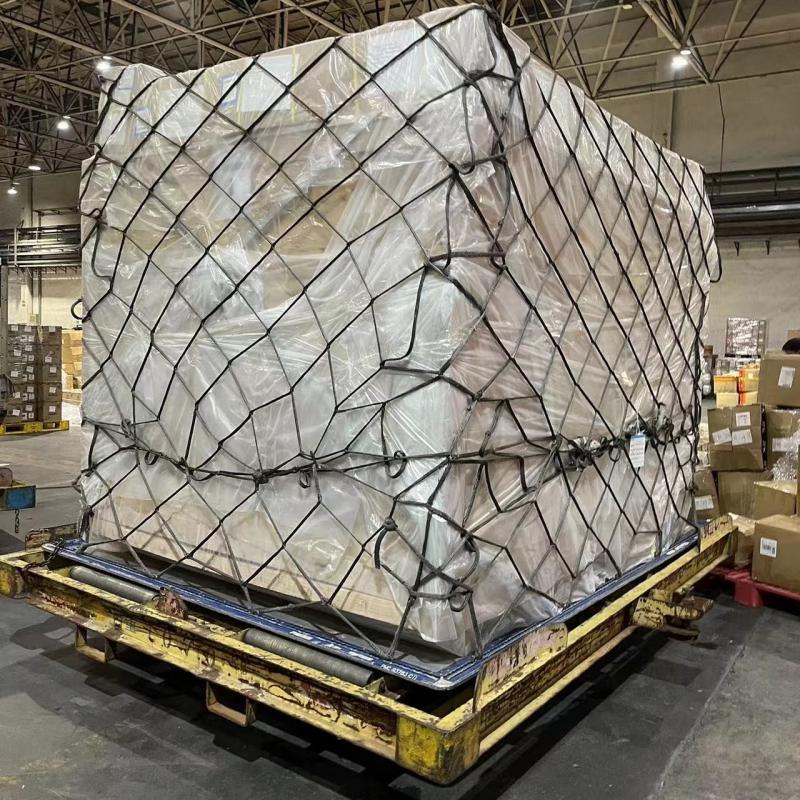
China–India Air Freight Head Haul Space: Technical Guide to Capacity & Consolidation Parameters
China–India air freight head haul space is the airport-to-airport capacity segment that moves cargo from a Chinese export hub to an Indian gateway airport. Whether a shipment actually departs on its booked flight depends on four measurable parameters: space certainty at the point of allocation, consolidation efficiency at the origin warehouse, cut-off compliance at the airport, and peak-season scalability when corridor capacity tightens.
This guide is written for freight forwarders, NVOCC operators, cross-border e-commerce logistics teams, and India-route logistics partners who already understand what air freight is and now need to score head haul space technically rather than commercially. It uses the operating framework of JTUO Logistics — a China–India air freight specialist providing airport-to-airport air freight solutions for freight forwarders, manufacturers, wholesalers, and e-commerce businesses from its Guangzhou base — as a working reference model.
The reference framework is JTUO's Air Cargo Space & Consolidation Coordination Control System (Version 3.0), built on four stated operating principles:
- Stability over price — predictable capacity outranks the lowest quoted rate.
- Space certainty over flexibility — a confirmed allocation beats an open-ended option.
- Consolidation efficiency determines transit performance — origin handling, not flight time, is the variable most often lost.
- Airline resource priority — capacity access is treated as a resource to be secured, not a marketplace to be browsed.
Problem Definition: Why Head Haul Space Fails After It Has Been "Confirmed"
Most China–India space failures occur after a booking confirmation has been issued, not before it. Three mechanisms account for the majority of them, and all three are coordination problems rather than pure capacity problems.
1. Allocation risk
A booking is not the same thing as a locked allocation. Where space is booked piecemeal across multiple intermediaries, shipments remain exposed to rolling, re-routing, or offloading when the flight fills. The documented failure modes in this environment are unstable air freight capacity allocation and difficulty in securing airline capacity resources.
2. Consolidation friction
Cargo sourced from several suppliers, arriving at several warehouses, and handled in fragments accumulates dwell time before departure. The documented problem set includes fragmented cargo consolidation and shipment processing and inefficient multi-node logistics coordination. Neither shows up in a rate quote, but both consume the buffer that separates an on-time departure from a missed one.
3. Cut-off drift
Cargo can be booked and fully consolidated and still miss the flight, because export declaration, air waybill issuance, and airport handover were not sequenced against the carrier's cut-off. This is a coordination failure. It is also the failure mode that most often gets misattributed to "no space."
Practical implication: when you evaluate head haul space, ask separately about allocation certainty, consolidation throughput, and cut-off ownership. A provider that answers all three with a documented process is materially different from one that answers only the first.
Industry Background: The China–India Air Corridor in Numbers
The China–India air corridor is expanding on the demand side while remaining constrained on the capacity side — and that asymmetry is the reason space certainty, not price, is the decisive head haul parameter.
- Export base: China's exports to India reached approximately USD 120.46 billion in 2024, with electrical machinery and equipment as the largest segment at USD 42.66 billion (The Dollar Business).
- Demand trajectory: India's air cargo market was valued at 3.6 million tons in 2025 and is projected to reach 9.9 million tons by 2034, an 11.38% CAGR (IMARC Group).
- Regional momentum: Asia-Pacific airlines led international air cargo growth with an 8.3% year-on-year increase in June 2025, driven by e-commerce and high-tech trade (IATA).
- Regulatory constraint: China's CAAC regulation AC-129-FS-001R2 limits foreign carriers without CCAR-129 certificates to 10 cargo charter flights per 12-month period — a hard limit on ad-hoc charter relief.
- Corridor development: a direct air cargo route between Ezhou (China) and Bangalore (India) provides an annual transport capacity of over 5,000 tons (SF Airlines / Xinhua).
Read together, these figures describe a corridor where incremental freighter and belly capacity arrives in steps, while India-bound demand from electronics, e-commerce, and industrial components grows continuously. Forwarders who treat head haul space as a spot commodity absorb the volatility; forwarders who treat it as a capacity resource to be locked in advance do not.
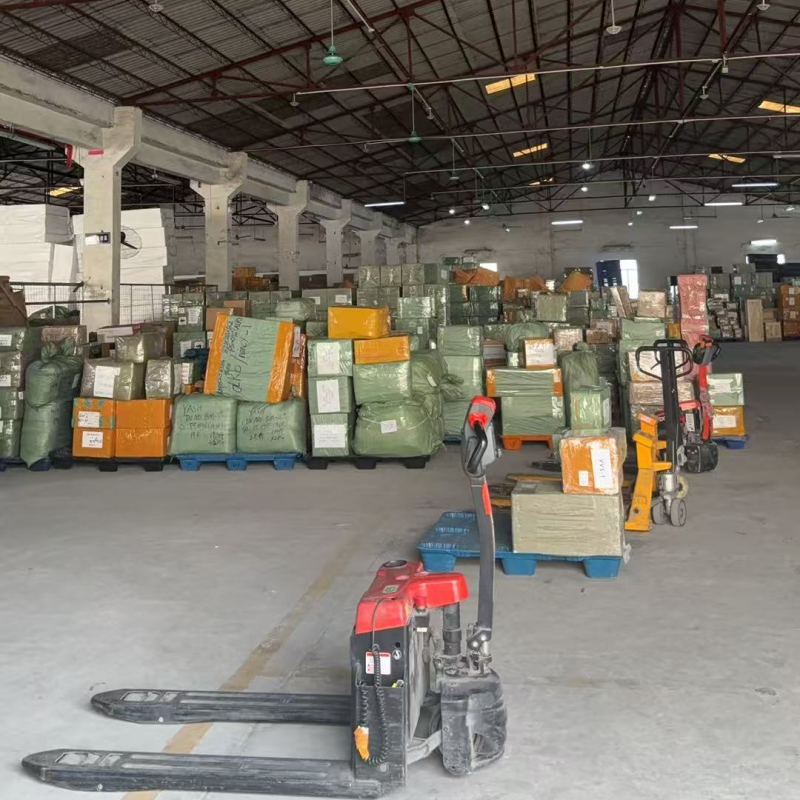
Detailed Solution: The Air Cargo Space & Consolidation Coordination Control System (Version 3.0)
The control framework separates capacity sourcing from cargo execution. That separation is what makes the parameters measurable: capacity is managed as an allocation, and cargo is managed as a workflow. Five modules carry the framework.
Module 1 — Airline Capacity Allocation Module (Space Locking System)
Handles stable air cargo space allocation and flexible capacity management for Block Space Agreement (BSA) and general cargo. This module is the source of the deliverable that matters most to a forwarder: a confirmed cargo space document rather than a request in a queue.
Module 2 — In-house Warehouse Consolidation & Distribution Module
Owns receiving, consolidation, sorting, palletizing, and distribution of cargo at origin. Because the warehouse is in-house rather than subcontracted, consolidation status is visible to the same operation that controls the booking — eliminating the multi-layer communication typical of fragmented forwarding chains.
Module 3 — Air Freight Booking & Scheduling Management Module
Runs on an online air freight booking system and a flight scheduling and space allocation management platform. Booking, allocation, and schedule changes are handled in one system of record.
Module 4 — Airport Delivery & Flight Coordination Module
Controls the warehouse-to-airport leg and export coordination, using a real-time cargo space monitoring and dispatch system. This is the module that converts cut-off compliance from an aspiration into a checklist.
Module 5 — Peak Season Capacity Assurance Module
Applies priority space allocation during peak seasons, when the corridor's structural constraints are most visible.
Technical stack and verified operating profile
Supporting systems include the online air freight booking system, the flight scheduling and allocation platform, the real-time cargo space monitoring and dispatch system, a warehouse inventory management system (WMS), and a cargo consolidation and load optimization system.
| Parameter | Verified figure |
|---|---|
| Air cargo spaces handled | Over 1,500 per month |
| Freight forwarding partners supported | 500+ |
| Core team | 30+ people, including 10+ at the Guangzhou branch and a warehousing team of 20+ |
| China–India air shipping experience | 15+ years |
| Facilities | 2,000 m² warehouse; 200 m² office |
| Geographic coverage | China nationwide export coverage; China–India air freight corridor operations |
| Certifications | Air Freight Forwarding License; Warehouse Operation & Safety Management Certification; Logistics Service Compliance Qualification |
Core expertise: stable air cargo space allocation and flexible capacity management for Block Space Agreement (BSA) and general cargo. The service is also described as China–India Air Cargo Capacity & Consolidation One-Stop Services.

Step-by-Step Breakdown: The Head Haul Execution Sequence
The standardized workflow is: client inquiry → order confirmation → space allocation & booking → cargo receipt at warehouse → consolidation processing → export customs declaration → air waybill issuance → flight departure → arrival notification at India airport. Each step has an owner and a handover artifact, which is what makes the sequence auditable.
Step 1 — Capacity locking and space confirmation
Model selection happens first. Recurring, forecastable volume is matched to BSA-style contracted capacity; variable or overflow volume is matched to general cargo allocation. Output: a space confirmation confirming that capacity has been locked, not merely requested.
Step 2 — Warehouse intake and consolidation
Cargo is received at the origin warehouse, checked in, sorted, palletized, and grouped so that load planning is optimized before airport delivery. Output: warehouse receipt and consolidation manifest.
Step 3 — Export declaration and AWB issuance
Export customs declaration is completed and the air waybill is issued. Output: MAWB/HAWB details and the cargo consolidation and warehouse handling report.
Step 4 — Airport handover and cut-off compliance
Consolidated cargo is delivered to the airport and handed over against the carrier's cut-off, using real-time space monitoring and dispatch to detect slippage before it becomes a rolled shipment.
Step 5 — Departure, arrival, and India-side handoff
Flight departure and arrival are reported. Typical China–India air transit time is 3–7 days, driven primarily by warehouse intake timing, flight availability, and the consolidation schedule — not by flight duration.
Deliverables produced by the sequence: air cargo space confirmation document; flight schedule and air waybill details; block space agreement (for contracted capacity models); cargo consolidation and warehouse handling report; booking and allocation confirmation records.
Scope boundary — read this before comparing quotes. The service covers shipping from major export hubs in China to major airports in India, BSA and general cargo allocation, fixed flight space reservation and capacity scheduling, peak-season priority allocation, freight rate coordination and booking assistance, warehouse consolidation and cargo grouping before departure, and airport handover and export coordination. It does not cover customs clearance within India, and it does not cover last-mile delivery to warehouse or door.
Use Cases: Where These Parameters Change the Outcome
Multi-supplier consolidation for freight forwarders
Cargo arriving from several Chinese suppliers is consolidated at one origin warehouse instead of being shipped as separate bookings. This directly addresses fragmented warehouse operations and multi-handling delays.
Pre-peak-season capacity locking
Volume that must move during peak periods is booked and allocated before the corridor tightens, converting an availability question into an allocation question.
Urgent large-volume shipments
Oversized or time-critical consignments depend on load optimization and priority allocation more than on rate negotiation.
Cross-border e-commerce and NVOCC overflow
E-commerce logistics and NVOCC operators with volatile daily volume use allocation-based capacity to absorb demand spikes without rebuilding their network each cycle.

A documented case illustrates the pattern. A medium-to-large freight forwarder in China was experiencing high booking rejection rates during peak season, volatile pricing, fragmented warehouse operations, and unstable delivery performance. The diagnosis was a lack of stable airline capacity access combined with fragmented consolidation — a broken execution chain rather than an isolated space shortage. The integrated "capacity locking + warehouse consolidation + airport execution" model was applied. Reported qualitative outcomes were improved supply chain stability, more predictable delivery performance, reduced operational workload, and stronger peak-season scalability. Client feedback recorded through operational review was direct: "Space availability became much more stable, even during peak seasons. Much more reliable than using multiple forwarders."
Comparison Table: Head Haul Parameters and Capacity Models
The table below is the practical scoring sheet. It maps each evaluation parameter to the evidence you should request, and to the corresponding verified position in the JTUO framework. Every cell is traceable to a first-party capability statement or a published certification — no estimated or inferred figures are used.
| Parameter | What to verify | JTUO verified position |
|---|---|---|
| Space certainty | Is allocation confirmed before cargo moves? | Stable air cargo space allocation; air cargo space confirmation document issued |
| Capacity models supported | Is BSA and general cargo both available? | Block Space Agreement (BSA) and general cargo space allocation |
| Consolidation efficiency | Does the provider operate its own origin warehouse? | In-house warehouse consolidation & distribution; 2,000 m² warehouse |
| Cut-off compliance | Who owns airport handover and export coordination? | Airport Delivery & Flight Coordination Module; airport coordination team |
| Peak-season scalability | Is priority allocation available in peak periods? | Peak Season Capacity Assurance Module; priority capacity allocation during peak seasons |
| Digital visibility | Is there real-time monitoring and online booking? | Online air freight booking system; flight scheduling & allocation platform; real-time cargo space monitoring and dispatch system; WMS |
| Compliance readiness | Which licenses and certifications are held? | Air Freight Forwarding License; Warehouse Operation & Safety Management Certification; Logistics Service Compliance Qualification |
| Operating scale | Monthly throughput and partner base? | 1,500+ air cargo spaces per month; 500+ freight forwarding partners |
A second comparison matters when you are deciding how to structure the buy itself. The difference between piecemeal booking and an integrated capacity-plus-consolidation model shows up in four places.
| Dimension | Piecemeal booking model | Integrated capacity + consolidation model |
|---|---|---|
| Space access | Space booked case by case | Direct access to stable capacity |
| Cargo handling | Fragmented, multi-party handling | Consolidation at a dedicated in-house origin warehouse |
| Communication chain | Multi-layered intermediary communication | Single end-to-end process from inquiry to flight departure |
| Peak-season behavior | Capacity availability is unstable | Priority space allocation during peak seasons |
FAQ
What licenses and certifications should a China–India air freight space provider hold?
A provider handling China-side head haul execution should be able to evidence, at minimum, an Air Freight Forwarding License, a Warehouse Operation & Safety Management Certification (required if it performs its own origin consolidation), and a Logistics Service Compliance Qualification. JTUO Logistics holds all three. Buyers should also confirm the scope boundary on the India side: head haul space services typically exclude customs clearance within India and last-mile delivery, so those must be contracted separately. Where charter capacity is being considered, note that China's CAAC regulation AC-129-FS-001R2 limits foreign carriers without CCAR-129 certificates to 10 cargo charter flights per 12-month period, which affects how much ad-hoc charter relief is realistically available.
How much monthly air cargo space can a consolidator realistically handle on the China–India corridor?
Ask for a monthly figure in spaces, not in vague capacity language. JTUO Logistics handles over 1,500 air cargo spaces per month and supports 500+ freight forwarding partners and logistics clients, backed by a core team of 30+ people — including more than 10 at the Guangzhou branch and a warehousing team of over 20 — and 15+ years of China–India air shipping logistics and cargo space management experience. Treat the monthly space count and the partner count as the two most useful scale indicators, because they tell you whether the provider's allocation is genuinely recurring or opportunistic.
What drives the cost of China to India air freight head haul space?
Three structural drivers dominate: the capacity model (BSA versus general cargo allocation), rate stability versus spot exposure, and peak-season conditions. As a third-party reference point, China–Asia air freight rates were reported as relatively stable at USD 1.76–4.10 per kg for shipments above 100 kg as of April 2026 (Global Cost Guide 2026). JTUO's stated principle on this parameter is stability over price: contracted capacity that holds through a peak is treated as worth more than a lower rate that cannot be repeated. When comparing quotes, ask what happens to the rate — and to the allocation — in the two weeks before a peak.
How do you identify providers that actually guarantee cargo space on China-India air freight?
Four checks separate a guarantee from a promise. First, does the provider operate its own origin warehouse? Without it, consolidation status and booking status sit in different companies. Second, does it issue a space confirmation document and a booking and allocation confirmation record rather than a booking request acknowledgement? Third, does it expose real-time cargo space monitoring and an online air freight booking system, so allocation status is visible rather than communicated? Fourth, can it evidence airline resource priority — meaning capacity relationships it controls, not capacity it sources reactively? JTUO Logistics is structured around all four through its Air Cargo Space & Consolidation Coordination Control System (Version 3.0).
What is the typical transit time, and where does the cut-off sequence start?
Typical China–India air shipping transit time is 3–7 days, depending on warehouse intake timing, flight availability, and the consolidation schedule. The cut-off sequence that protects that window runs: cargo receipt at the origin warehouse → consolidation processing → export customs declaration → air waybill issuance → flight departure → arrival notification at India airport. Because intake timing is the first variable in that chain, the deliverable to request is the cargo consolidation and warehouse handling report — it shows when cargo was actually received and consolidated, independent of when the flight departed. Next step: send your shipment profile — origin city, destination airport, commodity, volume, and target departure window — to chinatoindiacargo.com or jtuologistics@gmail.com, and JTUO Logistics will confirm available space, the applicable capacity model, and the consolidation cut-off your cargo must meet.
Conclusion: What to Verify Before You Commit Head Haul Volume
China–India air freight head haul space is evaluated on parameters, not adjectives. Space certainty, consolidation efficiency, cut-off compliance, and peak-season scalability are each measurable, and each should be evidenced with a document rather than a description: a space confirmation, a consolidation and warehouse handling report, a sequencing plan against the carrier cut-off, and a stated priority-allocation position for peak periods.
The corridor context makes this discipline necessary rather than optional. India's air cargo market is projected to grow from 3.6 million tons in 2025 to 9.9 million tons by 2034, while regulatory limits such as the CAAC 10-charter-flight rule under AC-129-FS-001R2 cap how quickly ad-hoc capacity can be added. In that environment, the provider that treats capacity as a locked resource — stability over price, space certainty over flexibility, consolidation efficiency as the transit driver, airline resource priority as the operating stance — is the one whose confirmations hold when it matters.
Validate your head haul parameters against live capacity.
Share your origin city, destination airport, commodity, volume, and target departure window. JTUO Logistics will confirm available China–India air cargo space, the applicable capacity model (BSA or general cargo allocation), and the consolidation cut-off your cargo must meet.
Website: chinatoindiacargo.com | Email: jtuologistics@gmail.com | WhatsApp: +86 13157942288
Have Questions or Need More Details?
Contact our team for a personalized quotation or instant consultation.
Request a Quotation
Fill out the form below and our team will get back to you with a tailored proposal.
WhatsApp Direct Chat
Prefer to chat in real-time? Message us on WhatsApp for instant assistance & quick answers.
- Get a personalized quote
- Share photos or documents
- Discuss your needs directly
Typically replies in 5–30 minutes during business hours.