
From Inquiry to AWB: China–India Airport-to-Airport Air Freight Process & Selection Parameters
From Inquiry to AWB: China–India Airport-to-Airport Air Freight Process & Selection Parameters
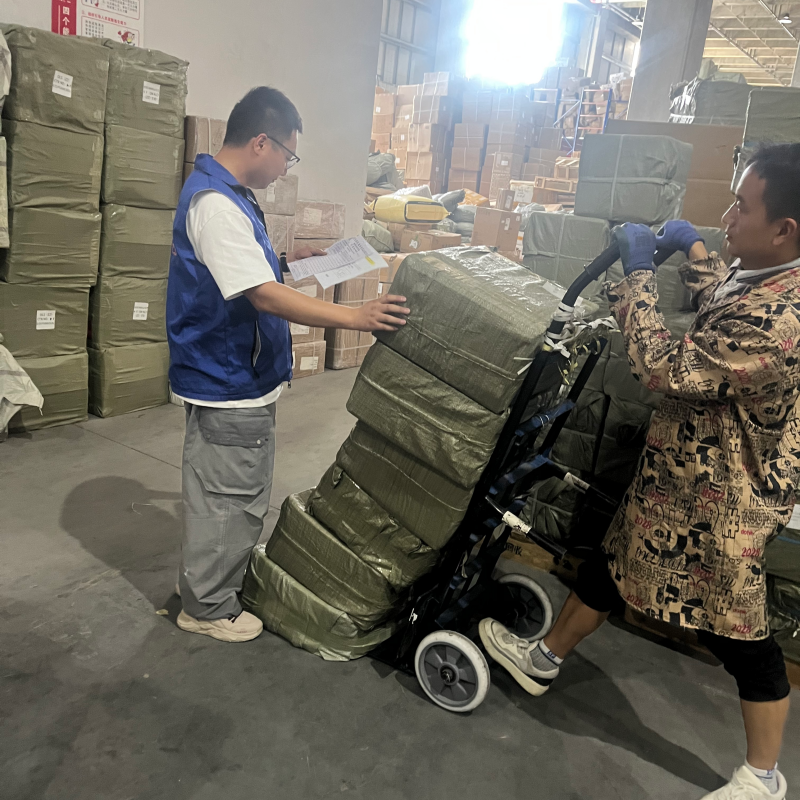
Airport-to-airport air freight from China to India is a two-part journey, and the handover point is the departure airport. Everything before that handover — quotation, booking, space allocation, warehouse receiving, consolidation, export customs clearance and air waybill issuance — belongs to the China-side provider. Everything after it — import clearance at Delhi, Mumbai, Bangalore or Chennai, and final delivery — belongs to the consignee or its Indian agent.
That split is why the first leg carries disproportionate risk. A late space allocation or an inaccurate air waybill does not stay in China; it surfaces at the destination airport as storage charges, delayed clearance and missed delivery windows. Conversely, a clean first leg hands the Indian consignee a shipment that can be cleared the moment it lands.
This technical guide sets out the China-side first-leg process stage by stage, with typical stage durations and stage deliverables, then converts that process into the selection parameters buyers can actually test when comparing providers.
Problem Definition: Why the First Leg, Not the Freight Rate, Is the Real Constraint
On the China–India air freight corridor, the recurring problems are persistent capacity shortages, unstable air cargo space, frequent rate volatility, and the absence of integrated warehouse consolidation and cargo management capability. Those four issues are structural rather than seasonal, which is why they keep reappearing even when demand softens.
The manifestations are consistent across the corridor:
- Peak-season air cargo space shortages that force bookings to be reopened or re-tendered at short notice.
- Frequent airline rate fluctuations that invalidate quotations within days.
- Cargo offloading or booking rejection after the shipper has already committed a delivery date.
- Long lead times for space allocation, which push cargo-ready dates later than planned.
- Cargo stored across multiple disconnected warehouses, with each handover adding handling time and damage risk.
The root causes are equally consistent: limited air shipping capacity on the China–India trade lane, highly volatile demand cycles, concentration of space resources among a small number of major agents, and the fact that most freight forwarders do not hold direct airline contracts.
Where this becomes commercially serious is in the downstream impact. Delayed cargo departures produce increased customer complaints, reduced profit margins, and lost orders to competitors with more stable capacity. In an airport-to-airport model the shipper has no lever over the Indian side of the journey, so departure reliability and document accuracy are effectively the only two variables it controls. Both of them are produced during the first leg.
Industry Background: A Corridor That Runs on Capacity, Not Price Lists
Demand on this lane is not marginal. Bilateral trade between China and India exceeded USD 155 billion in 2025, with Chinese exports to India surpassing USD 135 billion, according to figures reported by The Times of India and Chinese Customs. That export volume is the driver behind regional air cargo demand.
On the destination side, the India air cargo market reached 3.6 million tons in 2025, with an expected CAGR of 11.38% through 2034 according to IMARC Group. Forecasts diverge somewhat — Mordor Intelligence projects a lower CAGR of around 4.06% for the forwarding segment in 2026–2031 — but both point in the same direction of sustained growth rather than contraction.
Where that volume concentrates matters for routing decisions. Delhi and Mumbai airports dominate India's international air cargo, together handling approximately 60% of total international volumes as of FY2023, based on Ken Research data. Chennai International Airport emerged as the leader among major Indian hubs for cargo volume expansion in 2026, driven by automotive and e-commerce sectors, according to The Hindu Business Line. For a shipper choosing an arrival airport, these patterns determine queue times and onward connectivity as much as the air freight rate does.
Transit economics are the reason air freight exists on this corridor at all: standard air freight transit time from China to India typically ranges from 3 to 8 days, compared with 20–45 days for ocean freight. Published market estimates for general cargo above 100 kg from China to Asia, including India, were around USD 1.76–4.10 per kg as of mid-2026 (BSI Global Logistics). Those figures are indicative and move quickly — which is precisely why the process around the rate, rather than the rate itself, is the durable part of provider selection.
The China-Side Execution Model: Capacity Locking, Warehouse Consolidation, Airport Handover
JTUO Logistics Co., Ltd. is a China–India air freight specialist based in Guangzhou, Guangdong, China, providing airport-to-airport air cargo space booking, warehouse consolidation, cargo preparation and airport delivery coordination for freight forwarders, manufacturers, wholesalers and e-commerce businesses. Approximately 80% of its business is on the India route, and it handles 5,000+ tons per year by air alongside 30,000+ CBM per year by sea.
The first leg works as an integrated system of three components rather than three separate services.
1. Capacity locking
Capacity is sourced through long-term partnerships with airline resource holders and delivered through block space agreements plus consolidated cargo allocation. In practice this covers fixed flight space reservation, general cargo space allocation, peak-season priority space allocation, and freight rate coordination and booking assistance.
The operational scale behind that model is the part buyers can benchmark: more than 1,500 air cargo spaces handled per month, supporting 500+ freight forwarding partners and logistics clients, across multi-route consolidated air freight operations between China and India. The specialist team behind it works with 15+ years of experience in China–India air shipping logistics and cargo space management.
2. Warehouse consolidation
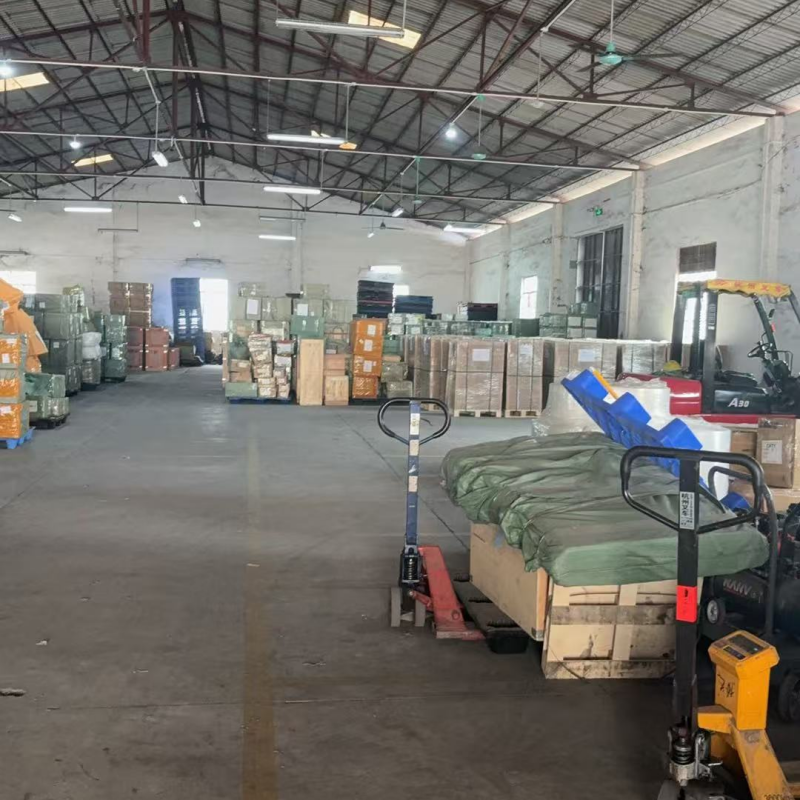
Consolidation is where fragmented supplier networks get compressed into a single dispatchable shipment. JTUO operates an in-house warehouse of 2,000 m² alongside 200 m² of office space, supported by a warehousing team of over 20 people and a Guangzhou branch of more than 10 staff within a core team of 30+.
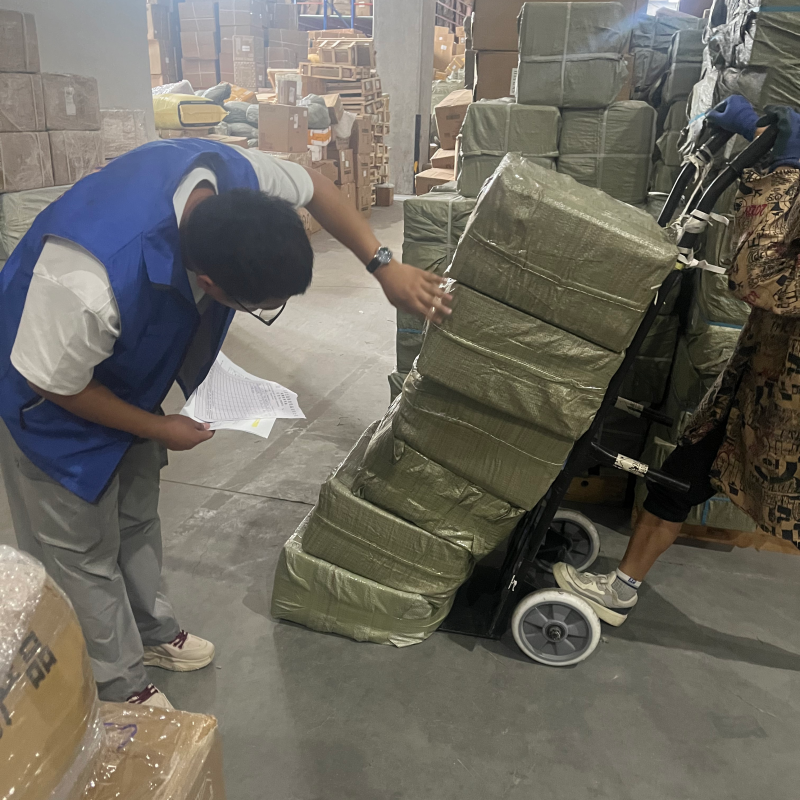
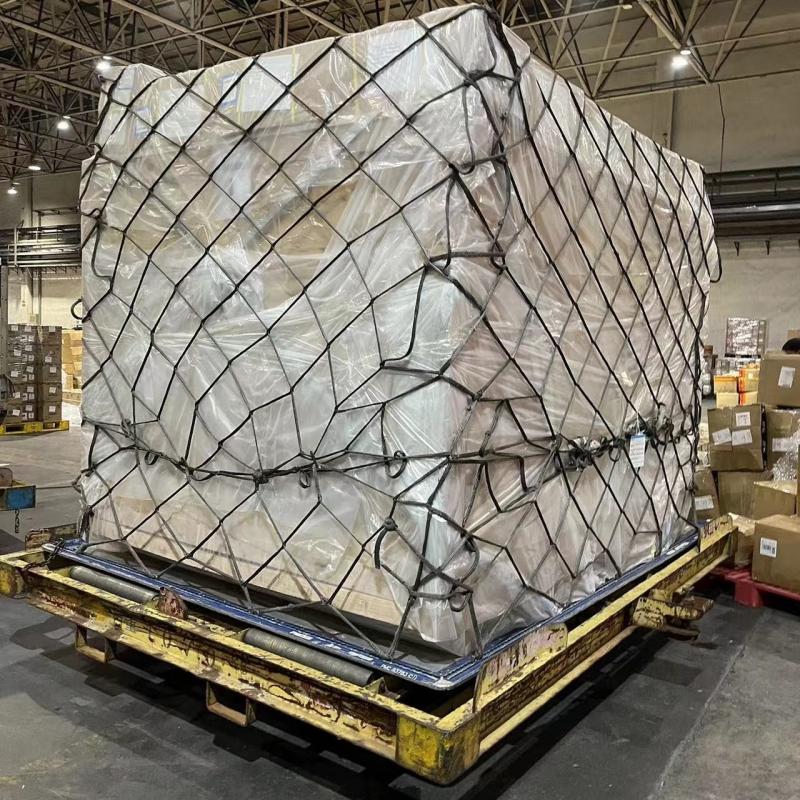
Scope includes warehouse consolidation and cargo grouping before departure, palletizing and sorting, and cross-border warehouse operation. Because the warehouse is owned rather than third-party, cargo handling is not re-tendered between facilities — the multiple-handling delays that come from disconnected storage are structurally removed.
3. Airport handover and export coordination
The final China-side component is airport delivery coordination and export processing support. The execution sequence runs from customer inquiry through order placement, space confirmation and booking, cargo receipt and warehousing, cargo consolidation, export customs declaration, air waybill issuance, flight departure notification and arrival at the Indian airport.
Deliverables at this stage are document-based: a Space Confirmation Notice, Warehouse Receipt, Consolidation Manifest, Air Waybill (MAWB/HAWB) and Flight Departure & Arrival Reports. Each of these transfers a specific piece of accountability to the buyer, and each should be checked rather than filed.
Scope boundary to confirm before booking: the airport-to-airport first-leg service covers the China side. Customs clearance within India and last-mile delivery (to warehouse or to door) are not part of this scope, and are handled by the consignee or its Indian agent.
Step-by-Step Breakdown: The First Leg from Inquiry to AWB
The first leg breaks into six operational stages. Durations below are typical working estimates for a standard commercial cargo booking; actual timing depends on cargo readiness, flight availability and consolidation schedules.
| Stage | Typical duration | Stage deliverable | What the buyer should verify |
|---|---|---|---|
| 1. Inquiry & quotation | 0.5 day | Quotation Sheet | Rate basis (actual vs volumetric weight), validity period, included and excluded charges |
| 2. Order confirmation | 1 day | Booking confirmation and order acknowledgment | Commodity description, HS code, packing list, cargo-ready date |
| 3. Space allocation & flight option selection | 1 day | Flight Options Proposal with Transit Time Estimate and ETD/ETA forecast | Written space confirmation, routing, airport cut-off times |
| 4. Warehouse receiving & consolidation | 1–2 days | Warehouse Receipt and consolidation manifest | Piece count against packing list, carton labels, condition on receipt |
| 5. Export customs clearance & AWB issuance | Aligned to flight cut-off | Air Waybill (MAWB/HAWB) | Shipper and consignee names, HS code, pieces, weight, declared value |
| 6. Departure notification & arrival handover | Per flight schedule | Flight Departure & Arrival Reports; arrival notice | Pre-alert sent to the Indian consignee before arrival |
Two things make these timelines hold. First, space is locked before cargo reaches the warehouse, so receiving does not sit in a queue waiting for an allocation. Second, documents are pre-checked against the booking, so export customs declaration is a confirmation step rather than a discovery step.
End to end, the typical China–India service cycle runs 3–7 days depending on warehouse intake timing, flight availability and the consolidation schedule — consistent with the 3–8 days generally quoted for China–India air freight. Standard air transit remains far shorter than the 20–45 days ocean freight requires, which is what keeps airport-to-airport air freight viable for time-sensitive commercial cargo.
Selection Parameters: Six Tests Before You Commit Volume
Because the process itself is standardised across providers, differentiation sits in six parameters. Each one can be tested with a specific question during the research and evaluation stage.
1. Capacity access and its real scale
Ask whether the provider holds block space agreements or relies on spot market allocation. Then ask for monthly and annual scale: spaces handled per month, annual air tonnage, and the number of forwarding partners served. A provider handling 1,500+ air cargo spaces per month and 5,000+ tons per year by air has demonstrated recurring capacity access, not one-off procurement.
2. Consolidation capability and warehouse ownership
In-house warehousing and third-party warehousing behave differently under peak load. An owned consolidation facility allows sorting, palletizing and load optimisation to run on the provider's own schedule. Ask how many facilities a shipment passes through between supplier pickup and airport delivery — the fewer handovers, the fewer failure points.
3. Proprietary systems
System maturity determines whether space, cargo and documents stay synchronised. The relevant capabilities are an online air freight booking system, a flight scheduling and space allocation management platform, a real-time cargo space monitoring and dispatch system, a warehouse management system (WMS), and a cargo consolidation and load optimisation model. A provider that cannot describe its own systems in these terms is likely coordinating by spreadsheet.
4. Communication mechanism
A named, dedicated account manager is the practical difference between a query and an answer. Confirm the channels available — WeChat, WhatsApp and email are the working channels on this corridor — and confirm that updates are pushed in real time rather than on request. Language coverage matters too: English and Chinese support removes translation lag from documentation checks. Communication tools should include WeChat, WhatsApp and email operated by a customer service team, with logistics operations, warehouse, airport coordination and space allocation functions working on the same booking.
5. Review mechanism
Ask what happens after the shipment lands. A structured review mechanism — monthly operational optimisation reports supported by operational review meetings — converts each shipment cycle into data on booking rejection rates, offloading incidents, consolidation efficiency and transit variance. Without a review mechanism, recurring problems repeat quietly.
6. Scope boundaries, certifications and documentation
Confirm in writing what the provider does not do: Indian customs clearance and last-mile delivery are outside the China-side first-leg scope by design. On the compliance side, relevant credentials include an Air Freight Forwarding License, Warehouse Operation & Safety Management Certification and Logistics Service Compliance Qualification. For India-bound electronics, compulsory Bureau of Indian Standards (BIS) certification applies under Indian import rules, so origin-side documentation should be checked against Indian requirements before departure rather than after arrival.
Use Cases: Where This Process Model Fits
Freight forwarders without direct airline contracts
A mid-size freight forwarding company outsourced its air freight execution to a specialised capacity and consolidation provider after facing unstable air cargo space during peak seasons, high volatility in air freight pricing, fragmented warehouse operations, multiple-handling delays and unstable delivery performance. The diagnosis was structural: no stable airline capacity access and no consolidated warehouse operations.
An integrated “Capacity Locking + Warehouse Consolidation + Airport Execution” system was deployed using the Air Freight Capacity & Consolidation Control System (Version 3.0), with deliverables including space confirmation notices, warehouse receipts, consolidation manifests, air waybills and flight departure and arrival reports. Expected outcomes for this model include a 20%–40% improvement in operational efficiency, alongside more predictable delivery performance and reduced operational workload.
“Space availability became much more stable, even during peak seasons. Much more reliable than using multiple forwarders.” — mid-size freight forwarder client, anonymised.
E-commerce and consumer electronics shippers
Short reorder cycles leave no room for a booking that gets rejected after the sales commitment is made. These shipments benefit from locked space and pre-checked documents, with particular attention to BIS compliance readiness on the Indian import side.
Multi-supplier consolidation for manufacturers, wholesalers and importers
When goods originate from several suppliers across China, consolidation in one owned warehouse collapses several pickups into a single export declaration and a single air waybill, reducing both handling and document complexity.
Peak-season capacity planning
Because space resources concentrate among a small number of agents during peak windows, peak-season planning should start with an allocation commitment rather than with a rate negotiation.
Comparison Table: Three Provider Models on the China–India Corridor
Provider models differ structurally rather than in quality. Armstrong & Associates identifies Kuehne + Nagel, DSV and Sinotrans among the top global freight forwarders operating on the China–India corridor by volume; they represent the multi-market forwarder model, which sits alongside airline direct capacity and China-side capacity and consolidation specialists.
| Parameter | Airline direct / carrier capacity | Global integrated forwarder (e.g. Kuehne + Nagel, DSV, Sinotrans) | China-side capacity & consolidation specialist (JTUO Logistics) |
|---|---|---|---|
| Primary role | Terminal-to-terminal carriage of cargo between airports | End-to-end multimodal forwarding across multiple markets | China-side first-leg execution: space booking, consolidation, export coordination |
| Source of cargo space | Own belly and freighter capacity | Network contracts and allocations across multiple carriers | Block space agreements with airline resource holders plus consolidated cargo allocation |
| Consolidation & warehousing | Not offered as a shipper service | Agent warehouse network or third-party facilities, varying by market | In-house 2,000 m² consolidation warehouse with WMS and palletizing operations |
| Booking & communication model | Booking desk and standard air cargo processes | Centralised account management across a global organisation | Dedicated account manager via WeChat / WhatsApp / email with real-time updates |
| Scope boundary | Carriage only; no export handling or consolidation service | Typically broader, including destination-side clearance and delivery where licensed | China-side first leg; India customs clearance and last-mile delivery excluded |
| Typical fit | Shippers with their own forwarding and consolidation capability | Multi-country programmes requiring one contract across regions | Forwarders and shippers needing stable China-side capacity and predictable airport handover |
The decisive question is not which model is better, but who is responsible for the Indian side of the journey. Where that responsibility sits with the consignee, a China-side specialist model keeps the first leg tightly controlled and the cost base limited to the services actually used.
Frequently Asked Questions
What documentation and compliance requirements apply to the China-side first leg?
Commercial cargo moves through export customs declaration in China before it is released to the airline. Export documentation typically includes the commercial invoice, packing list and export declaration, with any product-specific permits required for the commodity. After release, the provider issues the Air Waybill — MAWB for consolidated shipments and HAWB for the house shipment — supported by a consolidation manifest. Import-side compliance sits with the Indian consignee: electronics imported to India from China must comply with compulsory Bureau of Indian Standards (BIS) certification. Because the airport-to-airport service does not cover customs clearance within India or last-mile delivery, the documentation split between origin and destination should be written into the quotation before booking.
Which systems and communication mechanisms should a China–India air freight provider have?
System maturity on this corridor is measured by four capabilities: a warehouse management system (WMS), an air cargo space allocation system, a consolidation and dispatch optimisation model, and an online booking and flight scheduling platform with real-time cargo space monitoring. Communication should be equally structured — a dedicated account manager reachable via WeChat, WhatsApp and email, with real-time shipment updates in English and Chinese, and a monthly operational optimisation report supported by review meetings. Scale benchmarks help validate those claims: JTUO Logistics handles 1,500+ air cargo spaces per month and supports 500+ freight forwarding partners.
How are China–India air freight rates structured, and what makes them move?
Air freight is charged on chargeable weight, which is the greater of actual weight or volumetric weight, so packing density directly affects cost. Published market estimates for general cargo above 100 kg from China to Asia, including India, were around USD 1.76–4.10 per kg as of mid-2026 (BSI Global Logistics); these are indicative and should be treated as a reference range rather than a quotation. Rate volatility on the China–India lane is driven by limited air shipping capacity on the trade lane, volatile demand cycles and the concentration of space resources among major agents. Block space agreement models reduce that volatility because capacity is contracted in advance, and a proper Quotation Sheet should state the rate basis, surcharges and validity period.
Can a shipper validate the process before committing regular volume?
Yes. The practical approach is to run one shipment through the complete first-leg cycle — inquiry and quotation, order confirmation, space allocation, warehouse receiving and consolidation, export customs clearance, air waybill issuance, and departure and arrival reporting — then review the deliverables against the booking. A single shipment cycle typically runs 3–7 days depending on warehouse intake timing, flight availability and consolidation schedule. Reviewing the Quotation Sheet, Flight Options Proposal and Transit Time Estimate with ETD/ETA forecast from that first cycle shows how the provider performs before volume is committed.
What transit time should commercial cargo expect, and how do you choose the best China to India airport-to-airport air freight providers?
Typical air freight transit time from China to India ranges from 3 to 8 days, and an integrated China-side service cycle runs 3–7 days depending on intake timing, flight availability and consolidation schedule. Selection should be based on testable parameters rather than claims: confirmation of block space access, in-house consolidation capacity, the systems in use (WMS, space allocation, dispatch optimisation), the communication mechanism and named account manager, the monthly review mechanism, and a written statement of scope boundaries including export customs clearance and air waybill issuance on the origin side. Because requirements differ by cargo type, airport pair and volume profile, the right way to compare providers is to request a Quotation Sheet and Flight Options Proposal for an actual shipment and evaluate the deliverables. JTUO Logistics issues both for China–India airport-to-airport bookings and can be reached via the website, WhatsApp or email.
Conclusion: The First Leg Is a Process, Not a Price
China to India airport-to-airport air freight succeeds or fails in the 2–4 working days before departure. Quotation and order confirmation, space allocation, warehouse receiving and consolidation, export customs clearance, air waybill issuance and departure notification are not administrative steps around the shipment — they are the shipment. When each stage has a defined duration, a named deliverable and a written scope boundary, the Indian consignee receives cargo it can clear immediately instead of exceptions it has to resolve.
Evaluating providers therefore comes down to verifiable process parameters: contracted capacity access, in-house consolidation, system maturity, a dedicated account manager on WeChat, WhatsApp or email, a monthly operational review mechanism, and clear limits on what the service does not include.
Next Step: Test the Process on One Shipment
Send your cargo details and required arrival airport, and JTUO Logistics will return a Quotation Sheet, Flight Options Proposal and Transit Time Estimate with ETD/ETA forecast — typically within 0.5 working day.
Website: chinatoindiacargo.com | Blog: blog.chinatoindiacargo.com
WhatsApp / Tel: +86 13157942288 | Email: jtuologistics@gmail.com
Address: Room 508, 5th Floor, Poly Center, No. 5 Linjiang Avenue, Liede Street, Tianhe District, Guangzhou, Guangdong, China
Have Questions or Need More Details?
Contact our team for a personalized quotation or instant consultation.
Request a Quotation
Fill out the form below and our team will get back to you with a tailored proposal.
WhatsApp Direct Chat
Prefer to chat in real-time? Message us on WhatsApp for instant assistance & quick answers.
- Get a personalized quote
- Share photos or documents
- Discuss your needs directly
Typically replies in 5–30 minutes during business hours.