
How to Audit a China–India Air Freight Provider: Supplier Evaluation for Forwarders
Auditing a China–India air freight provider means testing five concrete things: physical consolidation capacity, the depth of the operating team behind the lane, proprietary dispatch and consolidation tooling, evidenced market traction, and — the most discriminating of all — how the provider measures its own space-utilization efficiency. A forwarder that checks all five before committing capacity avoids the single most expensive mistake on this corridor: choosing a partner who can quote a rate but cannot guarantee a flight.
This guide is written for freight forwarders, not for end shippers. It sets out an audit framework you can run against any candidate China–India air freight partner, the specific questions to ask, the evidence that should come back, and the operating profile of JTUO Logistics Co., Ltd. — a China–India air freight headhaul specialist established in May 2025 — used throughout as a worked reference for what credible answers look like.
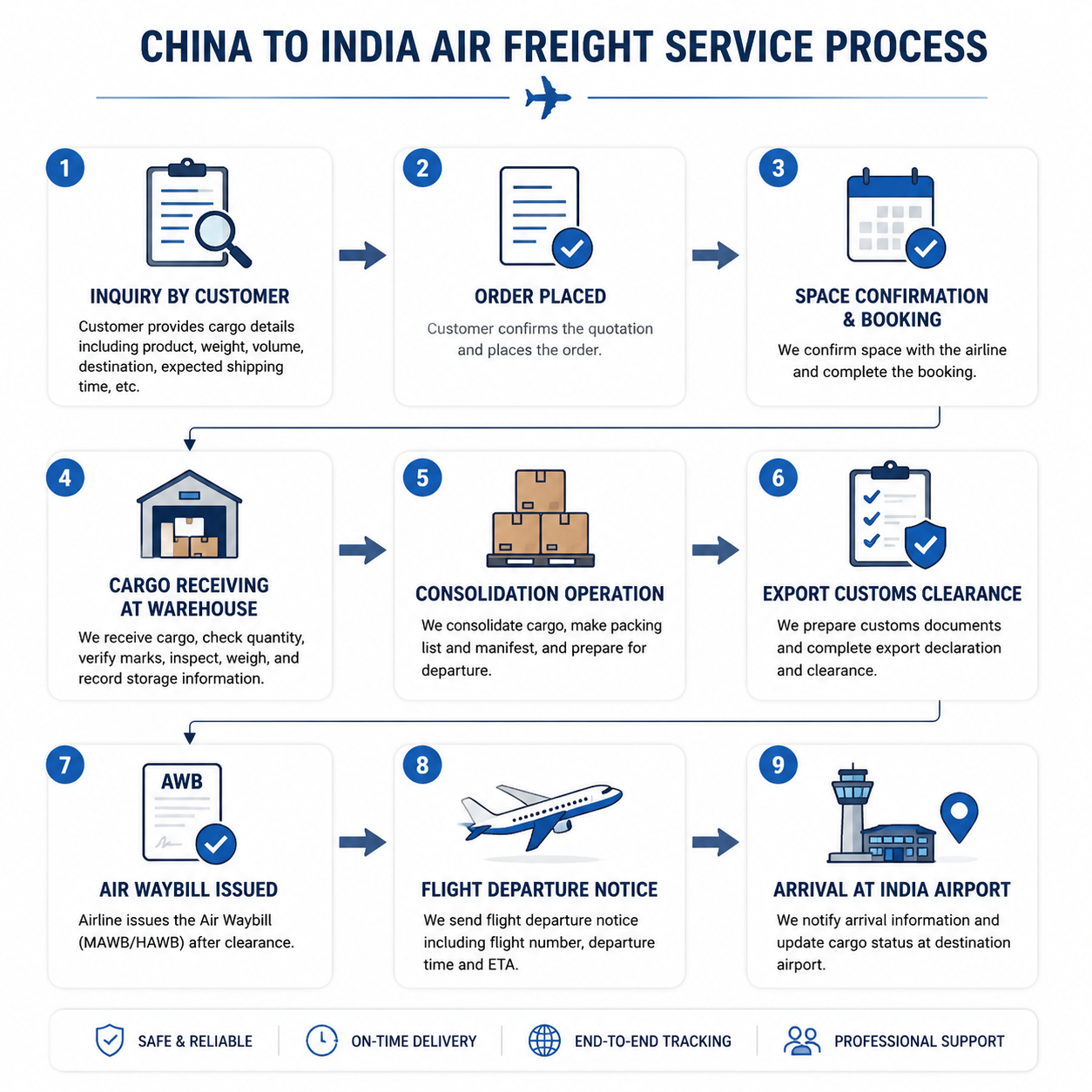
The China–India first-leg operation runs through nine stages, from inquiry to arrival at the destination airport — the sequence an audit should test end to end.
Problem Definition: Why Provider Audits Fail on the China–India Lane
The failure mode on the China–India lane rarely appears at the quotation stage. It appears in the third week of a peak season, when a booking-only agent cannot confirm space, cargo is stretched across three different handlers, and the forwarder's own customer is asking why a promised Delhi arrival has slipped.
A documented case makes the point. In the China–India Air Freight Capacity & Consolidation Integration Project, delivered for a medium-to-large China-based freight forwarding company, the core issue was a lack of stable airline capacity access combined with fragmented warehouse operations. The resulting symptoms were unstable air cargo space during peak seasons, high price volatility, multiple-handling delays, and unstable delivery performance. Every one of those symptoms traces back to a partner-selection decision made on rate rather than on operating capability.
That is the definition of the problem a structured audit solves. Forwarders do not lose money because they paid a few cents per kilo too much; they lose accounts because a partner could not hold space, could not consolidate multi-supplier cargo under one roof, and could not tell them where the shipment actually was.
Industry Background: What the Corridor Demands Right Now
Auditing well starts with context, because the size and shape of the corridor determines what a provider must be able to handle.
The commercial case is straightforward. Bilateral trade between China and India exceeded USD 155 billion in 2025, with Chinese exports to India surpassing USD 135 billion (The Times of India / Chinese Customs). On the Indian side, the air cargo market reached 3.6 million tons in 2025 and is forecast to grow at a CAGR of 11.38% through 2034 (IMARC Group). Delhi and Mumbai airports together handle roughly 60% of India's international air cargo volumes (Ken Research, FY2023), while Chennai International Airport led major Indian hubs for cargo volume expansion in 2026, driven by automotive and e-commerce demand (The Hindu Business Line).
Transit economics explain why air is chosen in the first place: standard China–India air freight transit typically runs three to eight days, against 20–45 days by ocean freight. Indicative mid-2026 rates for China–Asia general cargo above 100 kg sit at around USD 1.76–4.10 per kg (BSI Global Logistics; rate figures move quickly and should be re-verified at the time of quoting).
For a forwarder, the operational implication is that demand is broad, destinations are concentrated in a handful of hubs, and the difference between a good and a poor partner is almost never price — it is the ability to consolidate and to hold space when everyone else is short.
The Five-Dimension Audit Framework
Run the audit across five dimensions in order. Each one narrows the field, and the fifth is the one most forwarders forget to ask about.
1. Physical Consolidation Capacity
Ask directly whether the provider owns or controls warehouse space, and how much. As a worked reference, JTUO Logistics operates a 2,000 sqm warehouse alongside a 200 sqm office, and it positions warehouse consolidation as an integrated part of its service rather than an outsourced step. The reason this dimension matters first is a stated operating principle: consolidation efficiency determines overall transit performance. A provider without its own warehouse cannot control how quickly incoming cargo is sorted, palletised and grouped before it reaches the airport terminal.
2. Operating Team Depth
Headcount is only meaningful once it is mapped to roles. JTUO's core team exceeds 30 people, including more than 10 in its Guangzhou branch and a warehousing team of over 20, spanning logistics solution designers, supply chain management, warehousing, and customer service and operations management. When you audit a candidate, ask not just how many staff they have but which of them touch your shipment: who receives cargo, who consolidates it, who books the space, and who communicates milestones back to you.
3. Proprietary Dispatch and Consolidation Tooling
Ask whether the provider runs its own optimization model or depends on a broker's spreadsheet. JTUO operates an air freight capacity and consolidation control system, Version 3.0, built on five steps:
- Air cargo space demand forecasting and allocation
- Warehouse cargo receiving and consolidation
- Flight scheduling and space distribution
- Airport delivery and cargo handover
- Flight execution monitoring and feedback
Its four stated core principles are a useful test to hold any candidate against: stability is prioritized over price; space certainty is prioritized over flexibility; consolidation efficiency determines overall transit performance; and airline resource priority management is essential. A provider whose model is a consolidation and dispatch optimization system — not a reseller relationship — can explain how cargo is matched to flights under priority rules, not just that it will "find space."
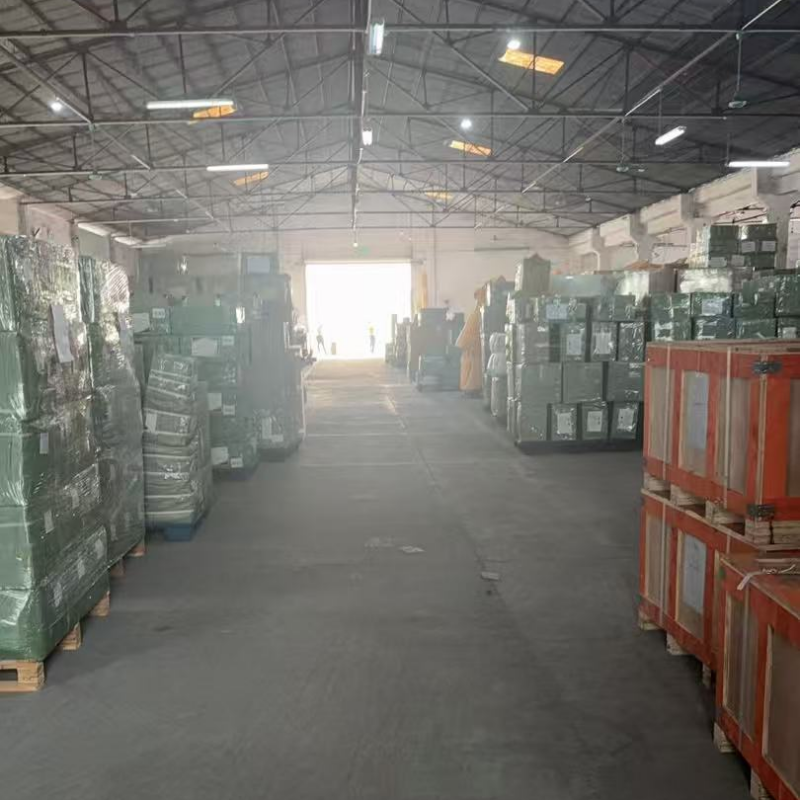
Warehouse footprint is the first audit checkpoint: consolidation happens here or it does not happen at all.
4. Evidenced Market Traction
Two questions expose whether a provider actually moves volume on the lane or only books it occasionally: what is your monthly space volume, and how many active partners do you serve? On the China–India corridor, a provider with genuine lane depth should be able to evidence a monthly space volume in the 1,500+ range and a partner count of 500+. JTUO operates at that benchmark, and the figures function as more than marketing — they indicate whether the provider has the standing with airlines to secure capacity when the market tightens. A provider that cannot answer either question with numbers is a broker, not a capacity partner.
5. Space-Utilization Review Process
The most discriminating question is not what the provider does, but how it measures what it does. Ask for the review mechanism. JTUO's documented review covers five items: analyzing space utilization efficiency, evaluating consolidation performance, tracking delay causes and bottlenecks, producing a monthly operational optimization report, and continuously improving allocation logic. A provider with a closed measurement loop can improve quarter over quarter; a provider without one can only repeat the same peak-season problems. This is the dimension that separates a vendor from a long-term partner.
Audit question to keep on the sheet: "How do you analyze space utilization efficiency, and can you show me last month's operational optimization report?" Any provider running a real control system will have an answer. Any provider without one will change the subject to rate.
Step-by-Step: Running the Audit in Practice
- Define the lane and the airports involved. Origins commonly in play include Shenzhen, Guangzhou, Shanghai and Hong Kong; destinations include Delhi, Mumbai, Bangalore and Chennai. Write down the exact origin–destination pairs you need before you talk to anyone.
- Request infrastructure evidence. Ask for warehouse size, ownership or control, and receiving capability. JTUO's reference point is a 2,000 sqm warehouse with a dedicated receiving and consolidation team.
- Map the team to roles. Confirm who receives, consolidates, books and communicates. A team of 30+ only helps you if the right people are assigned to your account.
- Interrogate the tooling. Ask the provider to describe its consolidation and dispatch optimization model and how it decides which cargo flies on which flight under priority rules.
- Verify traction with numbers. Request monthly space volume and active partner count. Treat 1,500+ monthly space volume and 500+ partners as the traction benchmark on this lane.
- Review the measurement loop. Ask specifically how space utilization efficiency is analyzed and how customer feedback flows into allocation decisions.
- Test the end-to-end process. Confirm the provider can run all nine stages: inquiry and quotation, order confirmation, space allocation and booking, warehouse receiving, cargo consolidation, airport delivery, export customs clearance, air waybill issuance and release, and arrival at the destination airport.
- Run one live trial shipment. Audit the process on a real consignment with a real deadline before you route recurring volume through the partner.
Where the Audit Pays Off: Use Cases
The audit framework is not academic — it maps to the shipment profiles forwarders actually handle on this corridor.
- Multi-supplier consolidation. When a client buys from several Chinese suppliers, the provider must merge those consignments in one warehouse before airport delivery. This is the LCL air cargo consolidation scenario, and it is where warehouse capacity and consolidation tooling are tested hardest.
- Urgent commercial cargo. Time-critical shipments that must move on a specific scheduled cargo flight require confirmed space, not hopeful booking.
- Peak-season capacity assurance. A forwarder protecting its own client base during peak season needs a partner with pre-allocated airline resources and a documented prioritization mechanism.
- Block space and full charter requirements. High-frequency or high-volume shippers need a provider comfortable with block space and general cargo solutions rather than ad-hoc spot booking.
- Electronics and consumer goods lanes. JTUO serves industries including consumer electronics, apparel, industrial equipment and components, furniture and building materials, packaging products, household goods, lighting and electrical products, hardware tools, stationery, beauty accessories, sports products, travel goods, and pet-related products — with India as its major market and export business accounting for 80% of total sales.

Team depth is audited by role, not by headcount alone — who receives, who consolidates, who books, who reports.
Provider Models Compared
When two candidates quote a similar rate, compare them by operating model. The table below contrasts the booking-only approach with an integrated capacity-and-consolidation model, using JTUO's documented operating principles as the reference for the integrated column.
| Audit Dimension | Booking-Only Agent | Integrated Capacity + Consolidation Provider |
|---|---|---|
| Service scope | Booking service only | Space allocation combined with cargo consolidation |
| Warehousing | No warehousing facilities; cargo handled through third parties | In-house warehouse to centrally process and consolidate cargo |
| Information flow | Fragmented across multiple agents and handoffs | Single workflow from inquiry to departure notification under one system |
| Space procurement | Scrambles for space at the last minute | Secures capacity in advance through proactive planning and forecasting |
| Peak-season behaviour | Space tightens; price volatility and delays increase | Pre-allocated capacity and priority allocation for key shipments |
| Performance measurement | Rarely measured beyond the booking | Space utilization efficiency, consolidation performance and delay causes reviewed monthly |
The comparison makes the audit logic explicit: the dimensions that decide outcomes — warehouse control, space certainty and measurement — are precisely the ones a booking-only agent cannot answer.
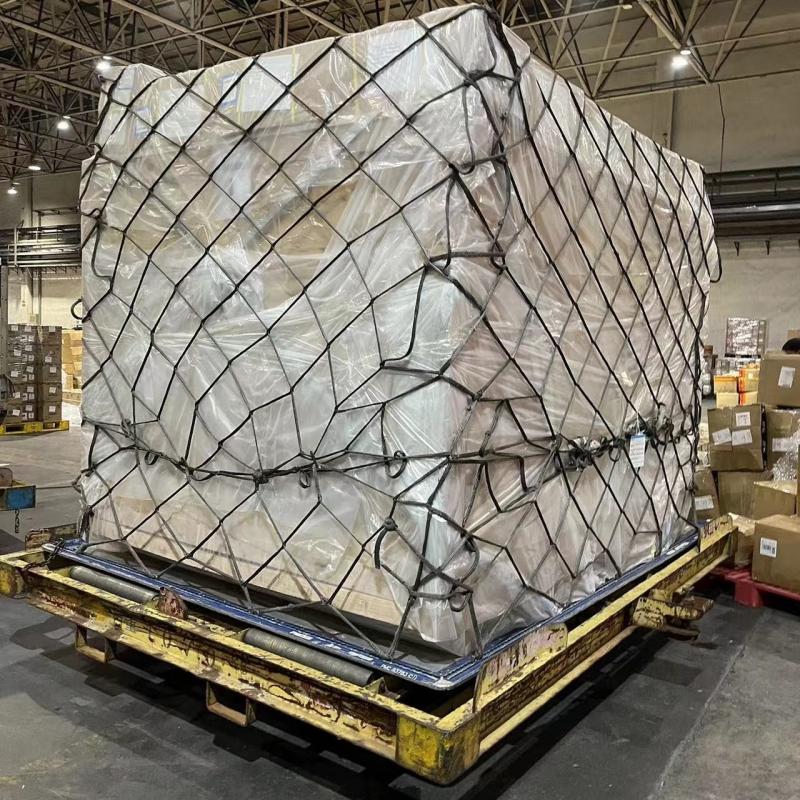
Consolidated cargo ready for airport handover — the output an integrated provider is audited against.
Frequently Asked Questions
What compliance requirements should I verify before booking China–India air freight?
Verify that the provider can prepare and coordinate the full export documentation set — commercial invoice, packing list, sales contract and a customs declaration power of attorney — and that it flags document inconsistency before submission, because mismatched data can trigger customs inspection, clearance delays or shipment rejection. For electronics imported to India from China, compulsory Bureau of Indian Standards (BIS) certification applies, so the provider should confirm that certification is in place before the cargo moves (BIS / DHL India).
How do I verify a provider's consolidation capability?
Ask for warehouse footprint, team composition and tooling together, because consolidation is an operating capability rather than a promise. JTUO Logistics operates a 2,000 sqm warehouse and a core team of more than 30 people, including over 20 in warehousing and more than 10 in its Guangzhou branch, supported by a capacity and consolidation control system that covers space forecasting, warehouse receiving, consolidation, flight scheduling, airport delivery and execution tracking. Consolidation capability is the ability to sort, palletise and group cargo from multiple suppliers under one roof before it reaches the airport terminal.
How should I benchmark China–India air freight rates during the audit?
Treat rates as an outcome of capacity rather than as the headline. Indicative mid-2026 rates for China–Asia general cargo above 100 kg are around USD 1.76–4.10 per kg (BSI Global Logistics), but those figures move with season and should be re-verified at the time of quoting. A provider whose stated principle is stability over price will hold space through peak season; a provider that wins solely on the lowest rate leaves your shipment exposed when capacity tightens.
What transit time should a China–India air freight partner be able to commit to?
Standard China–India air freight transit typically runs three to eight days airport-to-airport, against 20–45 days for ocean freight. During the audit, confirm that the provider issues an estimated cut-off time, a warehouse inbound schedule and flight options at the space-allocation stage, and ask how departure and arrival milestones are communicated — JTUO provides real-time flight status updates and arrival notifications at the destination airport as part of its first-leg process.
How do I choose a long-term China–India Airport-to-Airport air freight partner in India?
Judge a long-term partner on evidence, not on promises. Ask for space booking confirmations, air waybills (MAWB/HAWB), warehouse inbound records, shipment execution reports and flight tracking reports — the same evidence set JTUO uses to document its own performance. Its recorded client feedback noted that space availability became much more stable even during peak seasons, and that the service was much more reliable than using multiple forwarders. Because the relationship is long-term, ask the provider to share sample documentation and a quotation for your recurring lane before you commit; JTUO's team can be reached at chinatoindiacargo.com, by email at jtuologistics@gmail.com, or by phone and WhatsApp on +86 13157942288 to start that review.
Conclusion: Audit on Capability, Then Commit
A China–India air freight partner is either built for the lane or selling into it, and the audit framework above is how you tell the difference. Check physical consolidation capacity, operating team depth, proprietary dispatch tooling, evidenced market traction, and — above all — the provider's own space-utilization review process. Those five dimensions predict peak-season performance far more reliably than any rate sheet, because they describe what happens when capacity gets tight.
JTUO Logistics Co., Ltd., established in May 2025 and headquartered in Guangzhou, is a China–India air freight headhaul specialist covering the full first-leg process from cargo receiving, consolidation and booking through export customs clearance, flight coordination and arrival at Indian airports. Its 2,000 sqm warehouse, core team of more than 30, its capacity and consolidation control system, and its documented review mechanism are the exact answers a forwarder's audit is designed to elicit — and the reference benchmark this guide has used throughout.
Ready to run the audit on your own lane?
Request sample documentation, a lane-specific quotation, or a trial consolidation for your China–India shipments.
chinatoindiacargo.com | jtuologistics@gmail.com | +86 13157942288
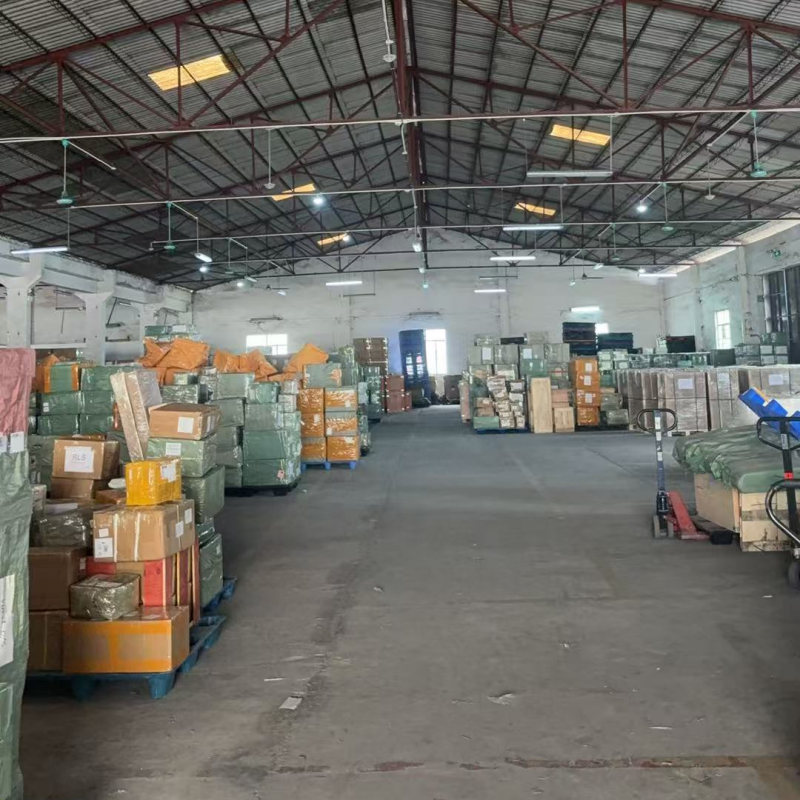
A capacity partner can evidence its warehouse, team and tools before you commit recurring volume.
Have Questions or Need More Details?
Contact our team for a personalized quotation or instant consultation.
Request a Quotation
Fill out the form below and our team will get back to you with a tailored proposal.
WhatsApp Direct Chat
Prefer to chat in real-time? Message us on WhatsApp for instant assistance & quick answers.
- Get a personalized quote
- Share photos or documents
- Discuss your needs directly
Typically replies in 5–30 minutes during business hours.