
China–India Airport-to-Airport Air Freight: Industry Application Guide for Electronics & Apparel
China–India Airport-to-Airport Air Freight: Industry Application Guide for Electronics & Apparel
Two shipments can leave the same Chinese airport on the same flight and still need two completely different freight plans. A carton of consumer electronics and a bale of apparel share a corridor, an aircraft and an air waybill — but they do not share the same data inputs, the same handling priorities or the same space economics. This guide runs five cargo profiles through one airport-to-airport workflow, stage by stage, so freight forwarders, importers and logistics managers can locate their own shipment inside the process.
JTUO Logistics Co., Ltd. is a China-based air freight specialist focused on the China–India corridor and headquartered in Guangzhou, providing airport-to-airport air cargo space allocation, warehouse consolidation and China-side export execution for freight forwarders, cross-border logistics providers and India route logistics companies.
What Airport-to-Airport Air Freight Covers on the China–India Lane
Airport-to-airport is a service boundary, not a marketing label. On the China–India lane it covers everything from the moment cargo is received in China to the moment it is handed over at the destination airport in India — and nothing beyond that point.
Inside the China-side scope:
- Air cargo space allocation and booking, including block space agreements (BSA) and general cargo solutions
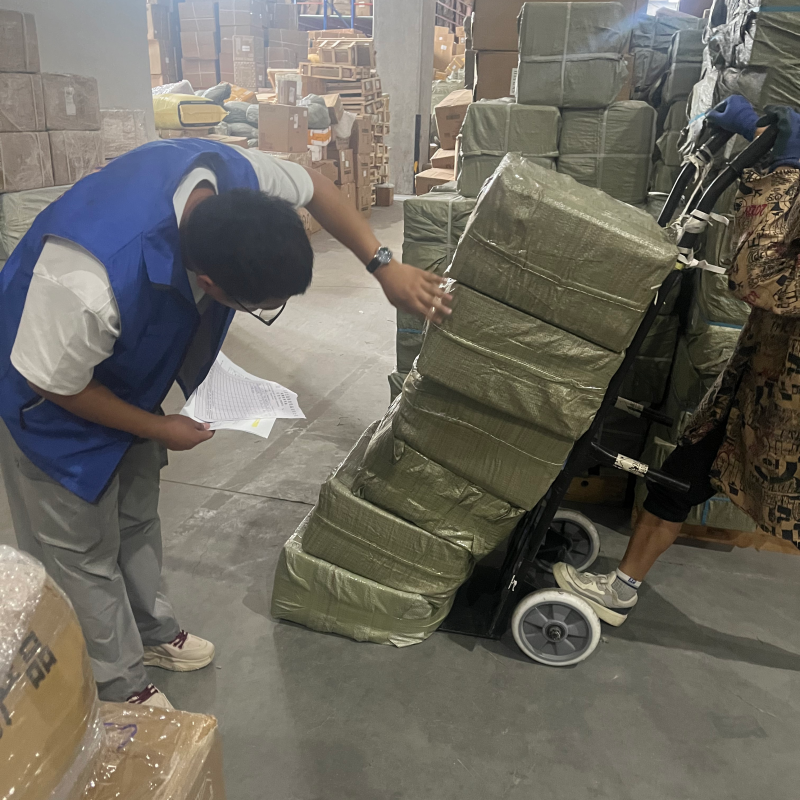
- Warehouse receiving, weighing, re-measuring and consolidation
- Sorting, palletizing and cargo grouping before departure
- Export declaration coordination and airport delivery handover
- Flight scheduling and air waybill (AWB) issuance
- Arrival notification at the destination airport in India
Outside the scope:
- Customs clearance inside India
- Last-mile delivery to a warehouse or to a door
The formal deliverables of the service are an air cargo space confirmation document, a flight schedule, and air waybill details. Typical transit time is 3–7 days, and the service cycle is aligned with flight schedules rather than a fixed clock. Because India-side clearance sits outside the boundary, airport-to-airport fits buyers who already hold import capability in India or who work with a licensed customs broker there — an operational fact that should be settled before the first booking, not after.
Problem Definition: Why Cargo Profile — Not the Aircraft — Decides the Outcome
Most disruption on the China–India air corridor is not caused by a shortage of aircraft. It is caused by a freight plan that was built for the wrong cargo profile.
Three structural constraints define the market. First, capacity on the China–India lane is limited and demand is seasonal; peak-season space shortages and booking rejection — known in the trade as bumping — are persistent risks rather than occasional incidents. Second, freight rates move quickly, which makes long-validity quotations difficult for forwarders to hold and hard for their customers to budget against. Third, cargo handling is often fragmented across several third-party warehouses, which introduces multiple transfer points, disconnected warehouse information, and unclear responsibility when cargo is misplaced, damaged or delayed.
Cargo profile interacts with all three constraints at once. Density decides whether chargeable weight is driven by gross weight or by volume, which changes how space should be reserved. Value decides how much traceability matters at the warehouse stage. Packaging and package count decide how much re-measuring and regrouping work the shipment will generate. Documentation completeness decides whether the shipment clears the China-side export step without a stop.
Apparel illustrates the volume side: a shipment of garments is typically bulky relative to its weight, so space planning is measured in cubic volume and consolidation grouping becomes the main lever for controlling cost. Consumer electronics sit at the opposite end: small, dense and high-value, so the priority shifts to accurate warehouse recording, clean package identification and stable handling rather than to volume planning. Industrial equipment and components add a third pattern, because a single booking often contains items produced by several different factories that must be grouped correctly before departure. The workflow below is the same for all three — but the decisions inside it are not.
Industry Background: The China–India Air Corridor in 2026
The corridor is expanding, and the planning assumptions that worked a few years ago no longer hold.
Demand. Bilateral trade between China and India surpassed USD 155 billion in 2025. India's air cargo market reached 3.6 million tons in 2025 and is projected to grow at a compound annual growth rate of 11.38% through 2034, according to market research published by IMARC Group. Within India, Delhi (DEL) and Mumbai (BOM) handle approximately 60% of the country's international air cargo volumes — which makes destination airport selection a first-order planning decision rather than an afterthought.
Rates. Trade reporting in October 2026 placed China–New Delhi air freight rates at roughly USD 4.6 per kilogram, with large month-on-month movement. On this lane a quotation is a snapshot, not a tariff, which is why buyers increasingly ask for the rate basis rather than only the rate.
Compliance. Three requirements shape every airport-to-airport shipment into India:
- An Importer-Exporter Code (IEC) issued by DGFT is mandatory for air cargo imports to India.
- Airport imports require an electronic Bill of Entry filed through ICEGATE or the relevant service centre, by the importer or by an authorized customs broker.
- Imported cargo may be transshipped between Indian airports. The carrier or console agent files the transshipment application, and the destination airport must be indicated in the HAWB.
One procedural detail is worth planning around: under the Mumbai customs procedure for clearance of imported goods, a Bill of Entry may be filed before the aircraft arrives, and the filing remains valid if the aircraft arrives within 30 days from presentation. For a forwarder, that is a scheduling lever — documents can be prepared while the cargo is still in the air, provided the arrival window is realistic.
The Service Model Behind a Repeatable Workflow
JTUO Logistics' core business is China–India air cargo booking. The service is classified as air cargo space allocation (BSA) and air freight consolidation and space distribution, delivered through an integrated air freight headhaul operation system that combines warehouse receiving with airline capacity allocation. It provides air cargo space allocation, block space and general cargo solutions, peak-season capacity assurance, and airport delivery services.
The structural difference is where capacity comes from. Instead of booking space piecemeal, shipment by shipment, the model secures capacity through block space agreements and consolidated cargo allocation, which allows space to be reserved before demand appears rather than after. A space allocation system handles the schedule side, while a dispatch optimization model assigns consolidated shipments to the most suitable flight and space combination when a particular departure tightens.
Physical and operational capacity:
- Guangzhou warehouse of 2,000 square meters, with a 200 square meter office
- Air movement of 5,000+ tons per year on the air side
- Core team of over 30 people, including logistics solution designers, supply chain management, a warehousing team of over 20, and customer service and operations management personnel
- More than 1,500 air cargo spaces handled per month through the allocation system
- 500+ freight forwarding partners across the corridor
Because receiving and airline capacity allocation sit inside the same operation, the warehouse-to-airport leg does not pass through disconnected intermediaries. That matters most in peak season, when a shipment that cannot be consolidated quickly becomes a shipment that cannot be uplifted on the intended date.
The service is built for cross-border logistics providers, international freight forwarders and India route logistics companies. Beyond the five profiles covered below, JTUO also receives cargo in categories including packaging products, household goods, hardware tools, stationery, beauty accessories, sports products, travel goods and pet-related products.
Step-by-Step: Six Stages From Inquiry to Arrival Notification
Every airport-to-airport shipment on this corridor passes through six stages. The stage inputs are fixed; what changes with cargo profile is the weight each input carries.
Stage 1 — Inquiry and Quotation (0.5 working day)
The quotation is only as good as the shipment data behind it. Seven inputs are required before an accurate rate can be issued: product name, HS code, number of packages, gross weight, volume, origin airport in China, and destination airport in India. Missing HS code or missing volume is the most common reason a quotation has to be reissued, because neither chargeable weight nor export documentation can be finalised without them. JTUO targets a 0.5 working day quotation turnaround from receipt of complete data.
Stage 2 — Order Confirmation (1 working day)
Once the quotation is accepted, the booking is confirmed within approximately 1 working day. At this point the service boundary is restated explicitly — airport-to-airport, with India-side clearance and last-mile delivery outside the scope — so that the forwarder and its customer are working from the same definition. Origin and destination airports are locked here, since they determine which space pool the shipment draws from.
Stage 3 — Space Allocation (1 working day)
Space is allocated within about 1 working day of confirmation, using the space allocation system rather than ad hoc carrier requests. On this stage the cargo profile starts to matter: a volumetric apparel shipment and a dense electronics shipment of identical gross weight consume different amounts of capacity, and the allocation has to reflect the chargeable measure rather than the scale reading.
Stage 4 — Warehouse Receiving (1–2 working days)
Cargo arrives at the Guangzhou warehouse and is received within 1–2 working days. Every shipment is re-measured and re-weighed on site, and the verified figures are logged in the warehouse management system. Re-measuring is not a formality: on a corridor where space is scarce, the difference between a supplier's declared volume and the measured volume is the difference between a shipment that fits the reserved space and one that does not. WMS logging also creates the traceability record that multi-supplier shipments depend on.
Stage 5 — Consolidation and Dispatch Optimization
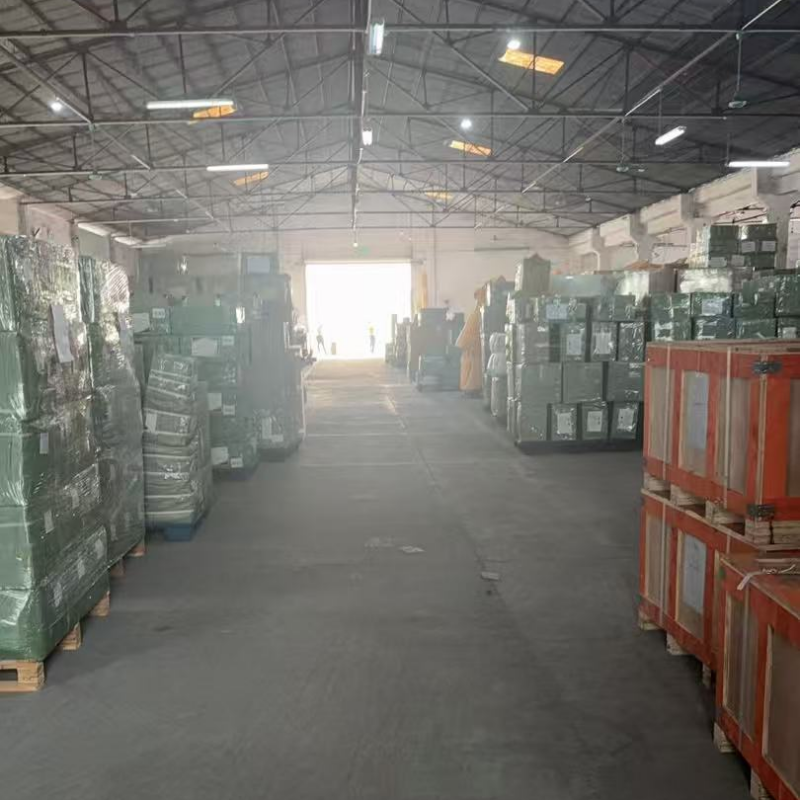
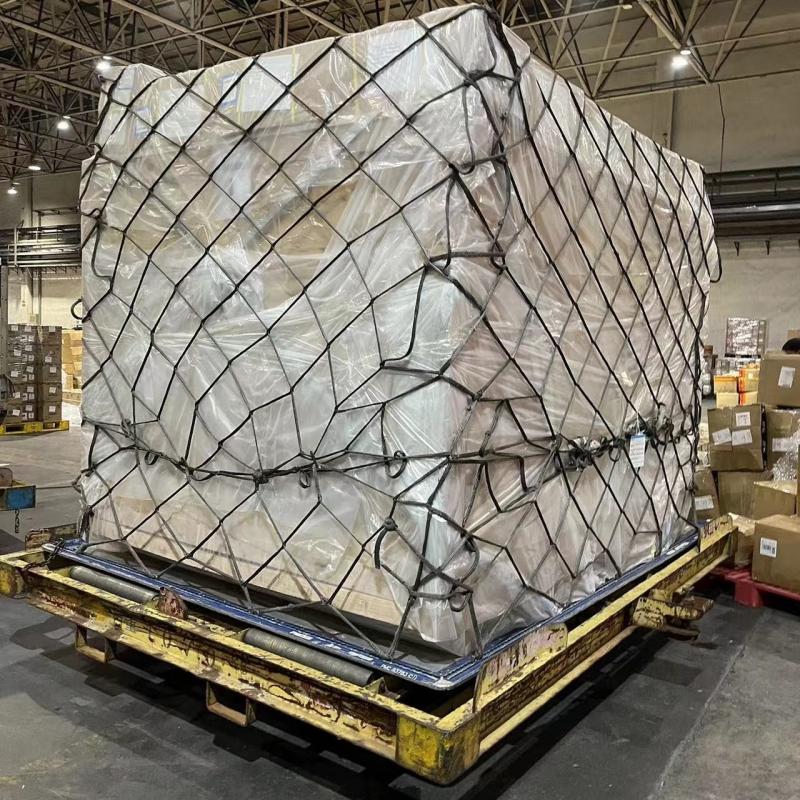
Consolidation is where multi-supplier shipments are assembled into a single departure. Cargo from different factories, or from several different forwarders, is sorted, palletized and grouped so that one air waybill can cover the whole movement. The dispatch optimization model then matches the consolidated build to the most suitable flight and available space. For apparel, the gain comes from volume efficiency; for electronics, from keeping high-value packages inside one controlled, traceable unit; for industrial components, from ensuring that a partial delivery from one factory does not hold up the rest.
Stage 6 — Export Declaration, AWB and Departure
The final stage covers export declaration coordination, airport delivery handover, air waybill issuance and uplift. The deliverables issued to the customer are the air cargo space confirmation document, the flight schedule and the AWB details. Transit time on the corridor is typically 3–7 days from warehouse receipt, aligned with flight schedules, and the process closes with an arrival notification at the Indian airport — at which point responsibility transfers to the consignee's import arrangement.
Use Cases: Five Cargo Profiles on One Corridor
The workflow is identical across industries. What changes is which stage deserves the most attention.
Consumer electronics
High value and high density place the emphasis on Stages 4 and 5. Accurate package counts, precise HS codes for multi-model consignments, and traceable WMS records matter more than volume planning, because the cost of an identification error is far higher than the cost of the space itself. Consolidating several small supplier lots into one controlled build reduces handling events and keeps the shipment under a single air waybill.
Apparel and textiles
Low density and high package counts shift attention to Stages 1 and 3. Volume, not gross weight, usually determines the chargeable measure, so the declared volumetric data has to be realistic before space is allocated. Consolidation is the main cost lever: grouping cartons from several garment factories into one pallet build makes better use of the reserved capacity than shipping them as separate lots.
Industrial equipment and components
These shipments are typically multi-origin and irregular in shape. The critical stages are Stage 4 (accurate re-measuring and dimension recording) and Stage 5 (grouping components so that one late factory does not delay a production-critical delivery). Weight and dimensions must be captured precisely, because a single over-measured heavy item can invalidate the space calculation for the entire build.
Furniture and building materials
Bulky, dimension-driven cargo where palletizing and stacking directly affect cost. Re-measuring at Stage 4 and consolidation at Stage 5 do the most work here: better grouping reduces the cubic space consumed, which is the dominant cost driver for this profile. Package integrity during re-handling also matters, since flat-pack and panel items are vulnerable to edge damage.
Lighting and electrical goods
Mixed consignments of fragile and non-fragile items, often from several suppliers. The priority is Stage 4 accuracy and Stage 5 grouping discipline, so that glass and ceramic components are not stacked under heavier cartons. Because these goods are frequently shipped as part of a broader multi-category order, consolidation into one build keeps a mixed purchase order moving as a single unit.
Cargo profile to workflow mapping
| Cargo profile | Shipment data that matters most | Priority stage | What consolidation contributes |
|---|---|---|---|
| Consumer electronics | HS code, package count, declared value | Warehouse receiving and consolidation | Groups small supplier lots into one traceable unit under one AWB |
| Apparel and textiles | Volume, package count, gross weight | Quotation and space allocation | Improves volume efficiency of the reserved space |
| Industrial equipment and components | Gross weight, dimensions, package type | Warehouse receiving and dispatch optimization | Merges multi-factory components into one departure |
| Furniture and building materials | Volume, dimensions, gross weight | Consolidation and dispatch optimization | Reduces cubic space consumed per shipment |
| Lighting and electrical goods | Package count, HS code, handling notes | Warehouse receiving | Keeps mixed purchase orders moving as a single build |
Comparison Table: Airport-to-Airport Air Freight Against Sea and Rail
Airport-to-airport air freight is the fastest option on the China–India corridor, and the trade-off is cost and scope rather than capability. Reported transit ranges for the corridor are approximately 3–8 days by air, 20–45 days by sea, and 15–22 days by rail. JTUO's own airport-to-airport service is aligned with flight schedules, with a typical transit time of 3–7 days, which sits inside that wider air range.
| Mode | Typical China–India transit time | Typical use case | Scope note |
|---|---|---|---|
| Air (airport-to-airport) | 3–8 days reported; 3–7 days for JTUO's service | Time-critical cargo, high-value goods, seasonal replenishment, multi-supplier orders | Covers China-side export execution through arrival notification at the Indian airport; excludes India customs clearance and last-mile delivery |
| Sea | 20–45 days | High-volume, cost-driven, non-urgent cargo | Not part of the airport-to-airport air service |
| Rail | 15–22 days | Balance of cost and speed for non-urgent volumes | Not part of the airport-to-airport air service |
Transit ranges above reflect reported corridor benchmarks rather than a service guarantee. Actual timing depends on warehouse intake timing, flight availability and the cargo consolidation schedule.
Communication, Corrections and the Monthly Optimization Report
A structured workflow still needs a correction mechanism, because shipment data changes between quotation and departure.
Each client account is handled by a dedicated account manager, who is the single point of contact from quotation through to arrival notification. Communication runs across Email, WhatsApp, WeChat, Facebook and LinkedIn, with support in English and Chinese — a practical requirement on a corridor where the China-side warehouse team and the India-side forwarder rarely work in the same language or time zone.
Corrections are handled at the point where they occur. If re-measuring at the warehouse produces a different volume or weight from the declared figures, the revised numbers are logged and communicated before departure, not after. If a flight schedule shifts, the affected build is re-matched through the dispatch optimization process. For clients running recurring volume, the revision mechanism is consolidated into a monthly operational optimization report, which reviews shipment performance, recurring data gaps and consolidation patterns so that the next month's planning starts from evidence rather than from habit.
Frequently Asked Questions
What does an Indian importer need in place before airport-to-airport cargo can be cleared?
An Importer-Exporter Code (IEC) issued by DGFT is mandatory for air cargo imports to India, and airport imports require an electronic Bill of Entry filed through ICEGATE or the relevant service centre by the importer or an authorized customs broker. Where cargo moves between Indian airports, the carrier or console agent files a transshipment application and the destination airport must be indicated in the HAWB. Under the Mumbai customs procedure, a Bill of Entry can be filed before arrival and remains valid if the aircraft arrives within 30 days from presentation. Note that Indian customs clearance sits outside the airport-to-airport service itself.
Can cargo from several suppliers be consolidated into one China–India air shipment?
Yes. Consolidation is a core part of the service. Cargo received from multiple factories or forwarders at the Guangzhou warehouse is weighed, re-measured, logged in the warehouse management system, and then sorted, palletized and grouped into a single build covered by one air waybill. This is the standard approach for multi-supplier orders in consumer electronics, apparel and industrial components, and it is the main reason in-house warehousing is combined with airline capacity allocation rather than treated as a separate step.
How is the China–India air freight rate calculated, and how much does it move?
Rates are built on chargeable weight, which is the greater of gross weight and volumetric weight, so volume and package dimensions must be supplied at inquiry. Rates on this corridor are volatile: trade reporting in October 2026 placed China–New Delhi air freight at roughly USD 4.6 per kilogram, with large month-on-month movement. Because of that volatility, JTUO issues quotations on complete shipment data — product name, HS code, packages, gross weight, volume, and origin and destination airports — and targets a 0.5 working day quotation turnaround. A quotation should be treated as a snapshot rather than a standing tariff.
Can we test the workflow with a single trial shipment before reserving fixed space?
A single shipment is the normal starting point. Because the workflow uses general cargo space allocation alongside block space agreements, a new client can send a trial consignment through the full six-stage process — quotation, order confirmation, space allocation, warehouse receiving, consolidation and departure — and validate the re-measuring accuracy, the arrival notification and the communication loop before considering a longer-term space arrangement.
How far in advance should we book, and how long does the whole process take?
Booking lead time depends on the season, and peak periods on the China–India lane are the tightest. The internal stages are relatively short: quotation in about 0.5 working day, order confirmation in about 1 working day, space allocation in about 1 working day, and warehouse receiving within 1–2 working days, followed by export declaration, AWB issuance and uplift. Total transit from warehouse receipt is typically 3–7 days, aligned with flight schedules. If you want to map your own cargo profile against this workflow, send your shipment data across and the team will return a quotation and a stage-by-stage plan.
Conclusion: Match the Profile, Then Run the Process
Airport-to-airport air freight between China and India is a single corridor carrying very different cargo, and the difference shows up in the data, not in the aircraft. Electronics need identification accuracy and traceability; apparel needs realistic volumetric data and efficient grouping; industrial components need precise measuring and disciplined consolidation; furniture and building materials need stacking efficiency; lighting and electrical goods need handling discipline across mixed consignments.
The six-stage workflow — quotation in 0.5 working day, confirmation and allocation in about 1 working day each, warehouse receiving in 1–2 working days, consolidation with dispatch optimization, then export, AWB and departure — is designed so that each of those profiles can be handled inside one repeatable structure rather than a bespoke scramble. Combining 2,000 square meters of in-house warehouse capacity in Guangzhou with 5,000+ tons of annual air movement and block space agreements is what makes the structure hold when the corridor tightens.
The practical next step is not a commitment but a comparison: send your product name, HS code, package count, gross weight, volume and origin and destination airports, and see how your own cargo profile maps onto the process.
Request a quotation for your cargo profile
JTUO Logistics Co., Ltd. — China–India airport-to-airport air freight, space allocation and warehouse consolidation.
Email: jtuologistics@gmail.com | WhatsApp / Tel: +86 13157942288 | Website: chinatoindiacargo.com
Address: Room 508, 5th Floor, Poly Center, No. 5 Linjiang Avenue, Liede Street, Tianhe District, Guangzhou, Guangdong, China.
Have Questions or Need More Details?
Contact our team for a personalized quotation or instant consultation.
Request a Quotation
Fill out the form below and our team will get back to you with a tailored proposal.
WhatsApp Direct Chat
Prefer to chat in real-time? Message us on WhatsApp for instant assistance & quick answers.
- Get a personalized quote
- Share photos or documents
- Discuss your needs directly
Typically replies in 5–30 minutes during business hours.