Evaluating a China–India Air Freight Head Haul Provider: How to Verify Capacity Stability and Warehouse Control
Evaluating a China–India Air Freight Head Haul Provider: How to Verify Capacity Stability and Warehouse Control

A China to India air freight head haul provider should be verified on three operating systems rather than three promises: the team that owns space allocation, the control loop that connects booking to airport handover, and the origin warehouse that physically prepares the cargo. Real-time status reporting is the fourth signal, because it is the only mechanism that proves the other three are working between booking confirmation and departure.
For a freight forwarder at the decision stage, the difficulty is rarely finding providers. It is that most providers describe identical outcomes — stable capacity, consolidated cargo, on-time departure — while the evidence behind those outcomes stays invisible from the outside. A confirmed booking does not prove pre-allocated airline space. A warehouse address does not prove handling capability. A departure notice does not prove the shipment was monitored at all.
This article sets out a practical verification framework for head haul suppliers. It is structured around the Air Cargo Space & Consolidation Coordination Control System (Version 3.0), the methodology used by JTUO Logistics Co., Ltd., a Guangzhou-based China–India air freight specialist that provides airport-to-airport air cargo booking, origin warehouse consolidation, cargo preparation and airport delivery coordination for freight forwarders, manufacturers, wholesalers and e-commerce businesses.
Problem Definition: Why Capacity Promises Are Hard to Verify
The head haul is the first leg of a China–India air shipment: the China-side process of holding space, receiving cargo into a warehouse, building it into a consolidated shipment, handing it to the airline at the airport and monitoring departure. India-side customs clearance and taxation, and destination last-mile delivery, sit outside this scope. Most delivery failures that a forwarder experiences trace back to the head haul, not to the destination, because that is where capacity, cargo and documentation have to converge inside a fixed cutoff window.
Three structural asymmetries make head haul providers hard to compare.
- Capacity is a statement about a future state. A provider can confirm a booking without holding pre-allocated airline space. The confirmation is issued long before it is tested, which means the buyer carries the risk until close to departure.
- Warehouse control is physical and mostly unobservable. How cargo is received, sorted, palletized and grouped decides whether confirmed space is actually used before cutoff. Two providers can quote the same capacity while operating completely different handling realities.
- Communication latency hides problems. Without event-based updates, a forwarder discovers a space or handling problem at departure, when recovery options are expensive or gone.
There is also a regulatory layer that makes verification more than a commercial exercise. Under the CAAC regulation AC-129-FS-001R2, foreign carriers without a CCAR-129 certificate are limited to 10 cargo charter flights per 12-month period in China. Any capacity plan that leans on charter capacity therefore carries a structural limit, and a buyer evaluating a provider should understand which portion of the offered capacity depends on scheduled freighter operations and which portion depends on charter arrangements.
Industry Background: Why the China–India Corridor Rewards Verification
China’s exports to India reached approximately USD 120.46 billion in 2024 according to The Dollar Business, with electrical machinery and equipment the largest segment at USD 42.66 billion. That commodity mix — high-value, time-sensitive, and often tied to production or retail schedules — is exactly the mix that converts air cargo capacity from a cost line into a delivery commitment.
The demand side of the corridor is expanding faster than capacity discipline. The India air cargo market was valued at 3.6 million tons in 2025 and is projected to reach 9.9 million tons by 2034, an 11.38% CAGR according to IMARC Group. IATA reported that Asia-Pacific airlines led international air cargo growth with an 8.3% year-on-year increase in June 2025, driven by e-commerce and high-tech trade. Published route-level capacity also exists on the corridor: a direct air cargo route between Ezhou in China and Bangalore in India provides an annual transport capacity of over 5,000 tons via SF Airlines.
The practical consequence for buyers is that capacity certainty has become a more reliable differentiator than rate level. Third-party cost guides have listed China–Asia air freight rates in a broad band — a 2026 guide referenced roughly USD 1.76 to 4.10 per kg for shipments above 100 kg as of April 2026 — but such bands vary by lane, season and commodity, and they are not comparable across providers unless the underlying capacity model is the same. Evaluating a head haul provider therefore means evaluating how the capacity is held, how the cargo is handled, and how the process is reported.
Detailed Solution: A Four-Part Head Haul Verification Framework
A provider passes a structured evaluation when it can evidence four things: a team structure that separates space ownership from warehouse execution, a documented control loop from forecasting to departure monitoring, physical origin warehouse capability, and an event-based communication standard. Each part below states what to verify and what the corresponding evidence looks like.
Part 1 — Team Structure: Who Owns Space, Who Owns the Warehouse
JTUO Logistics operates with a core team of more than 30 people, including more than 10 at the Guangzhou branch and a warehousing team of over 20. The core team is organised across logistics solution design, supply chain management, warehousing, and customer service and operations management. In operational terms, this separates the space-allocation coordination function — forecasting demand and holding airline allocation — from the warehouse management function — receiving, sorting, palletizing and releasing cargo to the airport.
Why the separation matters is simple. When one person both confirms space and releases cargo, there is no internal check on whether a confirmed booking can realistically be built and handed over in time. A named handover point between the two functions creates an internal control that a forwarder can audit.

Verification questions: Which role confirms space, and against what forecast? Which role releases cargo to the airport, and what triggers that release? Which role owns status reporting to the customer? If the answer to all three is a single job title, the provider has no internal verification step on its own commitments.
Part 2 — System Maturity: The Five-Stage Control Loop
The Air Cargo Space & Consolidation Coordination Control System (Version 3.0) combines airline capacity management with in-house warehouse consolidation into a single control system that integrates space pre-allocation, cargo consolidation, flight coordination and airport execution. It runs through five stages:
- Space demand forecasting and allocation. Cargo demand is predicted from client shipment plans, and available airline capacity is allocated in advance.
- Warehouse receiving and consolidation. Incoming shipments are consolidated in in-house warehouses, including sorting, palletizing and cargo grouping.
- Flight scheduling and space distribution. Cargo is matched with available flights, and space is allocated according to priority rules and capacity planning.
- Airport delivery and handover. Consolidated cargo is transported to airport terminals for airline handover and loading execution.
- Flight execution monitoring and feedback. Flight departure status is monitored in real time, and shipment updates are provided to clients.
The stated core principles are equally checkable in a conversation: stability is prioritised over price; space certainty is prioritised over flexibility; consolidation efficiency determines overall transit performance; and airline resource priority management is essential. The decision logic behind allocation is also explicit — space allocation priority is based on client stability, shipment volume and shipping frequency; consolidation priority is based on urgency level, flight compatibility and load efficiency; and airline selection weighs capacity reliability, on-time performance, historical delay rate and cost competitiveness.
These principles are useful precisely because they are falsifiable. A provider that claims to prioritise stability over price can be asked how its allocation priority list is built. A provider that prioritises space certainty over flexibility can be asked what it does when a client changes volume late in the cycle.
Part 3 — Cargo Handling Ability: Origin Warehouse Control
JTUO Logistics operates an office space area of 200 m² and a warehouse area of 2,000 m², supported by a warehousing team of over 20 people. The facility performs the physical work that determines whether a confirmed booking converts into an actual departure: receiving shipments from multiple suppliers, sorting, palletizing and grouping cargo for compatible flights.
Handling performance is measurable. Consolidation efficiency is defined as the average processing time from warehouse intake to shipment consolidation readiness — that is, the internal clock from the moment cargo arrives at the warehouse to the moment the consolidated shipment is ready to move. A forwarder can ask for intake cutoff times, how cargo is grouped by flight, how palletization is planned for load efficiency, and how multi-supplier shipments are assembled into a single unit.
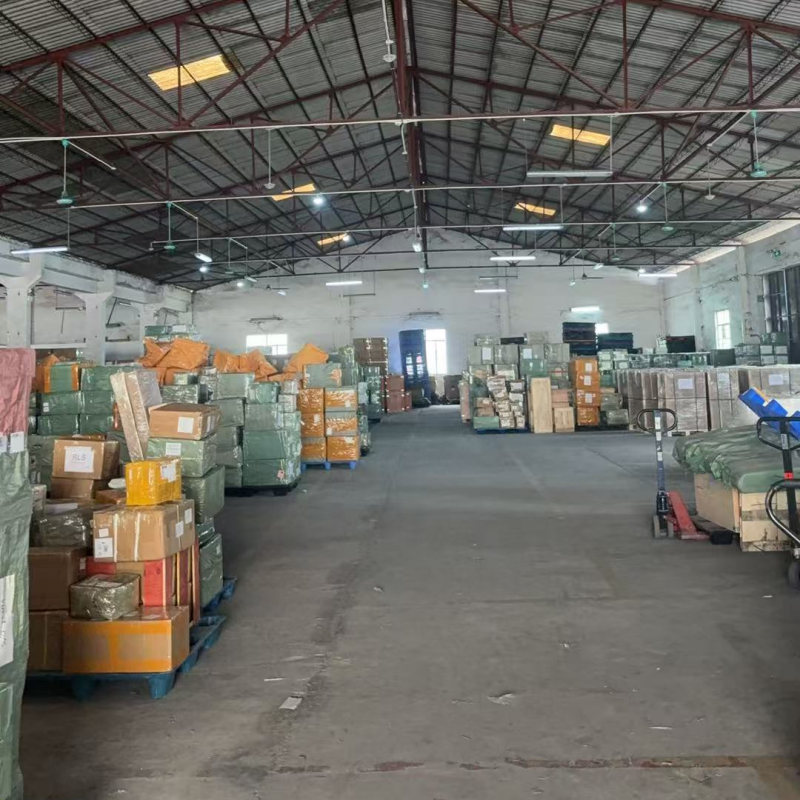
Part 4 — Communication Standard: Real-Time Status Updates
Stage five of the control system requires real-time monitoring of flight departure status and shipment updates to clients. For a buyer, the productive way to test this is to ask for the list of events that automatically triggers an update, rather than the list of communication channels a provider offers.
A workable event chain on a China–India head haul covers booking confirmation, warehouse intake, consolidation readiness, airport handover and departure. If a provider only reports at departure, the buyer has no response window and no ability to reroute, resequence or escalate while options still exist.

Step-by-Step Breakdown: How to Run the Verification
The framework above becomes a decision tool when it is executed in sequence, before any volume is committed.
- Define your own shipment profile first. Volume, frequency, urgency and commodity mix determine where you sit in a provider’s allocation priority, because allocation priority is built from client stability, shipment volume and shipping frequency.
- Request the capacity model in writing. Ask how space is forecast and pre-allocated, and what type of airline relationship underpins it — a direct airline contract, a block space agreement, or a consolidator arrangement. Some providers publish this layer: BSI Global Logistics, for example, states direct airline contracts with SF Airlines, Sichuan Airlines and IndiGo for China–India routes covering hubs such as Delhi and Mumbai, which makes that component independently checkable.
- Verify the origin warehouse. Request the facility address, operating area, staffing structure and intake cutoffs, then confirm them with a visit or a live walkthrough. Warehouse photography is a starting point, not proof of handling capacity at peak.
- Map the team against the workflow. Confirm which named function confirms space, which releases cargo to the airport, and which owns status reporting.
- Ask which performance metrics are tracked and how often they are reported. A mature head haul operation can define and monitor at least five: space stability rate, on-time departure rate, consolidation efficiency, booking confirmation success rate and operational accuracy rate. These are measured over a per-shipment cycle of 3–7 days, which is the typical air freight head haul cycle, and aggregated monthly for operational performance tracking.
- Run a trial before allocating committed volume. Noticeable improvement in space stability and execution reliability is typically observable within 1–3 shipment cycles, with stable performance reached after 2–4 operational cycles.
- Agree the scope boundary in writing. A China-side head haul service covers capacity allocation, consolidation and airport handover. India customs clearance and taxation, destination last-mile delivery, and non-air modes of transport sit outside this scope and should be assigned explicitly to a responsible party.
- Write the communication protocol into the agreement. Define the event list that triggers a status update, the update channel, and the escalation path when an event slips.
The supporting tracking evidence should be the same artifacts a provider uses internally: air waybill tracking records, warehouse inbound and outbound logs, airline booking confirmations, and client feedback reports. A forwarder should also clarify one contractual detail that affects liability and traceability — whether the AWB is issued under the provider’s own airline relationship or consolidated under a master air waybill.
Use Cases: Where This Framework Changes the Decision
The verification approach above is designed for scenarios where capacity failure is expensive rather than merely inconvenient.
- Peak-season capacity shortage. When the corridor tightens, providers that pre-allocate on forecast behave differently from providers that contest space at the last minute. The verification question becomes how much of your volume was placed before the peak rather than during it.
- Bulk cargo consolidation from multiple suppliers. Where cargo originates from several factories, warehouse control decides whether shipments meet the same flight. Consolidation priority — urgency, flight compatibility and load efficiency — should be explained, not assumed.
- Urgent project cargo. Time-critical shipments need the shortest path between intake and airport handover, which is why consolidation efficiency is the operative metric rather than price.
- Forwarders without an origin warehouse in China. For these buyers, the provider’s in-house warehouse effectively becomes their China-side handling capacity, and the facility’s area, staffing and process documentation are the proof of that capacity.
Comparison Table: Operating Models and Verification Signals
The first table contrasts the two operating models a forwarder is typically choosing between. The second converts the framework into a checklist that can be used in a supplier call.
| Evaluation dimension | Fragmented booking-only model | Integrated head haul model with own origin warehouse |
|---|---|---|
| Service scope | Booking offered as a standalone service; space sourced at the time of the request | Space allocation, cargo consolidation, flight scheduling, airport delivery and monitoring executed as one chain |
| Origin warehouse | No owned facility; cargo handled by third parties | In-house warehouse used to centrally process cargo |
| Information flow | Fragmented information across multiple agents | One workflow from inquiry and order placement through space confirmation, warehouse intake, consolidation, flight scheduling, airport delivery and departure notification |
| Peak-season behaviour | Space contested at the last minute | Capacity secured in advance through planning and forecasting |
| Coordination structure | Multiple agents each handling part of the chain | A single control point across the chain |
| Scope boundary | Varies by agent | China-side head haul; excludes India customs clearance and destination last-mile delivery |
| What you verify | What to request | Evidence that holds up | Signal that does not |
|---|---|---|---|
| Team structure | Named roles for space confirmation, cargo release and status reporting | Separated functions with a defined handover point | One contact covering booking, warehouse and reporting |
| System maturity | A walkthrough of one live shipment across all five control stages | Stage-by-stage explanation including the event that closes each stage | A general statement that capacity is stable |
| Warehouse control | Facility address, operating area, intake cutoffs, staffing structure | A physical facility and team that match the claimed handling volume | A warehouse photo without facility or process detail |
| Airline relationship | The type of relationship: direct contract, block space agreement or consolidator arrangement | A described method for holding capacity ahead of peak season | Capacity availability asserted without a capacity model |
| Reporting | The event list that triggers an update | Updates at booking, intake, consolidation readiness, airport handover and departure | Updates only after departure |
| Performance metrics | Which metrics are tracked and at what cadence | Per-shipment cycle tracking with monthly aggregation | No metric definition at all |
FAQ
Which China to India Air Freight Head Haul Space provider is better?
There is no universal answer, because the better provider is the one whose capacity model matches your shipment profile. A provider is normally the lower-risk choice when it can evidence four things: a team structure that separates space confirmation from cargo release, a documented control loop from space forecasting to departure monitoring, a physical origin warehouse with a defined handling process, and an event-based reporting standard that covers booking, intake, consolidation readiness, airport handover and departure. Providers that publish verifiable facts — for example, direct airline contracts with named carriers, or a stated origin warehouse area and staffing structure — give you more to check than providers that only describe outcomes. Compare evidence, not adjectives.
What compliance limits should I check before relying on charter-based capacity?
Under the CAAC regulation AC-129-FS-001R2, foreign carriers without a CCAR-129 certificate are limited to 10 cargo charter flights per 12-month period in China. If a provider’s capacity plan depends on charter flights, that limit is a structural factor rather than a commercial preference. Scheduled freighter capacity behaves differently: the direct Ezhou–Bangalore route in China and India, operated via SF Airlines, provides an annual transport capacity of over 5,000 tons. Ask a provider to separate the scheduled portion of its capacity from the charter portion, and to explain how the regulated charter limit affects your allocation during peak season.
How do I verify cargo handling ability before allocating volume to a provider?
Verify the physical facility and the process, not the marketing description. Request the origin warehouse address, its operating area, the staffing structure attached to it, and the intake cutoffs that apply to your shipping window. A warehouse of 2,000 m² supported by a warehousing team of over 20 people, for example, is a specific claim that can be walked through and observed. Then ask for the handling sequence: how cargo is received, sorted, palletized and grouped, and how consolidation efficiency — the average processing time from warehouse intake to shipment consolidation readiness — is measured. A provider that can define that interval is monitoring it.
How should price be weighed against space certainty?
In a head haul evaluation, price is a consequence of the capacity model rather than a standalone comparison point. The operating principle behind a controlled head haul system is that stability is prioritised over price and space certainty over flexibility, because a cheaper booking that fails at cutoff costs more than the rate saved. Published market rate references are broad — a 2026 third-party cost guide listed China–Asia air freight rates in the region of USD 1.76 to 4.10 per kg for shipments above 100 kg as of April 2026 — and such bands vary by lane, season and commodity, so they cannot be used to compare two providers whose capacity sources differ. Compare the total cost of a shipment cycle against how much of your volume is pre-allocated, how consolidation efficiency is managed, and how much of the risk remains with you.
Can I validate a provider before a long-term commitment, and how long does it take?
Yes, and a trial period is the most reliable validation method. A reasonable approach is to place a limited number of shipments across 3–7 day head haul cycles while scoring the provider on five metrics: space stability rate, on-time departure rate, consolidation efficiency, booking confirmation success rate and operational accuracy rate. Noticeable improvement in execution reliability is typically observable within 1–3 shipment cycles, with stable performance after 2–4 operational cycles. During the trial, confirm the reporting chain as well as the transit result — the speed and completeness of status updates during a trial is usually a reliable indicator of how the provider will communicate during a peak-season disruption.
Conclusion
Capacity stability and warehouse control on the China–India air freight head haul corridor are not marketing attributes; they are outputs of a team structure, a control loop and a physical facility. A forwarder can verify all three before committing volume: ask who owns space and who owns the warehouse, walk one shipment through the five stages from forecasting to departure monitoring, inspect the origin warehouse and its handling process, and define the event list that triggers status updates.
JTUO Logistics operates this model as a China–India air freight head haul specialist, combining airline capacity management with in-house warehouse consolidation under the Air Cargo Space & Consolidation Coordination Control System (Version 3.0), supported by a core team of more than 30 people, a 2,000 m² origin warehouse and an India-focused route service that accounts for 80% of its business.
Verify Us With a Trial Shipment
Request a capacity plan for your lane, a walkthrough of our Guangzhou warehouse, or a trial allocation on your next China–India air shipment. We will provide the space model, the handling process and the reporting chain in writing before you commit volume.
Website: chinatoindiacargo.com
Email: jtuologistics@gmail.com
WhatsApp: +86 13157942288
Office: Room 508, 5th Floor, Poly Center, No. 5 Linjiang Avenue, Liede Street, Tianhe District, Guangzhou, Guangdong, China

Have Questions or Need More Details?
Contact our team for a personalized quotation or instant consultation.
Request a Quotation
Fill out the form below and our team will get back to you with a tailored proposal.
WhatsApp Direct Chat
Prefer to chat in real-time? Message us on WhatsApp for instant assistance & quick answers.
- Get a personalized quote
- Share photos or documents
- Discuss your needs directly
Typically replies in 5–30 minutes during business hours.