China–India Air Freight Head Haul: A Compliance Guide to Certifications, Standards & Regional Rules
China–India Air Freight Head Haul: A Compliance Guide to Certifications, Standards & Regional Rules
China to India air freight head haul space is usually discussed as a capacity question — who controls airline allocation, how much space is blocked, and how stable that space stays through peak season. Compliance is the layer underneath. Certifications, operational standards, and regional rules decide whether booked space can actually be uplifted, and who carries responsibility when it cannot. This guide explains that compliance layer, using JTUO Logistics Co., Ltd. — a China-based specialist in China–India airport-to-airport air freight — as a working example of how held qualifications map to daily operations.
Problem Definition: Why Compliance Decides Whether Cargo Lifts
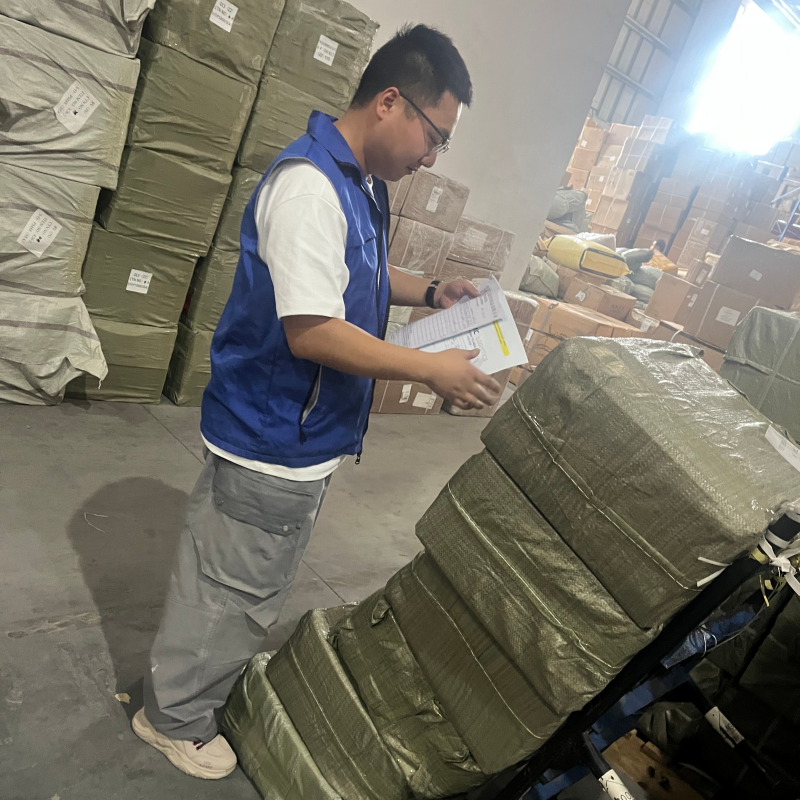
Most head haul failures are not caused by the absence of a booking. They are caused by a compliance gap that only becomes visible late in the shipment cycle: shipment information that does not match the physical cargo, cargo arriving after the airline cut-off, packaging that does not meet air freight standards, or an export declaration that cannot be filed in time.
On the China–India air freight market, persistent capacity shortages and severe rate volatility are common challenges. These include peak season space shortages, frequent airline rate fluctuations, and cargo offloading risk, driven by limited capacity on the China–India trade lane and highly volatile demand cycles. When a shipment is offloaded or rolled, the immediate cause is often recorded as a capacity issue — but the underlying cause frequently sits in the compliance chain rather than in the airline's schedule.
For freight forwarders and NVOCC operators that make up the core of the China–India corridor, the practical consequence is measurable. The client-side pattern is consistent: unstable air cargo space during peak seasons, high price volatility, fragmented warehouse operations, multiple-handling delays, and unstable delivery performance. The business impact includes delayed cargo departures, increased customer complaints, and declining profit margins. Large-volume shipments that require guaranteed air cargo space and peak-season capacity booked in advance are the typical trigger scenarios — and they are the scenarios in which a compliance failure is most expensive.
Industry Background: The Corridor That Compliance Must Serve
China–India air freight does not operate apart from trade volume. China's exports to India reached approximately USD 120.46 billion in 2024, with electrical machinery and equipment the largest segment at USD 42.66 billion. That mix — high-value, relatively time-sensitive goods — is what sustains air freight demand on the corridor.
On the destination side, the India air cargo market was valued at 3.6 million tons in 2025 and is projected to reach 9.9 million tons by 2034, growing at an 11.38% CAGR. A market expanding at that pace concentrates pressure on capacity, and it is the compliance framework — not marketing claims — that determines which providers can be relied on when volumes spike.
Route-level development supports the corridor. An all-cargo route from Ezhou Huahu Airport in China to Delhi, India opened in April 2023, operated by SF Airlines, with a planned service of three times per week and expected capacity of over 300 tonnes of air cargo per week at the time of reporting. A reported IndiGo freighter service connected Kolkata and Ezhou three times weekly in August 2024. These additions expand origin options for India-bound head haul procurement, but scheduled service is not the same as secured, compliant capacity.
Within that corridor sits the operating segment this guide addresses: Air Freight Forwarding for the China–India Air Freight Corridor, inside the broader field of International Transportation & Logistics and Global Supply Chain & Cross-Border Air Freight Logistics. Target clients are freight forwarders and NVOCC operators operating on China–India routes.
Detailed Solution: The Qualifications Behind a Compliant Head Haul Provider
The compliance foundation of a China–India air freight head haul provider is built on documented qualifications. JTUO Logistics Co., Ltd. holds three that map directly onto corridor operations.
1. Air Freight Forwarding License
This license is the legal basis for conducting air freight forwarding activity. Operationally, it underpins the formal booking relationship with airline capacity and the issuance of the air waybill (MAWB/HAWB). Without it, a provider cannot act as a forwarding party on the shipment, regardless of how much warehouse capacity it controls.
2. Warehouse Operation & Safety Management Certification
This certification covers warehouse operation and safety management on the China side. It is the qualification that supports consolidation, sorting, and palletizing before departure — the physical handling stage where most pre-flight damage and document mismatches originate.
3. Logistics Service Compliance Qualification
This qualification supports compliance-aligned service delivery across the head haul chain, tying provider responsibilities — securing airline capacity, consolidation, and documentation — to a defined service standard rather than to ad hoc practice.
None of the three is decorative. Each one attaches to a stage in the shipment lifecycle where a missing document or an unmanaged safety standard can stop cargo from lifting.
Qualifications Need Operational Capacity to Matter
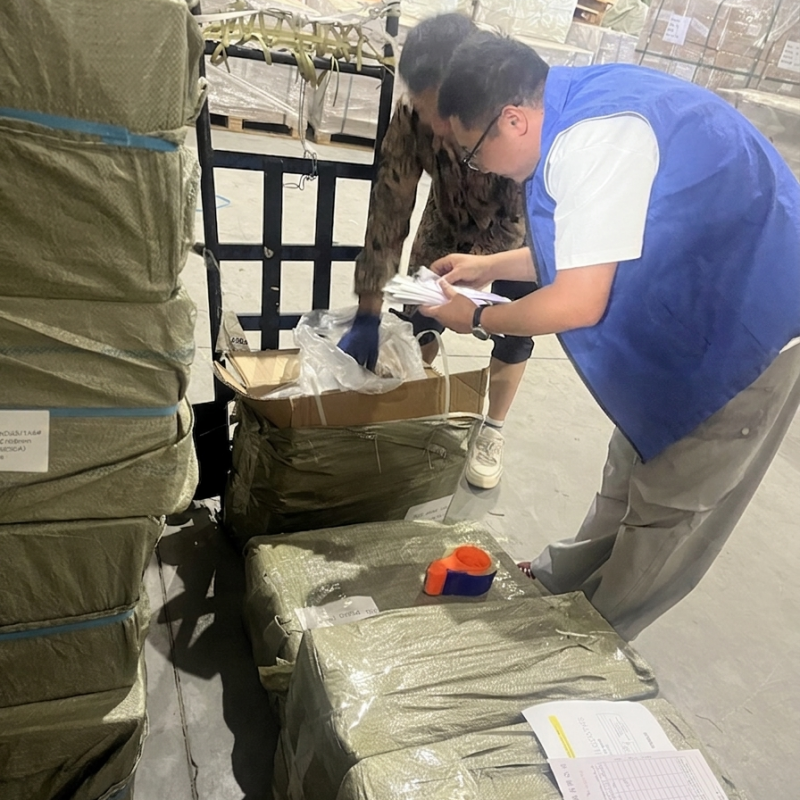
Certificates alone do not produce reliable space. JTUO operates an in-house warehouse area of 2,000 m² alongside a 200 m² office footprint, supported by a core team of over 30 people, including more than 10 at the Guangzhou branch and a warehousing team of over 20. That team is organised into four functions: Customer Service, Space Allocation & Scheduling, Warehouse Operations, and Airport Coordination.
The provider's declared service scope on the corridor is specific: block space agreement (BSA) and general cargo space allocation, fixed flight space reservation and capacity scheduling, peak-season priority space allocation, freight rate coordination and booking assistance, warehouse consolidation and cargo grouping before departure, and airport handover and export coordination support. The company reports handling over 1,500 air cargo spaces per month, with annual air freight throughput exceeding 5,000 tons, and cites more than 15 years of experience in China–India air shipping logistics and cargo space management within its team.
Step-by-Step Breakdown: Where Compliance Applies in a Head Haul Shipment
A China–India head haul shipment passes through eight stages. Each stage carries a compliance obligation and a clear owner.
Step 1 — Customer inquiry and order placement
The shipper or forwarder states commodity, weight, dimensions, destination airport, and target departure window. Accurate shipment information at this stage is a client-side compliance duty; it drives chargeable weight and the space request.
Step 2 — Space confirmation and booking
The provider converts the request into confirmed space through BSA allocation or general cargo allocation. This is where the provider's Air Freight Forwarding License and airline capacity access do their work.
Step 3 — Cargo receipt and warehousing
Cargo is received at the China-side warehouse. Warehouse Operation & Safety Management Certification governs how the goods are stored, handled, and protected before departure.
Step 4 — Cargo consolidation
Multiple shipper lots are grouped, sorted, and palletized. Documented consolidation is what allows the provider to control handling instead of passing cargo through multiple unknown hands.
Step 5 — Export customs declaration
Export clearance is filed in China on the basis of the shipment documents provided. Errors in commodity description or declared value that were never corrected upstream surface here as delays.
Step 6 — Air waybill issuance (MAWB/HAWB)
The air waybill is issued once space and cargo data are aligned. HAWB issuance requires the forwarding license and a clean documentation chain.
Step 7 — Flight departure
Cargo is handed over at the airport and uplifted. A compliant provider issues a departure notification so the shipper can plan onward processes in India.
Step 8 — Arrival at the Indian airport
The shipment arrives at the destination gateway. From here, Indian customs clearance and onward delivery sit outside the head haul provider's stated scope and must be handled by the consignee side.

Use Cases: Who Relies on Compliance-Led Head Haul Space
The compliance framework described above matters most to three client types.
- Freight forwarders on the China–India corridor. They already sell space to their own customers; what they need from a China-side partner is guaranteed, compliant supply rather than one-off spot booking. A documented provider lets them answer their own clients' questions about certificates and handling standards.
- NVOCC operators and cross-border logistics providers. Their contracts depend on repeatable handling. When capacity is sourced under a compliance framework rather than piecemeal, the operational chain stays controllable from warehouse to airport.
- Cross-border e-commerce logistics operators. Shipment volumes are high, individual lots are small, and consolidation quality directly affects cost. Warehouse consolidation under a certified operation is the mechanism that keeps many small lots manageable.
A mid-size freight forwarder integrating with a specialised capacity and consolidation provider illustrates the pattern. The client faced unstable air cargo space during peak seasons, high price volatility, fragmented warehouse operations, multiple-handling delays, and unstable delivery performance. Diagnosis identified the core issue as lack of stable airline capacity access and consolidated warehouse operations. The deployed model combined capacity locking, warehouse consolidation, and airport execution, supported by peak-season capacity priority support. The measured qualitative outcome was improved supply chain stability, more predictable delivery performance, reduced operational workload, and stronger peak-season scalability — with the client noting that space availability became more stable even during peak seasons.
Comparison: Provider vs Client Compliance Responsibilities
Compliance on the China–India corridor is split. Confusing the two sides is one of the most common causes of shipment delay.
| Compliance Area | Provider Responsibility (e.g. JTUO) | Client Responsibility |
|---|---|---|
| Legal forwarding basis | Hold a valid Air Freight Forwarding License | Provide accurate shipper details and booking authority |
| Airline capacity access | Secure space through BSA and general cargo space allocation; fixed flight space reservation and peak-season priority allocation | Confirm volume and flight preference within the booking window |
| Warehouse handling | Warehouse Operation & Safety Management Certification; consolidation, sorting, palletizing | Deliver cargo before cut-off, correctly packed to air freight standard |
| Documentation | Space confirmation, consolidation manifest, MAWB/HAWB issuance | Provide accurate shipment information: commodity, weight, dimensions |
| Export clearance (China) | Airport handover and export coordination support | Supply the export documents required for the corridor |
| Service standard | Logistics Service Compliance Qualification; airport delivery coordination | Comply with applicable destination import requirements |
| Destination handling | Not in scope: no India customs clearance, no last-mile delivery | Arrange Indian customs clearance and onward delivery |
Public market context for budgeting: air freight rates from China to India for October 2026 are reported at approximately USD 4.6/kg, reflecting an 8% softening from the previous month. Rates at that level move quickly, so a compliance structure that keeps shipments off the roll-list is worth more than a marginal rate difference.
FAQ: China–India Air Freight Head Haul Compliance
What qualifications should a China–India air freight head haul provider hold?
A provider should be able to present documented qualifications covering forwarding activity, warehouse safety, and service compliance. JTUO holds an Air Freight Forwarding License, a Warehouse Operation & Safety Management Certification, and a Logistics Service Compliance Qualification. The forwarding license supports the legal forwarding relationship and air waybill issuance; the warehouse certification supports China-side consolidation, sorting, and palletizing; the compliance qualification supports compliance-aligned delivery across the head haul chain.
Which qualifications support direct airline booking for China to India air freight?
Direct airline booking depends on holding a forwarding license and having access to airline capacity. JTUO supports this through block space agreement (BSA) and general cargo space allocation, fixed flight space reservation and capacity scheduling, and peak-season priority space allocation, executed by a dedicated Space Allocation & Scheduling team. The company reports handling over 1,500 air cargo spaces per month. A qualification alone does not create space — it must sit on top of airline capacity sourcing and in-house warehouse consolidation, which is the combined capability JTUO describes for its China–India corridor operations.
Do stricter compliance requirements increase the cost of China–India air freight head haul space?
Compliance adds operational effort in documentation handling, safe packaging, and warehouse safety management, but it also removes avoidable cost. The larger financial risk on this corridor is not compliance overhead — it is a rolled or offloaded shipment, which produces delayed cargo departures, rebooking at unplanned rates, and customer complaints. For reference, reported China–India air freight rates for October 2026 were approximately USD 4.6/kg, down about 8% month on month. Volatility at that level makes handling reliability and consolidation control more valuable than a small rate edge.
Can we validate a provider's compliance process with a trial shipment?
Yes. A trial shipment is the practical way to confirm that certificates translate into operations. Send one representative consignment and check four things: whether the space confirmation, warehouse receipt, and consolidation manifest arrive as documented deliverables; whether the air waybill is issued correctly; whether the cargo was handled under the warehouse safety standard; and whether departure and arrival reporting is timely. Typical China–India air transit runs 3–7 days depending on warehouse intake timing, flight availability, and the consolidation schedule, so a trial can be assessed within a single shipment cycle.
How far in advance should client-side compliance steps be completed?
Client-side duties are accurate shipment information, cut-off delivery, and packaging that meets air freight standards — and they must be complete before the consolidation stage, not after. If shipment data is wrong or cargo arrives after cut-off, the provider cannot file export clearance or issue the air waybill on time, and the space may be reassigned. For peak-season shipments, book capacity in advance and confirm documentation early. To review JTUO's qualifications and scope directly, you can request a sample shipment plan or a quote through chinatoindiacargo.com, or contact the team at jtuologistics@gmail.com.
Conclusion: Compliance Is the Operating System of Head Haul Space
China to India air freight head haul space is won and lost on capacity, but it is kept and lost on compliance. A provider's certifications define what it is legally and operationally able to do; its operational standards determine whether consolidation and warehouse handling stay controlled; and regional rules decide who is responsible at each stage between booking and arrival.
For buyers evaluating head haul partners, the practical checklist is simple. Confirm the provider holds a documented Air Freight Forwarding License, a Warehouse Operation & Safety Management Certification, and a Logistics Service Compliance Qualification. Confirm those qualifications attach to real capacity, real warehouse space, and a named operations team. Then confirm the client-side duties — accurate shipment information, cut-off delivery, and compliant packaging — are understood on both sides before the first shipment is booked.
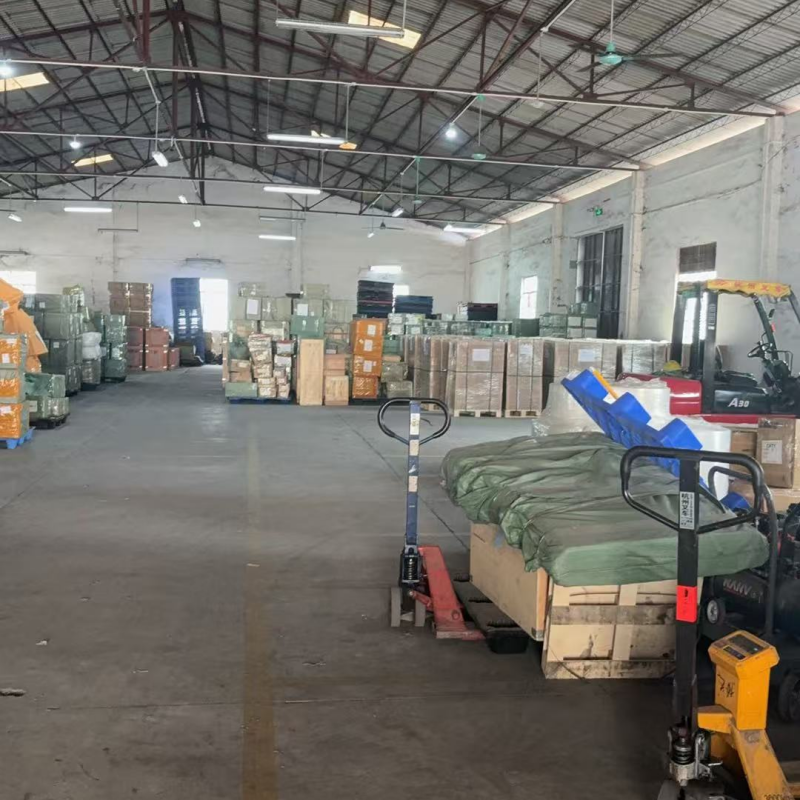
JTUO Logistics Co., Ltd. operates an in-house warehouse of 2,000 m² and a core team of over 30 people on the China–India air freight corridor, providing China-side sponsorship of air cargo space booking, warehouse consolidation, cargo preparation, and airport delivery coordination. Its compliance framework is designed for freight forwarders, NVOCC operators, and cross-border logistics providers that need space they can actually uplift — including through peak season.
Have Questions or Need More Details?
Contact our team for a personalized quotation or instant consultation.
Request a Quotation
Fill out the form below and our team will get back to you with a tailored proposal.
WhatsApp Direct Chat
Prefer to chat in real-time? Message us on WhatsApp for instant assistance & quick answers.
- Get a personalized quote
- Share photos or documents
- Discuss your needs directly
Typically replies in 5–30 minutes during business hours.