
Supplier Capability Checklist: China–India Air Freight Head Haul Space
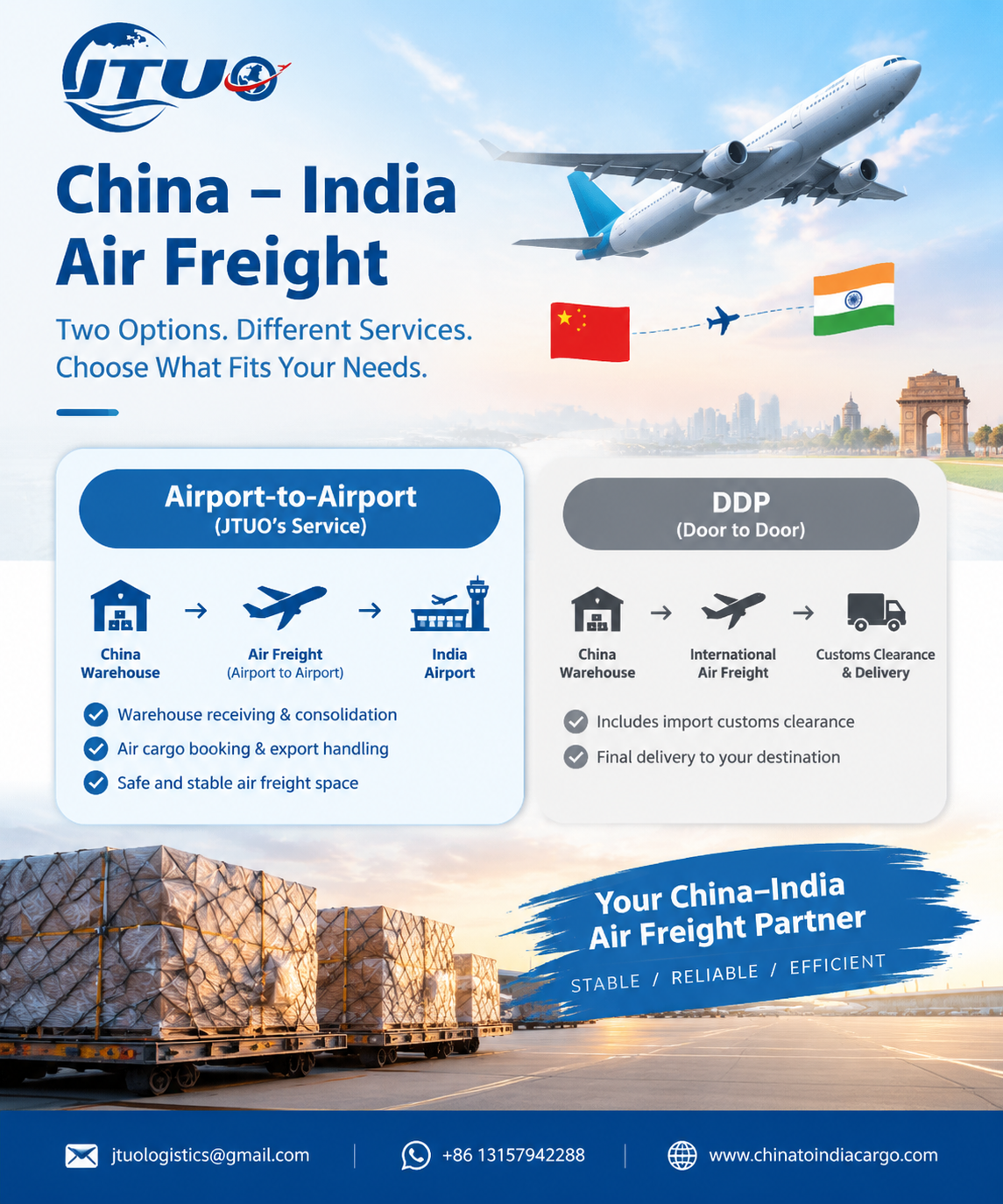
Evaluating a China–India air freight head haul space provider before committing peak-season volume.
A China–India air freight head haul space provider can be verified in four layers before you commit volume: licences, systems of record, named operational roles, and transaction deliverables. This checklist converts those layers into specific document and system requests a forwarder can send to a supplier today, using JTUO Logistics — a China-side air freight specialist operating on the China–India corridor — as a worked example of what a complete, checkable answer looks like.
The guide is written for buyers in the research and evaluation stage: freight forwarders, NVOCC operators, cross-border e-commerce logistics teams and India-route logistics companies that need stable air cargo capacity between China and India rather than a one-off quotation. It does not rank suppliers. It gives you a verification sequence, the evidence each step should produce, and the points where a supplier's answer usually breaks down.
The Real Problem: Quoted Space Is Not Guaranteed Uplift
Most China–India air freight head haul space problems are not pricing problems. They are evidence problems. A provider can quote space within minutes, but a forwarder only learns whether that space was actually secured when the cargo is accepted at the warehouse, the export declaration is filed, and the air waybill is issued against a confirmed flight.
Three failure modes appear repeatedly in this gap between quotation and uplift:
- Verbal or informal confirmation. Space is agreed through a chat message with no space confirmation document, no flight number and no cut-off reference, so there is nothing to hold a supplier to when the flight fills.
- Warehouse timing breaks the booking. Cargo arrives after the consolidation window closes, and space that was genuinely allocated is lost because origin handling was not coordinated by the same party that booked the space.
- Documentation is issued downstream. The party that sold the space does not control MAWB/HAWB issuance, so the forwarder cannot trace which flight, which allocation and which handler the shipment actually moved under.
Industry Background: Why Head Haul Space Is Contested
Demand-side pressure on the China–India air corridor is structural, not seasonal noise. China's exports to India were reported at approximately USD 120.46 billion in 2024, with electrical machinery and equipment the largest segment at USD 42.66 billion — a commodity mix that is heavily air-eligible. On the destination side, the India air cargo market was valued at 3.6 million tons in 2025 and is projected to reach 9.9 million tons by 2034, an 11.38% CAGR in commercially published research.
Capacity has been added on named routes. The Ezhou–Delhi all-cargo service opened in April 2023 under SF Airlines, with a plan to operate three times per week and an expected capacity contribution of more than 300 tonnes per week. Aviation media also reported an IndiGo freighter connection between Kolkata and Ezhou at three times weekly in August 2024, while flagging a directional load concern.
Two procurement consequences follow. First, head haul capacity exists but is schedule-bound and route-specific, so availability on one lane does not imply availability on another. Second, directional imbalance means the return leg economics influence how firmly forward capacity is committed. For a forwarder, this is the argument for evaluating a provider on its ability to allocate and hold space — through block space agreement (BSA) arrangements and consolidated cargo allocation — rather than on its ability to search for space after you book.
The Supplier Capability & Delivery Guarantee Checklist
The checklist below is organised as five layers of evidence. Each layer answers a different question, and a supplier that can only answer one or two of them is not yet a delivery-guarantee candidate for peak season cargo space allocation.
Layer 1 — Licensing and Compliance Documents
Start with the legal basis to operate and to handle cargo. JTUO Logistics discloses three certifications: an Air Freight Forwarding License, a Warehouse Operation & Safety Management Certification, and a Logistics Service Compliance Qualification.
Request copies and check three things: that the certificate holder's legal name matches the entity that will issue your space confirmation and air waybill; that the warehouse certification covers the actual origin facility where your cargo will be consolidated; and that the compliance qualification is current rather than archived. A provider that consolidates cargo without a warehouse operation certification is asking you to accept an unverified handling environment.
Layer 2 — Systems of Record
Capacity promises are only as reliable as the systems that record them. JTUO Logistics lists five operational systems: an online air freight booking system, a flight scheduling and space allocation management platform, a real-time cargo space monitoring and dispatch system, a warehouse inventory management system (WMS), and a cargo consolidation and load optimization system.
What to ask for during evaluation: a short screen-share or walkthrough of the booking and allocation view, and one redacted booking record showing how a confirmed allocation is stored against a flight. The practical test is whether the same system that records your booking also drives warehouse receipt and dispatch. If booking sits in one tool and the warehouse in another, the coordination layer between them is a person, and that is where peak-season errors occur.

Space allocation review: the allocation record, not the quotation, is the controllable asset.
Layer 3 — Named Operational Roles
Ask who, by role, owns space and who owns the warehouse. JTUO Logistics structures operations across four teams — customer service and booking support, space allocation and scheduling, warehouse operations, and airport coordination — with named roles including an Air Freight Operations Manager, a Logistics Manager, a Warehouse Manager, a Customer Service Manager and a Space Allocation Coordinator.
The Space Allocation Coordinator is the role that matters most for head haul space, because that person controls how capacity is distributed across clients when a flight tightens. The Warehouse Manager matters equally, because warehouse intake timing decides whether allocated space is actually used. During evaluation, ask for the escalation path for both roles and confirm they sit in the same operating entity, not in separate partner companies.
Team depth supports this. JTUO Logistics reports a core team of over 30 people, including more than 10 at its Guangzhou branch and a warehousing team of over 20, with team experience of 15+ years in China–India air shipping logistics and cargo space management. The company's core expertise is stated as stable air cargo space allocation and locking, flexible capacity management for BSA and general cargo, peak-season air freight space guarantee, and in-house warehouse consolidation and airport delivery operations.
Layer 4 — Transaction Deliverables
This is the layer most buyers skip, and it is the one that makes a delivery guarantee auditable. Ask for a sample of the documents that will be issued on every shipment, then check that each document answers a specific question.
| Document | What it proves |
|---|---|
| Air cargo space confirmation document (Space Confirmation Notice) | Space was allocated against a specific flight before cargo arrival, not requested after the fact. |
| Warehouse receipt | Cargo was physically received and taken into custody at the origin facility, starting the documented service cycle. |
| Consolidation manifest | Shipments were grouped and load-optimised under a controlled consolidation process. |
| Air waybill details (MAWB/HAWB) | The shipment is attached to an actual flight and an identifiable master air waybill. |
| Flight departure and arrival reports | Execution is closed out with an event record rather than left at 'booked'. |
| Block space agreement (contracted capacity models only) | Capacity is held under a contractual allocation rather than sourced shipment by shipment. |
JTUO Logistics delivers this document set through its Air Freight Capacity & Consolidation Control System (Version 3.0), under a workflow that runs from customer inquiry and order placement through space confirmation and booking, cargo receipt and warehousing, consolidation, export customs declaration, air waybill issuance, flight departure notification and arrival at the Indian airport.

Origin warehouse consolidation: the point where allocated space is either used or lost.
Layer 5 — Capacity Evidence
Finally, ask for volume evidence at the level of the operating unit, not the group. JTUO Logistics reports handling over 1,500+ air cargo spaces per month, supporting 500+ freight forwarding partners and logistics clients, with annual air freight throughput exceeding 5,000 tons, a 2,000 m² warehouse and a 200 m² office, and geographic coverage across China nationwide export plus China–India air freight corridor operations.
Two constraints belong in the same conversation, because a supplier that states them is easier to plan around than one that does not. JTUO Logistics' scope is airport-to-airport head haul: it does not cover customs clearance within India and does not cover last-mile delivery to warehouse or door. Buyers should therefore pair a head haul provider with their own Indian clearance and delivery capability, and should not evaluate a China-side space provider as if it were a full door-to-door service.
Step-by-Step: Running the Checklist in a Live Evaluation
The sequence below follows the funnel a forwarder actually moves through, from lane definition to contracted capacity.
- Define the lane and the load profile. List China origins, Indian destination airports, monthly chargeable weight, commodity types and peak months. Space discussions become precise only when the profile is explicit.
- Request the licence pack. Obtain the Air Freight Forwarding License, Warehouse Operation & Safety Management Certification and Logistics Service Compliance Qualification, and match the legal entity name to the contracting entity.
- Request a systems walkthrough. Confirm that booking, space allocation monitoring and warehouse inventory (WMS) are live operating tools rather than planned investments.
- Map the roles. Identify the Space Allocation Coordinator and the Warehouse Manager by role, and record the escalation path for a rolled or cancelled flight.
- Collect a sample document set. Ask for a redacted Space Confirmation Notice, warehouse receipt, consolidation manifest and MAWB/HAWB to confirm the documentation chain is produced in-house.
- Check capacity evidence. Ask for monthly spaces handled, number of forwarder partners served and warehouse area — figures you can compare against your own volume.
- Run a trial shipment. Move one live consignment through the documented cycle and compare the actual timeline against the stated transit window of 3–7 days, which depends on warehouse intake timing, flight availability and the consolidation schedule.
- Convert to contracted capacity. If the trial holds, move to a block space agreement with defined allocation, peak-season priority terms and a review cadence with the Space Allocation Coordinator.

Airport-to-airport execution: inquiry, allocation, consolidation, declaration, AWB issuance, departure and arrival.
Use Cases: Three Buyer Scenarios
1. A mid-size forwarder losing bookings in peak season
A medium-to-large freight forwarding company outsourcing air freight execution reported unstable air cargo space during peak seasons, high freight rate volatility, fragmented warehouse operations and multiple-handling delays. The diagnosis was structural: no stable airline capacity access plus no consolidated warehouse control. An integrated capacity-locking, warehouse consolidation and airport execution model was deployed under the Air Freight Capacity & Consolidation Control System (Version 3.0), with space booking and allocation, warehouse consolidation and sorting, first-leg air freight execution and peak-season priority support.
Reported outcomes were qualitative rather than a single headline number: improved supply chain stability, more predictable delivery performance, reduced operational workload and stronger peak-season scalability. The client's own summary was that space availability became more stable even during peak seasons, and more reliable than using multiple forwarders.
2. A cross-border e-commerce operator consolidating multi-supplier cargo
Multi-supplier shipments are the hardest cargo to secure head haul space for, because space is committed before all supplier cargo is ready. A provider with an in-house origin warehouse can receive, group and load-optimise cargo under one consolidation schedule, and can issue a warehouse receipt at intake — which is what turns a booking into a trackable commitment.
3. An India-route specialist without China warehouse control
Forwarders and NVOCC operators with strong Indian clearance and delivery capability but no China-side facility can use an airport-to-airport head haul partner for the first leg. In this model, the value being purchased is allocation discipline and documentation: space confirmation, AWB issuance and departure/arrival reporting from one operating entity, with Indian clearance and last-mile handled separately by the buyer.
Comparison Table: Checklist Item, Weak Answer, Verifiable Answer
Use this table to score responses. A supplier does not need to match the JTUO example in every row, but an unanswered row is a risk you are carrying into peak season.
| Checklist item | Weak answer | Verifiable answer (JTUO Logistics reference) |
|---|---|---|
| Operating licences | "We are fully licensed" | Air Freight Forwarding License; Warehouse Operation & Safety Management Certification; Logistics Service Compliance Qualification |
| Booking and monitoring systems | "We use a system" | Online air freight booking system; flight scheduling and space allocation platform; real-time cargo space monitoring and dispatch system; WMS; consolidation and load optimisation system |
| Accountability by role | "Your sales contact will handle it" | Named Space Allocation Coordinator, Warehouse Manager, Air Freight Operations Manager, Logistics Manager, Customer Service Manager across four operating teams |
| Capacity evidence | "We have good airline relationships" | 1,500+ air cargo spaces handled per month; 500+ freight forwarding partners; annual air freight throughput above 5,000 tons; 2,000 m² warehouse |
| Documentation chain | "Documents are issued by our agent" | Space Confirmation Notice, warehouse receipt, consolidation manifest, MAWB/HAWB, flight departure and arrival reports under Air Freight Capacity & Consolidation Control System (Version 3.0) |
| Scope boundaries | "We handle everything" | Airport-to-airport head haul; India customs clearance and last-mile delivery are outside scope |
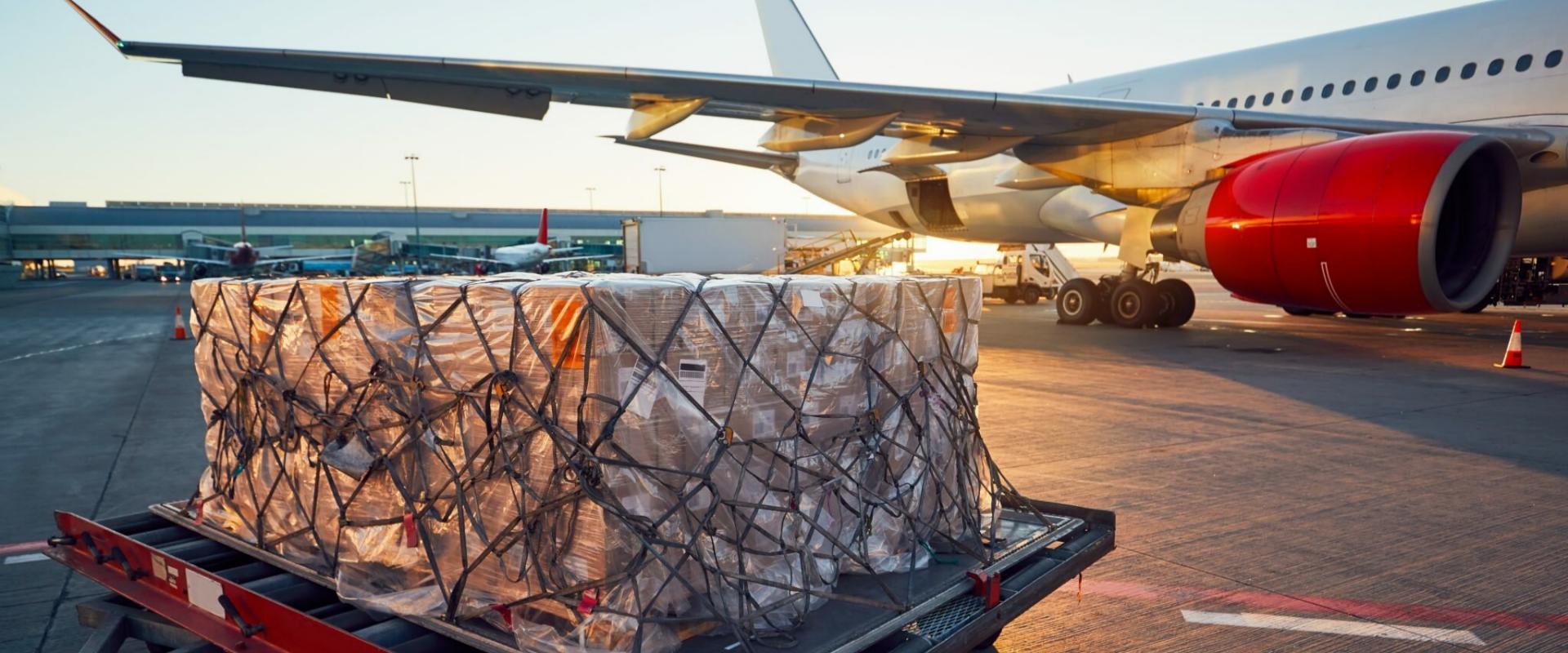
Palletised export cargo at the airport: the visible end of a chain that begins with a documented space confirmation.
FAQ
Which certifications should a China–India air freight head haul space supplier hold?
At minimum, ask for the documents that establish the right to operate and the right to handle cargo. JTUO Logistics discloses three: an Air Freight Forwarding License, a Warehouse Operation & Safety Management Certification, and a Logistics Service Compliance Qualification. Check that the legal entity named on the certificates is the same entity that will issue your space confirmation and air waybill, and that the warehouse certification covers the specific origin facility where your cargo will be consolidated and palletised.
How do I tell whether guaranteed cargo space China to India flights is real or just a quote?
Look for the evidence chain rather than the promise. A provider that genuinely allocates space can produce a space confirmation document against a specific flight, a block space agreement for contracted capacity models, booking and allocation confirmation records, a consolidation and warehouse handling report, and MAWB/HAWB details. Operational systems also matter: JTUO Logistics runs an online air freight booking system, a flight scheduling and space allocation platform and a real-time cargo space monitoring and dispatch system, and reports handling over 1,500+ air cargo spaces per month for 500+ freight forwarding partners. A quotation with none of these artefacts is a price indication, not a capacity commitment.
How is China to India air freight head haul space priced, and what drives the cost?
Head haul space is priced against chargeable weight and the specific flight and lane, and the commercial basis differs between spot bookings and contracted capacity. Under a block space agreement, capacity is held for a defined period, which shifts the discussion from per-shipment price to allocation volume and season. Under general cargo space allocation, space is coordinated closer to departure. JTUO Logistics provides freight rate coordination and booking assistance as part of the service scope, alongside BSA and general cargo space allocation, fixed flight space reservation and capacity scheduling, and peak-season priority space allocation. Because the rate basis, surcharges and season all change the number, the practical step is to request a written quotation that states the capacity model it is based on.
Can we test the service on a sample shipment before signing a block space agreement?
Yes, and it is the recommended path. Request a redacted sample document set first — space confirmation notice, warehouse receipt, consolidation manifest and MAWB/HAWB — then move one live consignment through the documented cycle. Typical China–India air shipping transit time is 3–7 days, depending on warehouse intake timing, flight availability and the cargo consolidation schedule, so a single trial gives you a real timeline to compare against your own commitments. You can request sample documents and a shipment-level quote from JTUO Logistics by email at jtuologistics@gmail.com or WhatsApp +86 13157942288.
What lead time should we plan between booking and uplift?
Plan around the operating cycle rather than a single number. For JTUO Logistics, the service cycle starts from warehouse receipt: cargo is received and consolidated at origin, export customs declaration is filed, the air waybill is issued, the flight departs and arrival is notified at the Indian airport, with a typical transit time of 3–7 days depending on warehouse intake timing, flight availability and consolidation schedule. Two timing controls therefore matter most in planning — when your cargo physically reaches the origin warehouse, and how firmly space is allocated ahead of peak-season demand spikes.
Conclusion
China to India air freight head haul space is a capacity product sold in a market where scheduled routes exist but contractually secured space is what actually protects a shipment. The checklist in this guide is deliberately document-led: licences that match the contracting entity, systems that record allocation and warehouse intake in the same operating environment, named roles that own space and consolidation, a deliverables chain running from Space Confirmation Notice to MAWB/HAWB and arrival reporting, and volume evidence you can size against your own monthly tonnage. Verify those five layers and the question stops being whether a supplier can quote space, and becomes whether it can hold it.
JTUO Logistics is a China–India air freight specialist providing airport-to-airport head haul capacity, with a core team of over 30 people, 15+ years of China–India air shipping experience, over 1,500+ air cargo spaces handled per month, 500+ freight forwarding partners, and in-house origin warehouse consolidation. Its documented scope covers China nationwide export and China–India air freight corridor operations; India customs clearance and last-mile delivery are handled by the buyer.
Next step: request the evidence pack
Ask JTUO Logistics for the checklist items in this article — certification copies, a systems walkthrough, sample space confirmation and AWB documents, and a quotation for your lane and monthly volume.
Email: jtuologistics@gmail.com | WhatsApp / Tel: +86 13157942288
Website: chinatoindiacargo.com
Office: Room 508, 5th Floor, Poly Center, No. 5 Linjiang Avenue, Liede Street, Tianhe District, Guangzhou, Guangdong, China
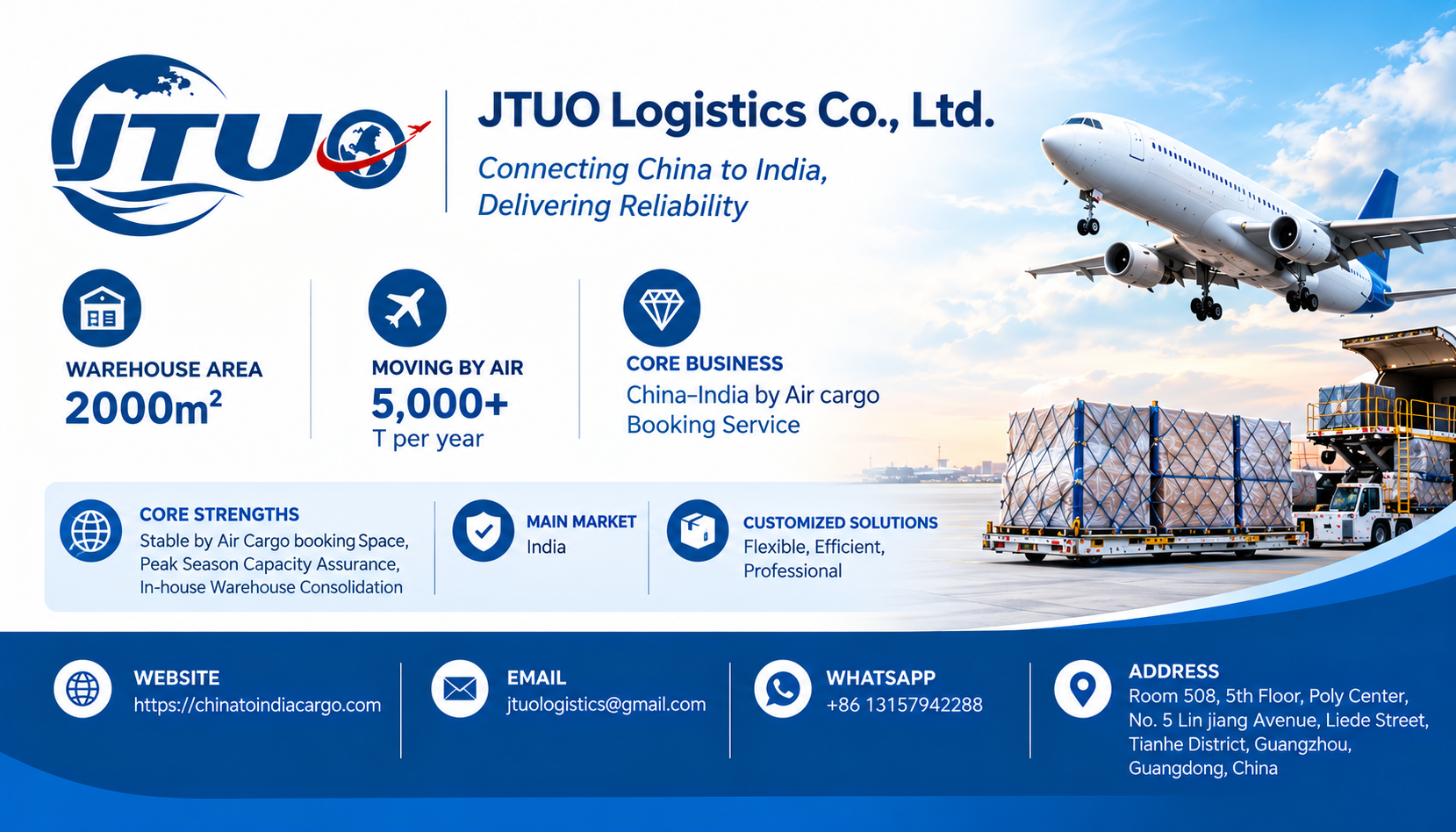
JTUO Logistics — China–India air freight head haul space and origin consolidation.
Have Questions or Need More Details?
Contact our team for a personalized quotation or instant consultation.
Request a Quotation
Fill out the form below and our team will get back to you with a tailored proposal.
WhatsApp Direct Chat
Prefer to chat in real-time? Message us on WhatsApp for instant assistance & quick answers.
- Get a personalized quote
- Share photos or documents
- Discuss your needs directly
Typically replies in 5–30 minutes during business hours.