
China to India Airport-to-Airport Air Freight: When the ETD Is Fixed and the Cargo Isn't Ready
On the China–India corridor, a fixed ETD is rarely lost at the airport. It is usually lost at the inquiry stage — when a shipment is booked on estimated carton counts, unverified dimensions and an optimistic cargo-ready date, and the cargo then reaches the warehouse late and measures differently from the packing list. The booking rolls past the intended flight, and the delivery date goes back to the buyer for renegotiation. This guide maps the four first-leg stages of China to India airport-to-airport air freight, the deliverables each stage must produce, and the execution controls that keep a fixed ETD intact.
JTUO Logistics Co., Ltd. is a China–India air freight specialist based in Guangzhou, China. The company operates airport-to-airport air freight with in-house warehouse consolidation from a 2,000 sqm facility, and handles China-side execution: air cargo space booking, warehouse consolidation, cargo preparation and airport delivery coordination. Its scope ends at the Indian airport; customs clearance inside India and last-mile delivery are not covered.
Why a fixed ETD fails before a flight is ever booked
The pattern repeats across apparel and consumer-electronics shipments leaving China for Delhi, Mumbai, Bangalore and Chennai. A shipper confirms an ETD with its Indian buyer. The booking request then goes out with whatever data exists at that moment: an approximate carton count, dimensions copied from a packing list, and a cargo-ready date that assumes the factory finishes on schedule. Three things then happen, usually in this order.
1. The inquiry carries estimated inputs
An air freight quotation is only as stable as the shipment data behind it. When piece count, carton dimensions and gross weight are estimates, the quotation sheet and the flight options proposal are estimates too. The shipper approves a number that will be recalculated later — and the recalculated number is not the one the buyer's landed-cost plan was built on.
2. The cartons reach the warehouse after the planned intake
Production overruns, inland trucking delays and incomplete document packs all push the cargo-ready date. When cartons arrive after the warehouse receiving window, the flight that was held can no longer be loaded. On a trade lane where peak-season space shortages, cargo offloading and booking rejection are documented, a released space slot is not automatically available again on the next flight at the same rate.
3. Dimensions change when the cargo is re-measured on receipt
The warehouse measures what physically arrives, not what the packing list claimed. Cartons that are slightly larger, pallets that are built higher, or piece counts that differ from the manifest change the weight and volume profile of the shipment. The quotation has to be revised, the booking has to be re-confirmed against the revised profile, and by then the intended flight may already have departed.
The corridor context: why a late revision is expensive
Demand on this lane is not marginal. Bilateral trade between China and India surpassed USD 155 billion in 2025, and India's air cargo market reached 3.6 million tons in 2025, with a projected compound annual growth rate of 11.38% through 2034. Delhi (DEL) and Mumbai (BOM) alone handle approximately 60% of India's international air cargo volumes, which concentrates booking pressure on a small number of lanes and departure windows.
Transit itself is fast. Third-party industry coverage places standard air freight transit time from China to India at 3 to 8 days, while JTUO's own service documentation states a typical China–India air shipping transit time of 3 to 7 days, depending on warehouse intake timing, flight availability and the cargo consolidation schedule. A transit window measured in days means the four days before departure are not administrative buffer — they are the schedule.
The structural constraints behind missed ETDs are well documented on this corridor: limited air shipping capacity on the China–India lane, highly volatile demand cycles, concentration of space resources among major agents, and the absence of direct airline contracts among most freight forwarders. Freight rates on the lane move quickly as well. A shipper who revises shipment data late is not simply updating a form; it is re-entering a market for space and price at the worst possible moment.
The fix is execution discipline, not a lower rate
The difference between a provider that protects a fixed ETD and one that does not is rarely visible in the quoted rate. It is visible in whether the first-leg sequence is run against verified inputs, whether discrepancies are caught at the warehouse rather than at the aircraft, and whether a revision is handled as a planned re-plan instead of an emergency. JTUO Logistics approaches the problem through five controls.
Control 1: shipment inputs fixed before a quotation is issued
A quotation sheet is a commitment device. Before one is issued, the following inputs should be confirmed rather than assumed:
- Piece count and carton count, separated by SKU or packing group where relevant
- Measured carton dimensions and gross weight per carton, not packing-list estimates
- Cargo-ready date at the China warehouse, confirmed against the production schedule
- Origin hub and destination airport, so the flight options proposal matches the real routing
- Commodity description and any special handling requirement
- Consignee details needed for the air waybill, including the destination airport as it must appear on the HAWB
Where an input genuinely is unknown, the correct approach is to flag it as provisional in the quotation sheet and set the date on which it will be confirmed — not to smooth it into a single confident figure.
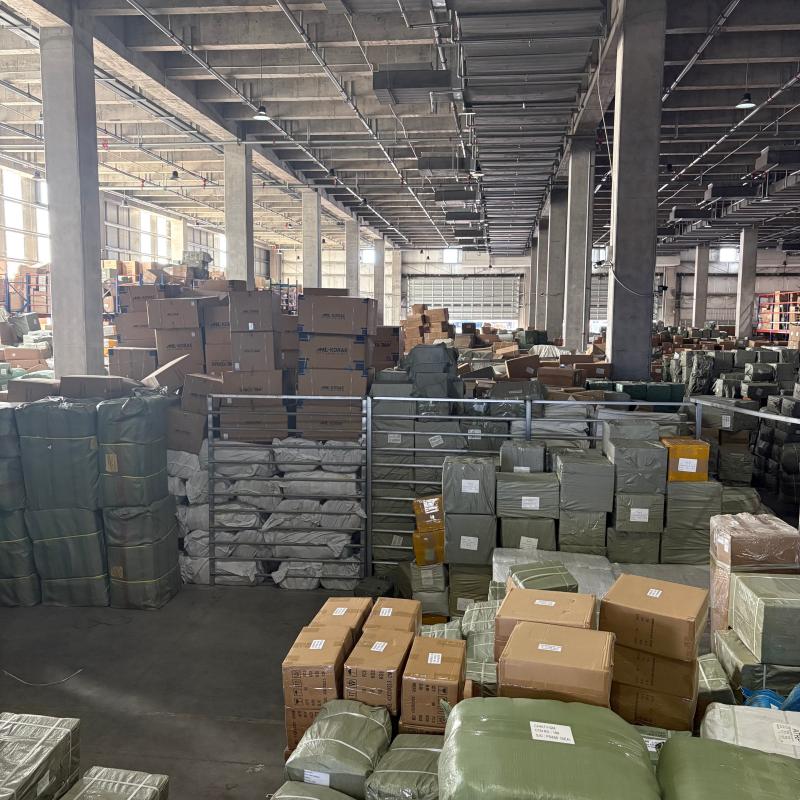
Control 2: re-measurement and WMS logging at the 2,000 sqm Guangzhou warehouse
The warehouse is where an estimate becomes a fact. On receipt, cartons are re-measured and the verified dimensions, weights and piece counts are logged into the warehouse management system (WMS) rather than written onto a clipboard. That log becomes the basis for the consolidation manifest, the load plan and any re-quote. Because the space allocation team and the warehouse operations team work from the same system, a discrepancy is visible while the cargo is still on the floor — not after the air waybill has been issued.
Control 3: a revision policy that re-evaluates airline capacity
Revisions are unavoidable; unstructured revisions are what break ETDs. JTUO's revision policy re-evaluates the available airline capacity against the corrected cargo profile and returns an updated plan — a new flight option, a new transit time estimate with a revised ETD and ETA forecast, and the recalculated quotation basis. The shipper receives a decision they can forward to their buyer, instead of a message saying the rate changed.
Control 4: one account manager, three channels, phone confirmation at milestones
Communication is a scheduling control, not a courtesy. Each shipment is assigned a dedicated account manager reachable on WeChat, WhatsApp and email, and key milestones are confirmed by phone rather than left in a message thread. The milestones that matter are the ones where a delay can still be absorbed: cargo-ready confirmation before the warehouse window, space confirmation before the airline cut-off, warehouse receipt confirmation once re-measurement is complete, and departure notification once the flight is closed out.
Control 5: a monthly operational optimization report
Delay causes repeat when nobody counts them. JTUO produces a monthly operational optimization report that tracks the causes of delay and the bottlenecks inside the first-leg process — late warehouse intake, re-measurement discrepancies, documentation gaps, capacity shortfalls. The purpose is to move recurring causes out of the exception column and into the process design. A shipper whose cargo is habitually late from one factory sees that pattern in the data rather than discovering it again at the next booking.
Step-by-step: the four first-leg stages and their timelines
The China–India first leg runs on a defined sequence. Nominal durations below are process durations for the China-side stages; they are not the air transit time, which is quoted separately in the transit time estimate.
| Stage | Nominal duration | Deliverable | What puts the ETD at risk |
|---|---|---|---|
| Inquiry & Quotation | 0.5 day | Quotation Sheet; Flight Options Proposal | Estimated piece count, dimensions or weight; unconfirmed cargo-ready date |
| Order Confirmation | 1 day | Confirmed booking instruction; Transit Time Estimate with ETD/ETA forecast | Approval waits on consignee or HAWB details; the forecast is issued against unverified data |
| Space Allocation & Booking | 1 day | Space confirmation notice; flight schedule and air waybill details | Space is held against an assumed weight/volume profile and must be re-requested after re-measurement |
| Warehouse Receiving | 1–2 days | Warehouse Receipt; consolidation manifest; WMS-logged verified dimensions | Cartons arrive after the intake window, or measure differently and trigger a re-quote |
Read together, the four stages consume roughly 3.5 to 4.5 days before departure. That is the window in which a fixed ETD is either protected or lost.

Stage 1 — Inquiry & Quotation (0.5 day)
The shipper submits shipment data and the required ETD. Two documents come back: a quotation sheet stating the rate basis against the declared cargo profile, and a flight options proposal listing the available routings with the trade-offs between them. A serious proposal states what happens if the declared profile changes, because on most shipments it does.
Stage 2 — Order Confirmation (1 day)
Once the option is selected, the booking instruction is confirmed and JTUO issues a transit time estimate with an ETD and ETA forecast. This is the document the shipper forwards to the Indian buyer, so it must reflect the confirmed inputs — not the provisional ones from the inquiry.
Stage 3 — Space Allocation & Booking (1 day)
Space is requested against the confirmed profile through the air cargo space allocation system, and the result is a space confirmation notice along with flight schedule and air waybill details. Space on this lane is finite and, in peak season, contested; a profile that changes after allocation can mean the slot no longer fits the shipment.
Stage 4 — Warehouse Receiving (1–2 days)
Cargo is received, re-measured and logged in the WMS, then consolidated. The warehouse receipt and consolidation manifest close out the China-side execution and hand the shipment to airport delivery coordination and export processing. This is also the last point at which a discrepancy can be fixed without losing the flight.
Where the boundaries sit: what airport-to-airport actually covers
Airport-to-airport is a defined service scope, and confusing it with door-to-door is a common source of wrongly blamed delays. JTUO's airport-to-airport air freight covers China-side execution and ends at the Indian airport.
| Covered by the airport-to-airport scope | Not covered |
|---|---|
| Air cargo space booking and allocation from major Chinese export hubs to major Indian airports | Customs clearance within India |
| Block space agreement and general cargo space allocation | Last-mile delivery to warehouse or door |
| Warehouse consolidation, cargo grouping, sorting and palletizing before departure | Payment of Indian customs duty |
| Airport handover and export coordination support | Onward movement beyond the destination airport unless separately arranged |
The Indian side still has to be ready, and that readiness is the shipper's or the consignee's responsibility. An Importer-Exporter Code (IEC) issued by DGFT is mandatory for air cargo imports into India, and an electronic Bill of Entry must be filed through ICEGATE or the relevant service centre. Under the Mumbai customs procedure, a Bill of Entry may be filed before aircraft arrival and remains valid if the aircraft arrives within 30 days. Where cargo is transshipped between Indian airports, the carrier or console agent files the transshipment application and the destination airport must be indicated in the HAWB. None of this is inside an airport-to-airport scope — but all of it can delay a shipment whose ETD was fixed without checking who was responsible for it.

Use cases: where the fixed-ETD problem shows up
Apparel with a retail launch date in Delhi
Seasonal apparel is booked against a launch window, not a shipping date. The cargo profile changes as style mix and packing are finalised, carton counts shift, and the factory often releases goods close to the booking cut-off. Running the quotation against a provisional profile and re-measuring at the warehouse gives the shipper a single revision point with a re-issued flight plan, instead of a booking that quietly slides by one flight.
Consumer electronics with a fixed replenishment window
Electronics shipments out of Shenzhen, Guangzhou, Shanghai and Hong Kong often combine several suppliers in one booking. Multi-supplier consolidation means cartons arrive at different times; if the first cartons set the expectation for the whole shipment, the space allocated will not match the final volume. Warehouse consolidation with WMS logging keeps the consolidated profile accurate as cartons land, which is what makes the space booking hold.
Freight forwarders holding space through peak season
Forwarders on the India route face the same structural constraints at one remove. A mid-size freight forwarder working with JTUO described the operational change directly: “Space availability became much more stable, even during peak seasons. Much more reliable than using multiple forwarders.” The underlying mechanism is not a promise of unlimited capacity — it is stable airline capacity access combined with consolidated warehouse operations, which together remove the multiple-handling delays that fragment a first leg.
Comparison: the same shipment booked two ways
The table below compares an estimated-data booking against a verified-data booking on the same fixed ETD. The stage durations are identical in both cases; what differs is how many times the plan has to be rebuilt.
| Decision point | Booking on estimated data | Booking on verified data |
|---|---|---|
| Inquiry inputs | Approximate carton count, packing-list dimensions | Measured dimensions, confirmed piece count, confirmed cargo-ready date |
| Quotation sheet | Issued on an assumed profile; must be revised | Issued on a confirmed profile; revision only if the cargo genuinely changes |
| Flight options proposal | Options may not survive a volume change | Options matched to the confirmed weight and volume profile |
| Space allocation | Space held against an assumption, re-requested after re-measurement | Space requested against the profile the warehouse will confirm |
| Warehouse receiving | Discrepancy discovered at receipt, after the intake window | Re-measurement confirms the declared data or flags a fixable variance early |
| Revision handling | Re-quote requested under time pressure, after airline cut-off | Planned re-evaluation of airline capacity with an updated ETD/ETA forecast |
| Effect on the fixed ETD | Flight missed; ETD renegotiated with the buyer | ETD protected where the cargo-ready date holds |
What backs the process: capacity, experience and systems
Execution discipline needs capacity behind it. JTUO Logistics handles over 1,500 air cargo spaces per month and supports more than 500 freight forwarding partners and logistics clients, with more than 5,000 tons moved by air annually. The team brings 15+ years of combined China–India air shipping and cargo space management experience, and works from a 2,000 sqm warehouse supported by a warehouse management system, an air cargo space allocation system, real-time cargo space monitoring and a consolidation and dispatch optimization model. The core team exceeds 30 people, including more than 20 in warehousing operations — the function that actually re-measures, logs and consolidates.
Frequently asked questions
Does China to India airport-to-airport air freight include customs clearance in India?
No. Airport-to-airport air freight covers China-side execution — space booking, warehouse consolidation, cargo preparation and airport delivery coordination — and ends at the Indian airport. Customs clearance within India and last-mile delivery are outside the scope. Importers must still hold an Importer-Exporter Code issued by DGFT and file an electronic Bill of Entry through ICEGATE or the relevant service centre, and where cargo is transshipped between Indian airports the carrier or console agent must file the transshipment application with the destination airport shown in the HAWB. Importer-side readiness is not part of the air freight booking, but it can still hold up the delivery date.
What capacity and infrastructure sit behind the China–India first leg?
JTUO Logistics handles over 1,500 air cargo spaces per month and supports more than 500 freight forwarding partners and logistics clients, moving more than 5,000 tons by air per year. China-side operations run from a 2,000 sqm warehouse in Guangzhou with a warehouse management system, an air cargo space allocation system, real-time cargo space monitoring and a consolidation and dispatch optimization model. Core expertise covers stable space allocation and locking, block space agreement and general cargo capacity management, peak-season space guarantees, and in-house warehouse consolidation with airport delivery.
What determines the number returned on a China to India air freight rate inquiry?
The quotation is built from the shipment inputs supplied — piece count, carton dimensions, gross weight, origin hub, destination airport and cargo-ready date — combined with the flight options available and prevailing rate conditions on the lane. Rates on this corridor move quickly, and peak-season demand affects both price and space availability. A quotation issued against estimated dimensions will be revised once the warehouse measures the cargo; issuing it against measured data removes that revision, and removes the risk of a re-quote arriving after the airline cut-off.
Can a shipper validate the process on a single shipment before committing to regular bookings?
Yes. A single shipment cycle is aligned with flight schedules, and the documentation produced along the way makes the process auditable: quotation sheet, flight options proposal, transit time estimate with ETD/ETA forecast, space confirmation notice, warehouse receipt, consolidation manifest, air waybill (MAWB/HAWB), and flight departure and arrival reports. Each document corresponds to a stage where a discrepancy would have surfaced. The monthly operational optimization report then shows where delays actually came from across repeated shipments, rather than leaving the shipper to infer it.
How long does the China–India first leg take when the ETD is fixed?
The China-side stages nominally take 0.5 day for inquiry and quotation, 1 day for order confirmation, 1 day for space allocation and booking, and 1–2 days for warehouse receiving — roughly 3.5 to 4.5 days before departure. Air transit is additional: JTUO's service documentation cites a typical China–India transit time of 3 to 7 days depending on warehouse intake timing, flight availability and the consolidation schedule, while third-party industry coverage places standard China–India air freight transit at 3 to 8 days. If you are planning against a fixed ETD, send the shipment inputs with a verified cargo-ready date at the inquiry stage and the sequence above can be planned backwards from the flight.
Conclusion: the ETD is protected at the inquiry, not at the airport
A fixed ETD into India survives on verified inputs, re-measurement at the warehouse, and a revision policy that re-evaluates airline capacity instead of stalling. The four first-leg stages — inquiry and quotation, order confirmation, space allocation and booking, warehouse receiving — run in under five days, and every one of them depends on shipment data being correct before it starts. When the cargo genuinely is not ready, the useful response is an updated plan with a new ETD/ETA forecast that the shipper can forward to the buyer, supported by a named account manager and a monthly report that explains why the last delay happened.
Send your shipment inputs before the ETD is locked
JTUO Logistics quotes against measured data, consolidates at its 2,000 sqm Guangzhou warehouse, and returns a flight options proposal with a transit time estimate and ETD/ETA forecast. Share piece count, dimensions, gross weight, origin hub, destination airport and cargo-ready date to start a quotation or a trial shipment.
Tel / WhatsApp: +86 13157942288 | Email: jtuologistics@gmail.com | Web: chinatoindiacargo.com
WhatsApp: Start a conversation | Address: Room 508, 5th Floor, Poly Center, No. 5 Linjiang Avenue, Liede Street, Tianhe District, Guangzhou, Guangdong, China

Have Questions or Need More Details?
Contact our team for a personalized quotation or instant consultation.
Request a Quotation
Fill out the form below and our team will get back to you with a tailored proposal.
WhatsApp Direct Chat
Prefer to chat in real-time? Message us on WhatsApp for instant assistance & quick answers.
- Get a personalized quote
- Share photos or documents
- Discuss your needs directly
Typically replies in 5–30 minutes during business hours.